At least 160 people have died after a massive flash flood and mudslide struck areas around Nepal’s Bhote Koshi and Trishuli rivers, with hundreds still unaccounted for, including at least 133 Indians.
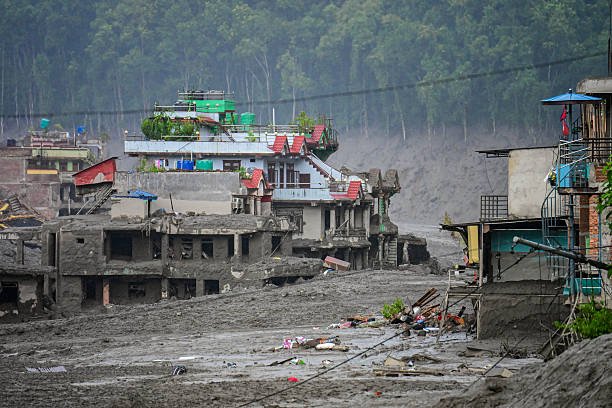
Kathmandu, Nepal — A devastating flash flood and mudslide along Nepal’s Bhote Koshi and Trishuli rivers has killed at least 160 people and left hundreds missing after floodwaters rose dramatically and swept through settlements and critical infrastructure near the Nepal-Tibet border on Wednesday morning.
Key Highlights
- At least 160 people have been reported dead in Nepal and Tibet following the disaster.
- At least 133 Indians are among those reported missing, including 37 non-resident Indians.
- Nepal Police said 579 people remained untraced, while Chinese authorities reported 265 missing in Tibet’s Gyirong county.
- The disaster damaged at least 19 bridges, around 40 km of roads and 13 hydropower projects.
Nepal Floods Leave Hundreds Missing
Nepal Police reported a death toll of 157, while Chinese authorities recorded three deaths in Tibet’s Gyirong county, taking the combined toll to at least 160. The Chinese side also reported 265 people missing after floods and mudslides affected the region around the Gyirong port.
Nepal Police said 579 people remained untraced, comprising 466 foreigners from 28 countries and 113 Nepalis. Indians formed the largest identified group among those missing, with at least 133 reported unaccounted for.
Among the missing were at least 37 NRIs. Other foreign nationals on the untraced list included 54 Americans, 34 Australians, 33 Britons, 24 Canadians, 19 Malaysians and eight Koreans.
Kailash Mansarovar Pilgrims Caught in Disaster
The disaster struck as many Kailash Mansarovar pilgrims were preparing to cross the Nepal-Tibet border or travelling through the affected region. Nearly 400 pilgrims, including Indians, were in the area when the flooding occurred.
The flood also disrupted the route around Gyirong port, an important Nepal-Tibet crossing used by pilgrims. Roads, communications and electricity supplies were severed by the flooding and mudslides.
Rescue Operations Face Difficult Conditions
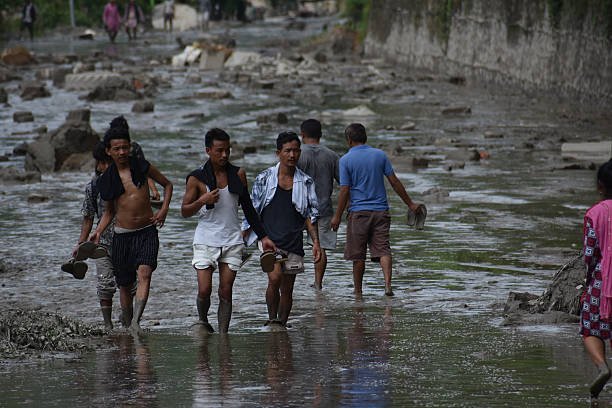
Rescue teams have been working amid poor weather, damaged roads, heavy mud and high river levels. The Nepali Army, Nepal Police and Armed Police Force deployed helicopters, drones, boats and ground teams to search for survivors and people still missing.
Nepal Foreign Minister Shisir Khanal told parliament that 29 police personnel and 44 soldiers were among those untraced after floodwaters swept through their barracks in Rasuwa. Customs officials, hydropower workers and other personnel stationed near the border were also reported missing.
At the 20MW Langtang Khola Hydropower Project, dozens of workers remained out of contact. Security posts, customs facilities, banks and other establishments along the river corridor were also swept away or inundated.
Flood Damage Extends Across Northern and Central Nepal
The disaster caused extensive damage to transport and energy infrastructure. Preliminary government estimates indicated that at least 19 bridges and approximately 40 km of roads were damaged or washed away.
Thirteen hydropower projects were affected, while around 200 trucks were lost in the disaster. Authorities declared the worst-hit areas disaster zones for three months and ordered free medical treatment for people injured in the flooding.
The scale of the destruction was also reflected downstream, where 33 bodies were reportedly recovered in Chitwan, about 150 km from the affected area, indicating the force and reach of the floodwaters.
Authorities Continue Search and Rescue
Nepal Prime Minister Shah appealed for patience and unity as rescue operations continued. Across the border, Chinese President Xi Jinping called for all-out efforts to locate people who remained missing.
With hundreds of people still untraced and major roads and communication links damaged, search teams continued working across affected areas while authorities relocated families from vulnerable settlements to safer locations.

Praveen Yadav is the Founder and Editor at The Nation Bulletin. With over 3 years of experience in digital journalism and news reporting, he covers national affairs, governance, and breaking current events with a commitment to factual accuracy and verified reporting.