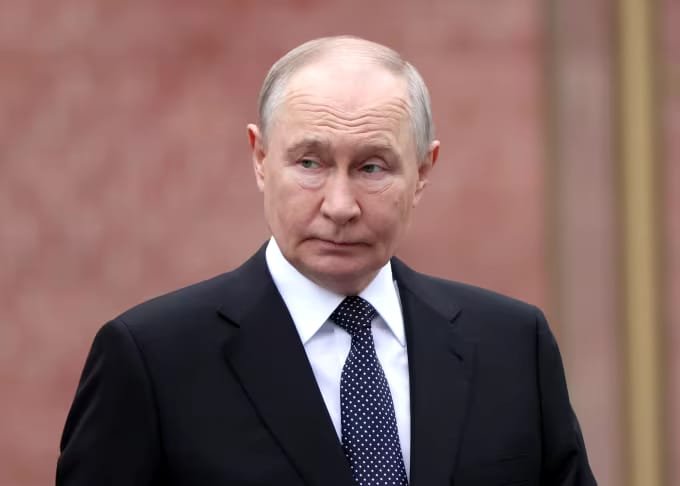
WASHINGTON, United States — Recent US intelligence assessments indicate that Russian President Vladimir Putin could attempt to test NATO’s resolve by launching a limited attack against a member country within the next few years, according to three people familiar with the assessments.
- US intelligence assessments outline possible Russian escalation against NATO within the next few years.
- Potential scenarios range from a cyberattack to a limited military incursion designed to test NATO’s response.
- The assessments identify the Baltic states and Poland as possible targets for escalation.
- NATO says it is preparing for multiple scenarios and remains ready to deter and defend its members.
US intelligence outlines possible Russian escalation
The assessments describe several ways Russia could attempt to challenge NATO, including cyberattacks and a small-scale incursion into allied territory.
According to the sources familiar with the reports, a possible objective would be to test NATO’s unity and commitment to Article 5, which establishes that an attack against one member is treated as an attack against all.
The scenarios are described as potential forms of escalation that could challenge the alliance without necessarily immediately crossing the threshold for a broader allied military response.
Baltics and Poland identified as possible areas
One of the sources said Putin would be most likely to escalate by targeting the Baltic states or Poland, although the timing and form of any potential action remain uncertain.
The Wall Street Journal was the first to report on the recent intelligence assessments.
US and NATO officials believe Russia could consider escalation against NATO if Putin is unable to secure what the sources described as a face-saving way out of the war in Ukraine.
The assessments indicate that the potential window for such a decision extends from now into the next few years.
NATO says it is preparing for multiple scenarios
Martin O’Donnell, a senior NATO military spokesperson, declined to comment on classified intelligence assessments.
He said NATO routinely considers a wide range of possible scenarios and maintains preparations to respond to threats.
“NATO is watching and we are ready to deter and defend as necessary, which we continue to demonstrate.”
O’Donnell’s comments came amid growing concern about Russian activity affecting NATO territory and airspace.
Russian incidents have raised NATO concerns
There have been several incidents involving Russian activity near or across NATO territory in recent years.
In May, a drone carrying explosives struck an apartment building in Romania while Russian forces were attacking a nearby Ukrainian port. Two people were injured in that incident.
Last September, NATO fighter jets shot down several Russian drones that had entered Polish airspace during a Russian attack on Ukraine.
These incidents have contributed to wider concerns among NATO members about the possibility of Russian actions testing the alliance’s response mechanisms.
Explosive-laden drone found at German airport
Concerns have also been heightened by an incident in Germany this week. A US defence official in Europe told CNN that an explosive-laden drone discovered at an airport on Wednesday night was assessed by the United States to belong to a Russian intelligence service.
The official said the drone was carrying military-grade explosives. It was reportedly discovered by an airport employee in a secure area used for cargo flight operations.
CNN sought a response from the Kremlin regarding the intelligence assessment about Putin and the drone.
German Interior Minister Alexander Dobrindt said drone threats had previously been known in a hybrid context, but described an explosives-equipped drone at an airport as a new type of threat scenario.
On Thursday, Dobrindt said the drone could be connected to “foreign powers”, while stopping short of identifying a specific country.
Germany’s National Security Council, led by Chancellor Friedrich Merz, met on Friday to discuss the airport incident.
US munitions shortages add to concerns
The intelligence assessments come as US officials face concerns about the availability of key weapons and missile interceptors following the war against Iran.
According to the supplied report, US stockpiles have been significantly reduced. Nearly 80% of THAAD missile interceptors, a key missile-defence system, have reportedly been exhausted compared with pre-war levels, while roughly half of Patriot interceptors have also been used.
The depletion has become relevant to military planning for potential future conflicts, including a possible confrontation involving NATO and Russia or a conflict with China in the Pacific.
Russian attacks on Ukraine continue
The concerns over NATO also come amid an increase in civilian casualties from Russian long-range weapons in Ukraine.
The United Nations has reported that civilian casualties from Russian long-range weapons rose by 60% between January and June compared with the same period a year earlier.
In one night of attacks this week, Russian ballistic and anti-ship missiles killed at least 17 people and wounded dozens more, according to the supplied report. Ukrainian defences did not intercept any of the missiles in that attack.
Trump addresses concerns over US weapons stocks
US President Donald Trump has privately expressed concern over reports of declining US munitions stocks following the war with Iran, according to people familiar with a recent Cabinet meeting at Camp David.
Trump subsequently addressed the issue publicly on Truth Social, arguing that the United States has large quantities of munitions and that production is expanding.
“The U.S. has massive amounts of ‘munitions,’ especially of certain types,” Trump said.
He also said defence companies were building more production facilities in the United States.
Diplomatic efforts remain stalled
The latest intelligence assessments come as US-led diplomatic efforts to end the Russia-Ukraine war have stalled.
Western sanctions have affected Russia’s economy but have not stopped Moscow’s continued military campaign against Ukraine.
Against that backdrop, US and NATO officials are assessing possible future scenarios while also dealing with concerns over available munitions and missile-defence interceptors.
Frequently Asked Questions
What does NATO Article 5 mean?
NATO Article 5 establishes the principle that an armed attack against one member of the alliance is considered an attack against all members, forming a central part of NATO’s collective-defence commitment.
Which NATO countries are mentioned as possible targets?
One source familiar with the intelligence assessments said Russia could potentially target the Baltic states or Poland if Putin chooses to escalate against NATO. The assessments do not establish that such an attack will occur.
What happens next?
The US intelligence assessments do not provide a definitive timeline or establish that Russia has decided to attack a NATO member. Instead, they outline potential scenarios that US officials believe could emerge over the next few years.
NATO says it continues to prepare for multiple contingencies while maintaining its focus on deterrence and defence. Meanwhile, diplomatic efforts to end the war in Ukraine remain stalled and concerns over weapons stockpiles continue to influence military planning.
Sources
Source material supplied by the user, based on reporting by CNN and statements attributed to US officials, NATO spokesperson Martin O’Donnell, German Interior Minister Alexander Dobrindt, US President Donald Trump and the United Nations.
Editorial note: The intelligence assessments described in this report are based on sources familiar with classified reports. The specific timing and form of any potential Russian escalation remain uncertain.

Praveen Yadav is the Founder and Editor at The Nation Bulletin. With over 3 years of experience in digital journalism and news reporting, he covers national affairs, governance, and breaking current events with a commitment to factual accuracy and verified reporting.