China’s humanoid robots are pushing past headline-grabbing speed records at the World Humanoid Robot Games in Beijing, but the tougher challenge may be whether they can perform precise, autonomous tasks in warehouses, factories and other real-world workplaces.
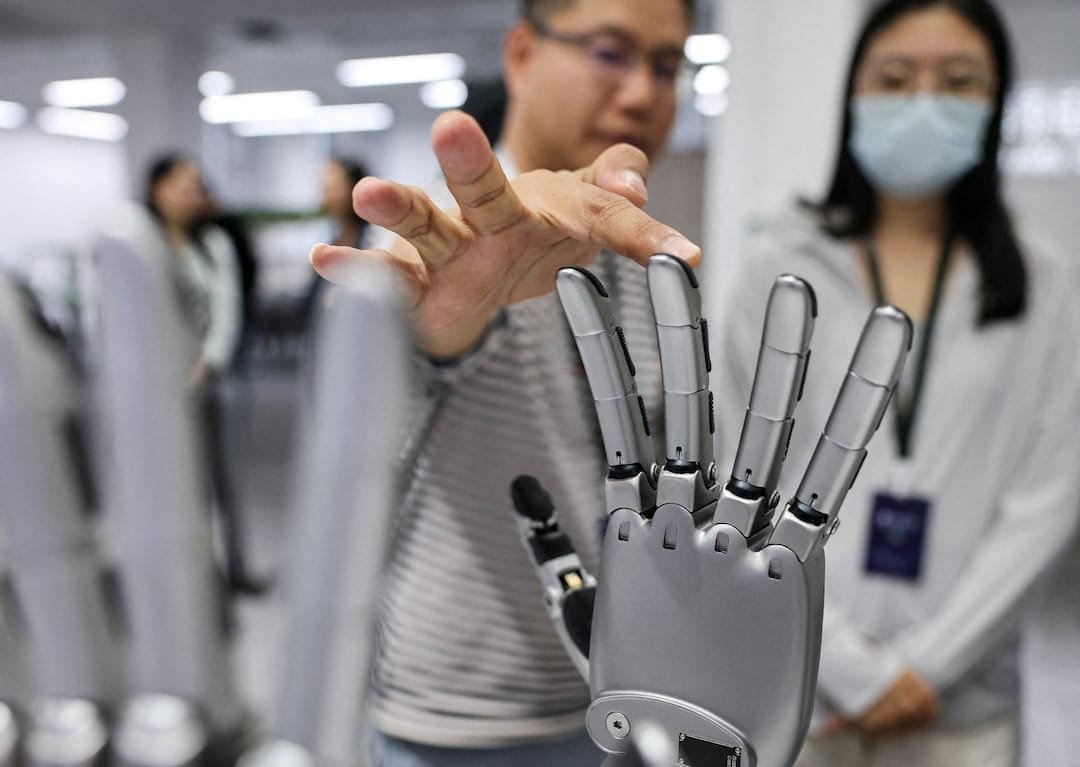
BEIJING, China — China’s humanoid robots demonstrated remarkable speed on the opening day of the five-day World Humanoid Robot Games, with two machines surpassing Usain Bolt’s 100-metre world-record time. Yet the competition’s broader focus is testing whether humanoid robots can move beyond athletic displays and reliably perform practical tasks such as packaging, warehouse operations and precision cable connections.
Key Highlights
- The World Humanoid Robot Games features 51 events, including 30 sports competitions and 21 scenario-based contests.
- Two humanoid robots beat the 9.58-second human world record in the 100-metre sprint, while another completed 400 metres in 39.7 seconds.
- More than 40% of the events require robots to operate fully autonomously, with challenges covering industrial, commercial and emergency scenarios.
World Humanoid Robot Games Put Robots to the Test
The five-day competition began Saturday in Beijing and combines sporting events with tests designed to measure how humanoid robots perform in simulated workplaces and challenging physical environments.
The games include competitions modelled on human sports as well as scenario-based challenges involving factories, restaurants, offices and emergency situations. Huawei, a technology partner of the event, said more than 40% of the contests require full autonomous operation.
Participants are competing across a total of 51 events. The programme includes 30 sports competitions and 21 challenges focused on practical scenarios where robots must interact with objects and operate in changing environments.
Humanoid Robots Break Sprint Benchmarks
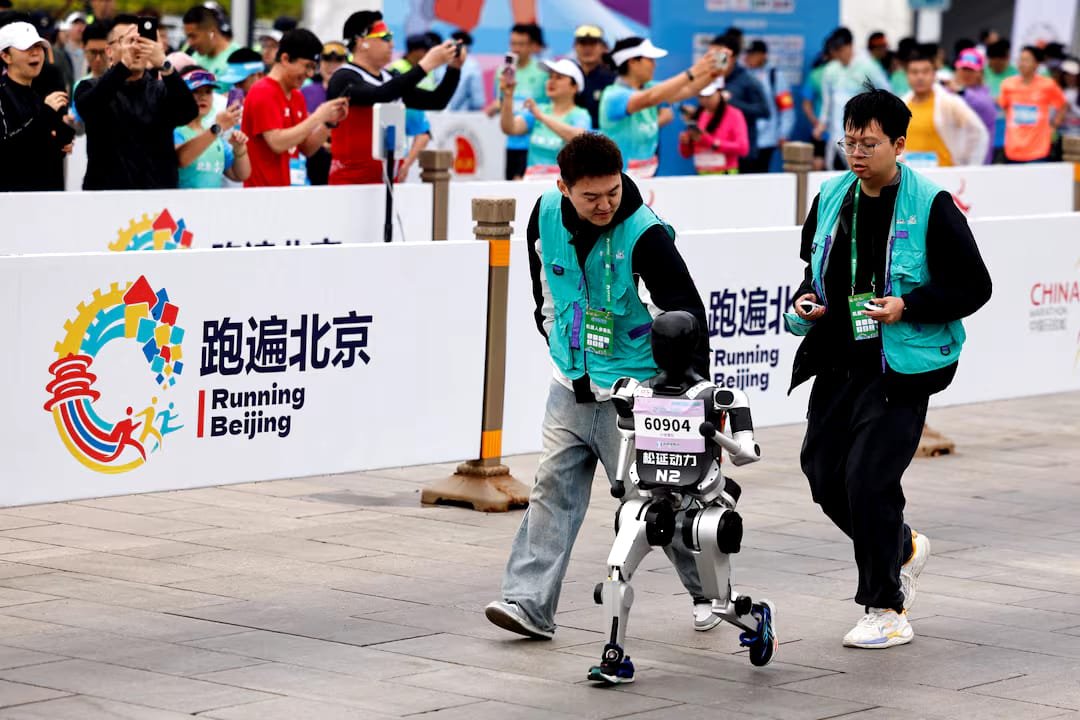
The opening day produced one of the competition’s most striking demonstrations when two robots ran the 100 metres faster than Usain Bolt’s world-record time of 9.58 seconds.
The result marked a significant improvement from the previous year, when the winning robot recorded a time of more than 20 seconds. However, speed was not the only challenge, as braking remained a problem for the machines after crossing the finish line.
Organisers placed a thick mat several metres beyond the finish, but some robots still crashed into it while attempting to stop.
Another humanoid robot, using the same model as the 100-metre champion, completed the 400 metres in 39.7 seconds. That was faster than South African athlete Wayde van Niekerk’s 43.03-second world record.
Spectator and robotics investor Xu Qiaosheng said the increased intensity of the competition had created greater demands on robot systems.
“The intensity is higher than last year, which places significant demands on the robot’s battery management and thermal dissipation capabilities,” Xu said.
“It holds huge significance for the development of China’s industrial sector.”
Why Precision Tasks May Be the Bigger Test
While sprinting and athletic demonstrations highlight advances in robot movement, the more demanding evaluation may come from small, unpredictable imperfections in physical environments.
A cable positioned at an incorrect angle, an object placed slightly beyond reach, a moving package or a missed step can test whether a humanoid robot can adapt without direct human assistance.
These situations require machines to identify objects, position their hands and bodies accurately, apply the correct amount of force and recover from mistakes independently.
From Cable Connections to Warehouse Operations
The competition includes practical challenges involving EV charging, restaurant work, emergency incident handling, industrial assembly and material loading. Robots are also being tested in hand-dexterity contests designed to examine fine motor control.
The cable connection challenge is particularly focused on vision, mechanical alignment and force control — capabilities that could be critical for robots intended to operate in industrial environments.
Lumos Robotics Chief Executive Yu Chao said the event could help advance robot hardware while also providing greater visibility for the sector. However, he said the industry’s longer-term value would depend on whether robots can solve practical problems.
“Only when it can work in those end scenarios does it have real value,” Yu said. “Simply running and jumping does not improve efficiency.”
Sports Events Meet Industrial Robotics
The games also feature tug-of-war and weightlifting, alongside Tai Chi and pitch-pot, a traditional Chinese activity in which contestants throw arrow-like sticks into a narrow-necked vase.
Beijing-based robotics startup Galbot said it would also stage an autonomous humanoid tennis match, featuring robots playing singles and doubles while attempting to track the ball, serve and return shots.
For Hua Rong, chief marketing officer at robotics firm Zeroth, the most important measure of success will come after the competition demonstrations are over.
“The competition will be whether, after the product is sold, it can really solve users’ problems,” she said.
Frequently Asked Questions
What are the World Humanoid Robot Games?
The World Humanoid Robot Games is a five-day competition in Beijing featuring 51 events that test humanoid robots in sports and practical scenarios, including industrial work, restaurants, offices, emergency situations and precision tasks.
Why is the cable connection challenge important for humanoid robots?
The challenge tests whether a robot can combine visual recognition, accurate mechanical alignment and controlled force to complete a precise physical task without human intervention.
As the competition continues, the contrast between spectacular athletic performances and demanding workplace tasks is expected to remain central to the event. The key question is not only how fast humanoid robots can run, but how reliably they can handle the unpredictable physical problems they may encounter when deployed to solve users’ real-world needs.

Praveen Yadav is the Founder and Editor at The Nation Bulletin. With over 3 years of experience in digital journalism and news reporting, he covers national affairs, governance, and breaking current events with a commitment to factual accuracy and verified reporting.