Donald Trump’s tariffs and threats toward Canada are reshaping Quebec’s independence debate, with support for sovereignty falling to about 30% as economic uncertainty and renewed Canadian patriotism weaken the appetite for a quick break from the country.
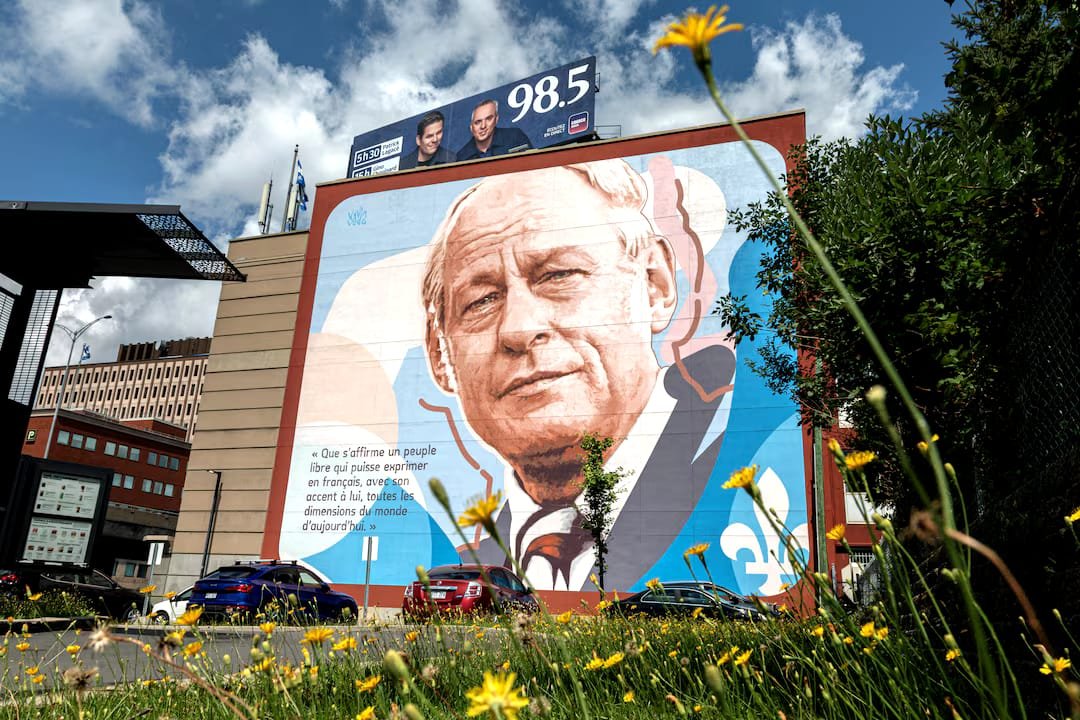
MONTREAL, Canada — Quebec’s long-running independence movement is facing an unexpected obstacle ahead of the province’s next election: U.S. President Donald Trump. As tariffs hit key industries and threats to make Canada the 51st state fuel anxiety, support for Quebec sovereignty has fallen to about 30%, its lowest level in decades, prompting the separatist Parti Quebecois to rule out a third independence referendum while Trump remains in the White House.
Key Highlights
- Support for an independent Quebec stands at about 30%, despite the Parti Quebecois holding a slim lead in provincial election polls.
- Trump’s tariffs have hit Quebec industries, including steel and aluminum, while one factory lost about a third of its orders within days.
- Parti Quebecois leader Paul St-Pierre Plamondon has said a sovereignty referendum will not be held while Trump remains president.
Trump Tariffs Hit Quebec Industries Hard
The economic impact of Trump’s trade policies has become increasingly visible in Quebec, a province with a significant concentration of industries exposed to tariffs, including steel and aluminum.
When Trump imposed 50% tariffs on Canadian steel in June last year, a Quebec factory producing bolts and fasteners lost about one-third of its orders in less than a week. The Heico Companies subsequently froze hiring, closed a regional plant and laid off several dozen employees.
The measures formed part of 140 layoffs by the company, mainly in Quebec. David Jeannotte, an operations director whose brother also lost his job, said the factory had previously sent about 90% of its products to the United States.
Some of the factory’s bolts had been used in New York’s Empire State Building. Jeannotte said some workers now go without pay on certain days, while others have voluntarily reduced their working hours.
“As long as Trump will be in his chair, I don’t feel that we even need to talk about that,” Jeannotte said.
Quebec Independence Support Falls to Decades-Long Low
Quebec is required to hold a provincial election by October 5, and the Parti Quebecois currently holds a slim lead in polling. However, analysts say support for the party does not necessarily translate into backing for its independence agenda.
The separatist movement has historically argued that independence is the best way to protect Quebec’s distinct French culture and language. Quebec remains Canada’s only majority French-speaking province and has held two previous referendums on separation.
The province narrowly voted to remain in Canada during the 1995 referendum. The result led to a national legal and political reckoning, including a request by the federal government for the Supreme Court to clarify the procedure for separation.
This time, however, economic uncertainty and concerns over the United States appear to be pushing many Quebecers toward a stronger Canadian response rather than a separate political path.
Parti Quebecois Delays Third Referendum
The Parti Quebecois remains committed to holding a third referendum if it returns to power, which would mark the party’s first return to government after a dozen years. But leader Paul St-Pierre Plamondon has said such a vote would not take place while Trump remains president.
On Tuesday, Plamondon wrote on X that Quebec’s political future should not be shaped by turmoil in American politics, the actions of an unpredictable president or what he described as a campaign of fear.
Former interim PQ leader Stéphane Bédard said the party had to recognise the political reality created by external uncertainty.
“Postponing a referendum is unfortunately a choice we have to accept,” Bédard said. “Quebec is stronger than it’s ever been, but the external factor of Trump has created a lot of insecurity, so we have to be realistic.”
Trump Threats Spark Canadian Patriotism in Quebec
Trump’s threats to annex Canada and his shifting tariff policies have generated a wave of Canadian patriotism, including in Quebec, where separatist sentiment has historically been strongest.
Quebecers have largely aligned with the rest of Canada in responding to U.S. tariffs and annexation threats. This differs from Alberta, where another separatist movement is developing alongside a referendum scheduled for mid-October.
Liberal Prime Minister Mark Carney, who won last year’s national election after pledging to negotiate firmly with Trump, could face fewer domestic political challenges if a Quebec sovereignty vote is postponed.
The uncertainty surrounding Trump has also complicated separatist movements beyond Canada. Efforts in Scotland and Catalonia have faced additional uncertainty linked to U.S. tariff threats and criticism of NATO.
Trump Faces Deep Unpopularity in Quebec
Trump is particularly unpopular in Quebec, according to August polling data from Angus Reid. Only 10% of Quebec respondents held a favourable view of the U.S. president.
Jonathan Kalles, a former Quebec adviser to former Prime Minister Justin Trudeau, said Trump’s policies conflict with values Quebec has pursued for decades while building a modern and progressive society.
Trump’s conservative policies and comments from his administration describing Quebec’s French-language requirements as a trade irritant have also drawn criticism in the province.
Quebec Economy Faces Slower Growth
The financial pressure from tariffs is expected to weigh heavily on Quebec’s economy. A March report from the Bank of Montreal estimated that Quebec’s economy would grow by about 1% this year.
That forecast compared with growth of more than 2% for Alberta and Saskatchewan, highlighting the uneven impact of trade pressures across Canada.
For businesses and workers exposed to the U.S. market, the immediate concern remains economic stability rather than constitutional change.
Separatists Still Argue Quebec Needs Its Own Seat
Despite falling support for sovereignty, some separatist voices continue to argue that Quebec needs independence to defend its own interests.
Marie-Anne Alepin, president of the Société Saint-Jean-Baptiste de Montréal, criticised Carney’s decision to eliminate a tax that helps finance Canadian programming. Ottawa has said it will replace the tax with government funding.
“Canada is not capable of defending Quebec’s interests,” Alepin said. “(Quebec) has to be at the negotiating table and to do that, we have to be a country.”
Farmers See Need for a National Response
Not all Quebecers share that view. Vincent Rainville, a fourth-generation dairy farmer who owns more than 250 cows, said Trump’s policies have affected industries across the country and require a coordinated Canadian response.
Nearly half of Canada’s dairy farms are located in Quebec, making the sector a significant part of the province’s economy.
“It’s not just Quebec, it’s all of Canada and all our industries that have been affected,” Rainville said. “If I supported an independent Quebec, I would not want to talk about that policy now.”
Frequently Asked Questions
Why has support for Quebec independence fallen?
Support for Quebec sovereignty has fallen to about 30% as Trump’s tariffs, economic uncertainty and threats toward Canada have encouraged many Quebecers to prioritise a united response rather than a quick separation from the country.
Will Quebec hold another independence referendum?
The Parti Quebecois remains committed to a future referendum if it wins power, but party leader Paul St-Pierre Plamondon has said a vote will not take place while Trump remains in the White House.
Quebec’s independence debate has repeatedly shifted with economic and political conditions, but the current pressure from the United States has changed the immediate political calculation. With tariffs affecting jobs and industries while concerns over Canada’s relationship with Washington remain high, the province’s separatist movement is confronting a new reality in which national unity has gained urgency.

Praveen Yadav is the Founder and Editor at The Nation Bulletin. With over 3 years of experience in digital journalism and news reporting, he covers national affairs, governance, and breaking current events with a commitment to factual accuracy and verified reporting.