RIYADH, Saudi Arabia — The newly announced defence agreement between Saudi Arabia, Pakistan and Turkiye has come under scrutiny after a Houthi drone strike targeted an Aramco refinery in Jazan, with no publicly announced military response from the other two members. An analysis published by The Jerusalem Post said the incident has raised early questions about how the three-way collective-defence arrangement would function during an actual security crisis.
- The Houthi rebels claimed responsibility for a drone strike targeting an Aramco refinery in Jazan.
- Saudi Arabia’s Energy Ministry said the resulting fire was extinguished.
- The Pakistan-Saudi-Turkiye pact treats an armed attack on one member as an attack on all three.
- Turkish officials have indicated that consultation would precede decisions on the nature and scale of assistance.
Jazan strike puts new defence pact under scrutiny
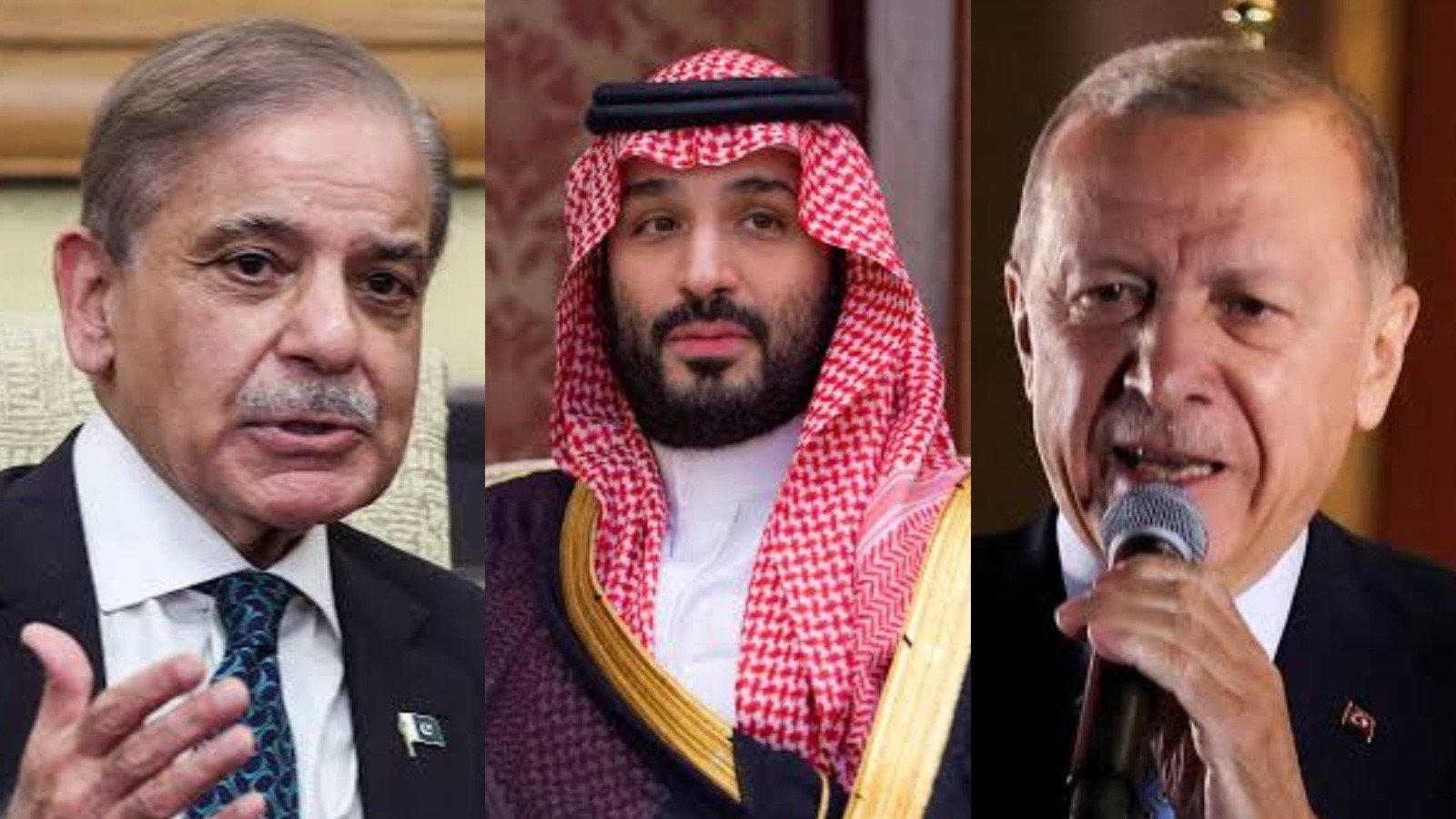
The Jazan incident occurred only around 48 hours after Saudi Crown Prince Mohammed bin Salman, Turkish President Recep Tayyip Erdogan and Pakistani Prime Minister Shehbaz Sharif met in Mecca and signed the joint defence agreement.
Under the agreement, an armed attack against any of the three countries is to be regarded as an attack against all three. The arrangement is intended to strengthen collective deterrence and expand defence cooperation among Saudi Arabia, Pakistan and Turkiye.
The Houthi military spokesman Yahya Saree said the group had targeted the Jazan facility with a drone, describing the operation as retaliation for Saudi drone activity over Yemen’s Saada and Hajjah governorates.
Saudi Arabia’s Energy Ministry subsequently confirmed the fire at the facility and said it had been extinguished.
Why the pact does not necessarily mean automatic military action
The wording of the agreement has generated particular attention because it does not publicly set out detailed operational procedures requiring an immediate military response whenever one member is attacked.
Turkish Foreign Minister Hakan Fidan said the collective-defence clause was technically comparable to NATO’s Article 5. He also explained that the arrangement would include a ministerial committee and a permanent secretariat headquartered in Saudi Arabia.
At the same time, Fidan indicated that an attack would first lead the member states to consult each other over the nature and scale of assistance required. That distinction has become central to debate over the pact’s practical meaning following the Jazan strike.
‘Islamic NATO’ comparisons face an early reality check
The Jerusalem Post analysis said some Israeli commentary has described the agreement as a possible foundation for an “Islamic NATO” or a wider Sunni security alliance. Other descriptions have suggested that Pakistan could provide a nuclear umbrella for Saudi Arabia.
However, the available details point toward a framework focused on collective deterrence, consultation and defence cooperation rather than a publicly defined mechanism for automatic military intervention.
The Jazan episode therefore provides an early opportunity to assess whether the agreement can move beyond political commitments toward coordinated action when one of its members faces an attack.
Saudi-Pakistan defence cooperation already has a precedent
The latest arrangement follows an earlier defence agreement between Saudi Arabia and Pakistan signed in September 2025. Riyadh and Islamabad said at the time that the agreement committed each country to defend the other.
Its practical effectiveness later attracted scrutiny after the United States and Israel launched strikes against Iran on February 28. According to the supplied material, no immediate Pakistani military intervention was reported even after Saudi Arabia invoked the earlier arrangement.
Reuters, citing five Pakistani and Saudi sources, subsequently reported that Pakistan deployed around 8,000 troops, approximately 16 aircraft, mainly JF-17s, two drone squadrons and a Chinese-built HQ-9 air-defence battery.
The same reporting said Pakistani personnel operated the equipment while Saudi Arabia financed the deployment. Two sources characterized Pakistan’s role as primarily advisory and focused on training.
Questions remain over collective defence
According to The Jerusalem Post analysis, the earlier deployment did not prevent subsequent Iranian attacks on Saudi refineries and US aircraft stationed at Prince Sultan Air Base. Two Saudi civilians were killed, while the Pakistani squadron remained in position.
Islamabad also continued hosting talks between Washington and Tehran, according to the analysis. The episode highlighted the difference between maintaining a defence presence and committing forces to direct combat.
The latest Mecca agreement could therefore represent a model built around defence coordination, consultation and the deployment of foreign military capabilities in Saudi Arabia, rather than an unconditional commitment to immediate combat operations.
What the Jazan incident means for the new alliance
The Houthi strike has arrived at an early and politically sensitive stage for the Pakistan-Saudi-Turkiye partnership. While the agreement establishes a collective-defence principle, the response to an individual attack will depend on consultations among the three governments and the circumstances of the incident.
For now, the absence of a publicly announced military response from Pakistan or Turkiye has given critics an early basis to question how quickly the pact can translate its stated deterrence commitment into operational action.
The Jazan incident does not by itself determine the long-term effectiveness of the agreement, but it has exposed the gap between a collective-defence declaration and the concrete military steps that could follow an attack.

Praveen Yadav is the Founder and Editor at The Nation Bulletin. With over 3 years of experience in digital journalism and news reporting, he covers national affairs, governance, and breaking current events with a commitment to factual accuracy and verified reporting.