DUBAI, Aug. 12, 2026 — Fresh attacks on commercial shipping in the Gulf of Oman and the Bab el-Mandeb Strait have deepened concerns over global trade and energy supplies as diplomatic efforts to end the Iran war face a new impasse. Four crew members were killed in a suspected Houthi attack on the cargo vessel Tihamah, while U.S. forces separately struck a Panama-flagged ship near Pakistan.
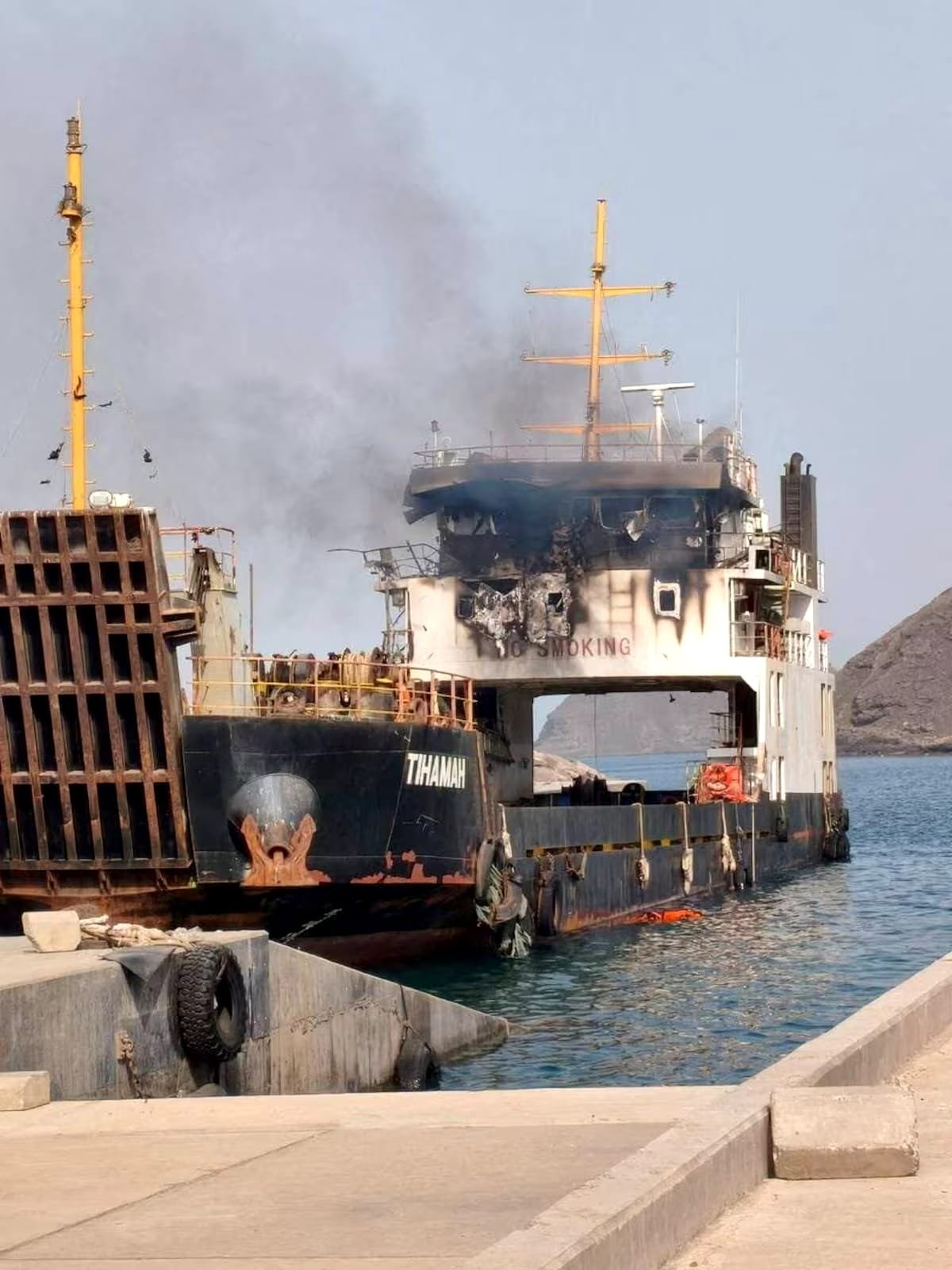
- Four crew members killed: Yemen’s Transport Ministry reported fatalities aboard the Egyptian-owned Tihamah after an attack in the Bab el-Mandeb Strait.
- U.S. strikes cargo ship: A U.S. Navy helicopter fired two missiles to disable the steering gear of a Panama-flagged vessel in the Gulf of Oman.
- Hormuz remains closed: Iranian security official Mohsen Rezaei said the Strait of Hormuz would not reopen unless Washington accepted Tehran’s conditions.
- Oil prices rise: Brent crude settled 1.4% higher at $88.91 a barrel, while U.S. crude gained 1.3% to $83.20.
Four Crew Members Killed in Suspected Houthi Attack
The deadliest of the two reported maritime incidents occurred at the southern entrance to the Red Sea, where the Egyptian-owned Tihamah came under suspected Houthi attack in the Bab el-Mandeb Strait.
Yemen’s Transport Ministry said four crew members were killed. The Yemen Coast Guard also reported that two rescuers from an anti-Houthi military group died while responding to the incident.
If confirmed, the deaths aboard the Tihamah would represent the first reported fatalities involving shipping attacks by Yemen’s Iran-aligned Houthis since the Iran war began.
The Houthi-run Saba news agency said the group had attacked a Saudi vessel carrying military equipment. The report did not identify the ship, and there was no immediate response from Saudi Arabia.
U.S. Forces Disable Ship in Gulf of Oman
Separately, the U.S. military said an MH-60 Navy helicopter fired two Hellfire missiles at a Panama-flagged cargo vessel after it allegedly ignored repeated warnings over a naval blockade covering Iranian ports.
U.S. Central Command said the operation was intended to disable the vessel’s steering system. Maritime sources told Reuters that the ship was struck off Pakistan while moving toward the Gulf of Oman.
The simultaneous incidents have highlighted the growing security risks around two maritime chokepoints that are important for international energy supplies: the Bab el-Mandeb Strait and the Strait of Hormuz.
Iran Says Strait of Hormuz Will Stay Closed
The maritime attacks came as rhetoric between Tehran and Washington intensified. Mohsen Rezaei, Iran’s top security official, said the Strait of Hormuz would remain closed unless the United States accepted Iranian conditions for ending the war.
Those conditions include the release of Iran’s frozen assets and an end to conflicts across the region, including in Lebanon and Gaza. The statement represented one of the strongest indications yet that Tehran does not expect the strategically important waterway to reopen soon.
Before the conflict, the Strait of Hormuz carried about one-fifth of global oil and liquefied natural gas flows. Prolonged disruption therefore continues to pose risks to energy markets and international shipping.
Trump Maintains Pressure on Tehran
U.S. President Donald Trump has continued to demand compensation from Iran for people killed during decades of wars, attacks and protests. His administration has also maintained a hard-line position while repeatedly suggesting that an agreement could still be possible.
Trump said on Monday that negotiations could take time and indicated that Washington could either wait for economic pressure to affect Tehran or take much stronger military action.
On Tuesday, Trump said Iran was “going fine” and claimed the United States had control of the Strait of Hormuz. He also warned that Iran could face severe consequences if it took further action.
Oil Markets React to Growing Shipping Risks
Financial markets responded to the renewed uncertainty as investors reassessed the likelihood of a quick end to the conflict. Global shares retreated while oil prices moved higher.
Brent crude futures settled at $88.91 a barrel after gaining 1.4%. U.S. crude rose 1.3% to $83.20, reflecting concern that continued disruption around major shipping routes could affect energy supplies.
The latest incidents therefore come at a sensitive point for the global economy. With diplomatic positions hardening and maritime attacks continuing, the prospect of restoring normal shipping through the region remains uncertain.
Iran Signals Further Military Escalation
Iranian Revolutionary Guards adviser Mohammad Reza Naqdi also raised the prospect of further escalation, saying the corps was developing the capability to conduct operations on enemy territory when required.
His comments came after weeks of fighting that has already spread beyond Iran’s borders. The conflict has involved attacks affecting U.S. assets and infrastructure in several countries, including Oman, Jordan, Kuwait, Israel, the United Arab Emirates and Saudi Arabia.
The combination of fresh attacks at sea, hardened demands over the Strait of Hormuz and increasingly aggressive rhetoric has further complicated efforts to reach a ceasefire or broader political settlement.

Praveen Yadav is the Founder and Editor at The Nation Bulletin. With over 3 years of experience in digital journalism and news reporting, he covers national affairs, governance, and breaking current events with a commitment to factual accuracy and verified reporting.