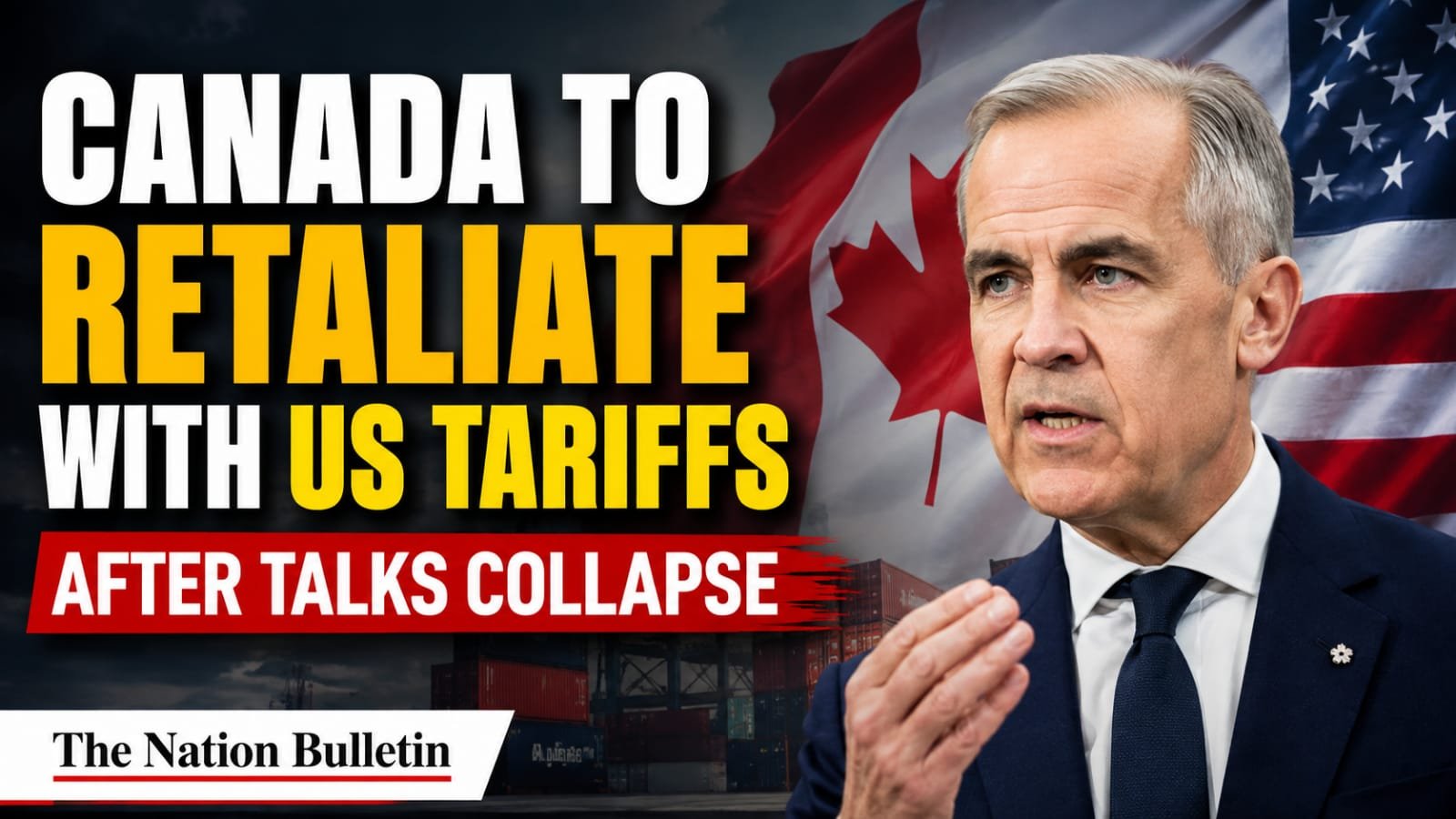
OTTAWA, Canada — Canada will impose retaliatory tariffs on US goods from September 8 after trade negotiations with the United States broke down, Prime Minister Mark Carney said Saturday. The Canadian government is preparing measures it says will respond to Washington’s planned tariffs while protecting Canadian workers and businesses.
- Key Highlights:
- Canada will introduce retaliatory tariffs on US goods from September 8.
- Prime Minister Mark Carney said the measures will match US tariffs dollar for dollar.
- The dispute could affect about $20 billion in Canadian exports, including several major product categories.
- Canada is simultaneously pursuing trade diversification and reduced dependence on the US economy.
Canada prepares response after negotiations fail
Carney said details of Canada’s new tariff measures would be released in the coming days, with the measures scheduled to take effect on the Tuesday after Labor Day. His announcement followed the suspension of trade negotiations with Washington on Friday after Canada objected to last-minute changes in the US position.
The Canadian prime minister said the proposed terms were “unfair” and “uneconomic” and raised concerns about the reliability of reaching an agreement. He also instructed Canada’s negotiators to return to Ottawa, stressing that his government would not accept a trade agreement simply to meet a deadline.
Canada had entered the talks seeking to maintain tariff-free access to the US market for most Canadian businesses, reduce tariffs affecting strategic industries and provide greater certainty for companies and workers. Carney said the negotiations had made progress during recent weeks but had not delivered Canada’s desired outcome.
US tariffs and Canada’s dollar-for-dollar response
The breakdown occurred shortly before the United States was expected to introduce an additional 50% tariff on Canadian goods. Carney said Canada would respond by imposing tariffs on US products on a dollar-for-dollar basis.
The measures are expected to affect approximately $20 billion worth of Canadian exports. Products identified in the supplied information include wine, furniture, dairy products, cement, clothing, fishing equipment and hockey equipment.
Carney also said Ottawa would introduce further measures to assist businesses and workers affected by the dispute. Those measures would build on almost $25 billion in support that Canada says has already been provided over the past 18 months.
Why the US-Canada trade talks broke down
The negotiations had appeared to be approaching an agreement earlier in the week. US President Donald Trump had delayed the original Wednesday tariff deadline while saying that a deal was close to completion. Canada’s Trade Minister Dominic LeBlanc similarly said Thursday that the two sides were “very close.”
However, the final stages of the negotiations produced a sharp disagreement over the terms being proposed by Washington. Carney said changes made at the last minute failed to meet Canada’s objectives and undermined confidence in the potential agreement.
US Trade Representative Jamieson Greer presented a different explanation for the collapse. In a post on X early Saturday, Greer said Canada had declined to complete an agreement based on terms that had been reached earlier in the week.
Greer said Washington had offered Canada substantial tariff reductions covering steel, aluminium, automobiles and lumber. He also accused Ottawa of maintaining retaliatory measures affecting US goods and services.
Canada seeks to reduce dependence on US trade
The latest dispute comes as Carney’s government seeks to reshape Canada’s economic relationships and reduce its reliance on the United States. The prime minister said his government had been working since taking office to strengthen the domestic economy while expanding international partnerships.
Carney said Canada’s existing free trade agreements provide preferential access to 1.5 billion consumers and that Ottawa expects to double that market access by the end of the year. The government is also advancing nearly $500 billion in major infrastructure projects, while exports to markets outside the US are expected to double over the next decade.
Carney also said Canada’s economy was accelerating and was on track for the second-fastest growth rate in the G7 over the next two years. His broader strategy reflects an effort to create alternatives to Canada’s longstanding economic dependence on its southern neighbour.
Trade dispute creates risks for Canadian businesses
Canada remains particularly exposed to disruptions in US trade because of the close integration between the two economies. The latest breakdown therefore creates risks for businesses and workers even as Ottawa seeks to diversify its international trade relationships.
The decision has received backing from some provincial leaders. Ontario Premier Doug Ford supported Carney’s move, while British Columbia Premier David Eby said Canada would continue its fight.
Alberta Premier Danielle Smith, however, urged the federal government to resume negotiations with Washington. Canadian industry has also raised concerns about the uncertainty created by a prolonged trade conflict.
USMCA negotiations face another complication
The collapse of the talks also adds another layer of difficulty to negotiations involving the USMCA, the trade agreement covering the United States, Canada and Mexico.
For Carney, the decision leaves Canada balancing two competing pressures: accepting an agreement he believes does not adequately protect Canadian interests or facing the economic consequences of another round of US tariffs while pursuing a more independent trade strategy.
Carney has argued that Canada cannot simply return to its previous economic relationship with the United States. His government is therefore pursuing broader partnerships in Asia and Europe while trying to strengthen Canada’s position in other international markets.
“We will not allow any nation to determine our future,” Carney said.

Praveen Yadav is the Founder and Editor at The Nation Bulletin. With over 3 years of experience in digital journalism and news reporting, he covers national affairs, governance, and breaking current events with a commitment to factual accuracy and verified reporting.