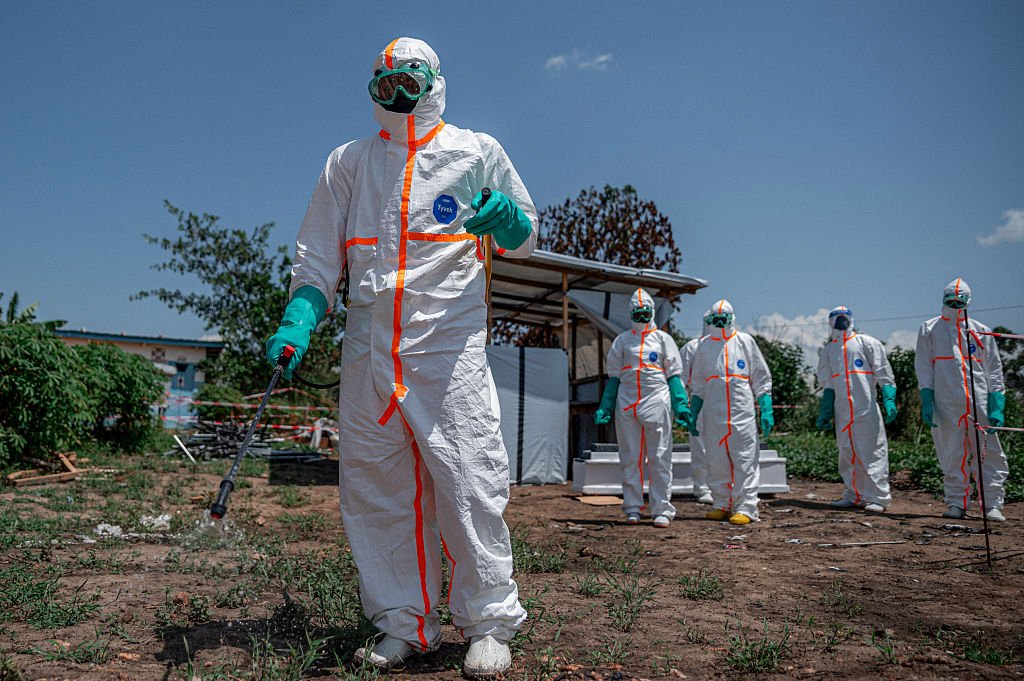
ITURI, Democratic Republic of the Congo — Women and children are bearing a disproportionate share of the impact of an Ebola outbreak in eastern Democratic Republic of the Congo, with nearly one million people displaced in Ituri province and essential health services sharply disrupted, according to United Nations agencies.
- Women and children account for about 80% of people displaced in Ituri.
- Children represent nearly one-third of Ebola-related deaths while accounting for about a quarter of confirmed cases.
- Health service use has fallen by more than 40% in the worst-affected areas.
- More than 2.4 million people have received Ebola prevention messages through community outreach efforts.
Displacement puts women and children at greater risk
The UN Office for the Coordination of Humanitarian Affairs said women and children make up roughly four-fifths of those displaced by the crisis in Ituri. The scale of displacement is putting additional pressure on communities already facing limited access to healthcare.
UNICEF reported that children account for nearly one-third of deaths linked to the outbreak, despite representing about one-quarter of confirmed Ebola cases. The figures highlight the particularly severe consequences of the outbreak for younger people.
Fear of infection is disrupting healthcare
The outbreak has affected healthcare access beyond confirmed Ebola cases. UNICEF said use of health services in the worst-hit parts of Ituri has declined by more than 40% in recent months as concern about infection discourages people from visiting medical facilities.
The decline has created additional risks for patients who need treatment for conditions unrelated to Ebola, as well as for those requiring routine and emergency care.
Pregnant women face growing maternal health risks
The UN Population Fund warned that fear surrounding Ebola, combined with pressure on already overstretched medical facilities, is preventing some pregnant women from seeking necessary care.
According to UN figures cited in the report, maternal deaths in Ituri have almost doubled since the outbreak began. An average of around six women are now dying each week from complications associated with childbirth.
The UN also said Ebola infection during pregnancy is associated with an almost universal risk of fetal loss, adding another serious dimension to the health crisis affecting pregnant women.
Community outreach becomes central to outbreak response
Humanitarian agencies say restoring public confidence is essential to controlling the outbreak. The DRC Ministry of Public Health is working with UNICEF and its partners, the World Health Organisation and the Africa Centres for Disease Control and Prevention on prevention and early-detection efforts.
About 13,000 community workers and other personnel have been deployed to engage with residents, provide information about Ebola prevention and encourage people to seek treatment at an early stage.
The outreach programme has delivered prevention information to more than 2.4 million people. Teams have also completed more than 500,000 household visits aimed at addressing misinformation and encouraging early medical care.
South Sudan strengthens border preparedness
The outbreak has also prompted preparedness measures in neighbouring South Sudan, where authorities and humanitarian partners are working to reduce the risk of cross-border transmission.
No Ebola cases have been confirmed in South Sudan, but the UN said movement of people across the border with the DRC remains a concern. Preparedness activities include disease surveillance, screening at border crossings, training for healthcare workers, medical supply distribution and public awareness campaigns.
More than 135,300 travellers entering South Sudan were screened this month. More than 300 healthcare workers and frontline personnel have also received training covering screening, triage, infection prevention and control, referrals and safe burial procedures.
More than seven tonnes of emergency supplies have been positioned in Yambio, near the border with the DRC, to support a rapid response if required.
Insecurity complicates humanitarian response
Security conditions remain another obstacle for humanitarian agencies operating in South Sudan. OCHA reported 451 incidents between January and July that either obstructed or threatened humanitarian activities across the country.
The Yei-Morobo corridor has presented particular difficulties. Thirty-two humanitarian staff abductions have been recorded there since January last year, underscoring the security risks faced by personnel working in areas regarded as vulnerable to Ebola transmission.
What happens next
Humanitarian agencies will continue focusing on early detection, community engagement, healthcare access and cross-border preparedness. Restoring confidence in health services will be particularly important in Ituri as authorities seek to limit further transmission and prevent the wider outbreak from deepening existing humanitarian pressures.
In South Sudan, surveillance and border screening will remain important while the outbreak continues in neighbouring DRC. The absence of confirmed cases in South Sudan means preparedness efforts are currently focused on preventing and rapidly detecting possible transmission.
Medical disclaimer: This article is for news and informational purposes only and does not constitute medical advice. Health decisions should be made in consultation with qualified healthcare professionals and relevant public health authorities.

Praveen Yadav is the Founder and Editor at The Nation Bulletin. With over 3 years of experience in digital journalism and news reporting, he covers national affairs, governance, and breaking current events with a commitment to factual accuracy and verified reporting.