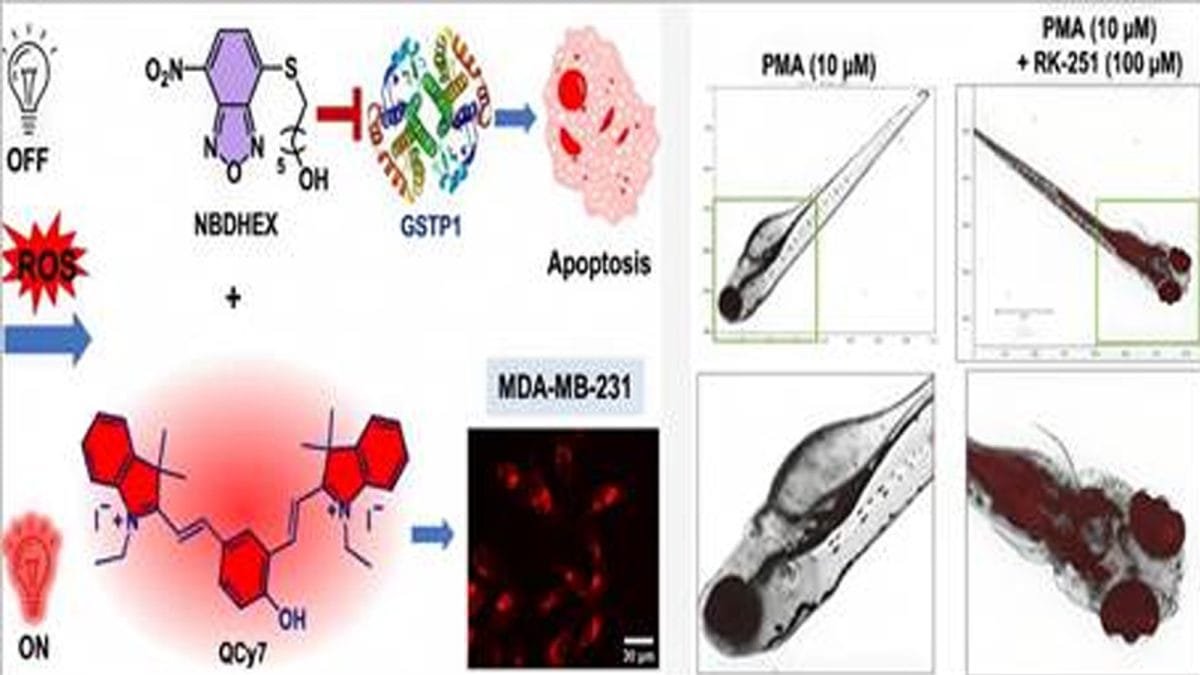
NEW DELHI, India — Indian scientists have developed a new experimental cancer drug designed to activate mainly inside tumour cells while remaining relatively inactive in healthy tissue, offering a potential targeted approach to cancer treatment. The drug, named RK-251, was developed through collaborative research involving the Institute of Advanced Study in Science and Technology and the Indian Institute of Technology-Guwahati.
- RK-251 is designed to become active in cancer cells with elevated reactive oxygen species.
- The drug releases the anticancer compound NBDHEX after activation inside such cells.
- Preclinical experiments showed strong activity against triple-negative breast cancer cells with substantially lower effects on healthy cells.
- The candidate remains at the preclinical stage and has not yet been evaluated in human clinical trials.
Smart Cancer Drug Uses Tumour Cell Conditions
The research was led by Dr. Asis Bala of the Institute of Advanced Study in Science and Technology, an autonomous institute under the Department of Science and Technology, along with Dr. K.P. Bhabak of the Indian Institute of Technology-Guwahati.
The scientists designed RK-251 around a biological difference between cancerous and normal cells. Cancer cells can contain elevated levels of reactive oxygen species, or ROS, which are molecules capable of causing cellular damage.
RK-251 is designed to take advantage of this environment. According to the supplied report, the drug remains relatively inactive in normal tissues but can be activated when it encounters high ROS levels inside cancer cells.
How RK-251 Targets Tumour Cells
Once RK-251 enters a cancer cell with elevated ROS levels, the reactive molecules trigger the drug’s activation and release an anticancer compound called NBDHEX.
NBDHEX targets proteins that are used by many cancer cells to survive and resist treatment. By releasing the compound within the targeted cellular environment, the researchers aim to concentrate the anticancer activity within tumour cells.
This approach differs from conventional chemotherapy, which can affect both cancerous and healthy cells. The researchers’ strategy is intended to reduce unwanted effects on healthy tissue by making activation more dependent on conditions found inside cancer cells.
Preclinical Tests Show Activity Against Breast Cancer Cells
RK-251 produced promising results in preclinical experiments involving triple-negative breast cancer cells, an aggressive form of breast cancer. The candidate showed strong activity against these cancer cells while producing substantially lower effects on healthy cells in the reported experiments.
The researchers also examined the drug in zebrafish embryos, using Danio rerio as a model for their studies. The behavioural assessment found no obvious signs of toxicity in the embryos during the reported experiments.
Fluorescence Helps Track Drug Activation
Another feature of RK-251 is its fluorescence response. The researchers observed the desired fluorescence when the candidate drug was exposed to reactive oxygen species.
This response provides an indication that the compound is being activated in an ROS-rich environment. The finding therefore supports the proposed mechanism behind the drug’s targeted approach.
RK-251 Still Requires Further Research
Despite the encouraging laboratory findings, RK-251 remains an experimental candidate. The results reported so far come from preclinical studies rather than human clinical trials.
Further research will be necessary to determine the drug’s safety, effectiveness and suitability for eventual testing in people. The current findings therefore do not establish that RK-251 is an approved cancer treatment or that it is ready for use in patients.
Research Published in Journal of Medicinal Chemistry
The research has been published in the Journal of Medicinal Chemistry, an American Chemical Society publication. The work adds to research into approaches that attempt to distinguish tumour cells from healthy cells through differences in their biological environment.
For RK-251, the reported preclinical results provide the basis for further investigation into whether ROS-triggered activation can support more selective anticancer treatment.
Frequently Asked Questions
What is RK-251 cancer drug?
RK-251 is an experimental drug developed by Indian researchers. It is designed to activate primarily in cancer cells with elevated reactive oxygen species and release the anticancer compound NBDHEX.
Can RK-251 be used to treat cancer patients now?
No. RK-251 is still at the preclinical research stage. Further studies are required before its safety and effectiveness can be assessed in human clinical trials.
Medical disclaimer: This article is for general informational purposes and does not constitute medical advice, diagnosis or treatment guidance. RK-251 is an experimental preclinical candidate and should not be considered an approved cancer treatment. Patients should consult qualified healthcare professionals for medical advice and treatment decisions.

Praveen Yadav is the Founder and Editor at The Nation Bulletin. With over 3 years of experience in digital journalism and news reporting, he covers national affairs, governance, and breaking current events with a commitment to factual accuracy and verified reporting.