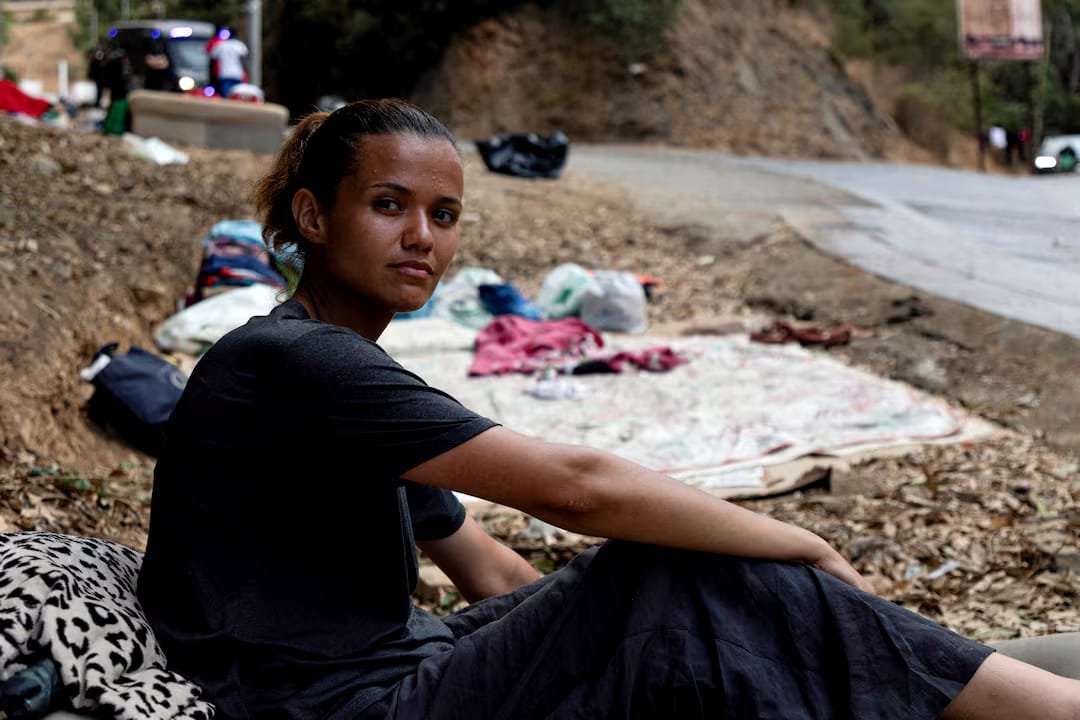
CEUTA, Spain — Women who crossed into Spain’s North African enclave of Ceuta during a mass migration surge say overcrowded accommodation and sleeping outdoors have left them facing fear and reported sexual harassment while waiting for authorities to process their cases.
- Overcrowding: A government-run reception facility is sheltering about 700 people, roughly 200 above its stated capacity.
- Women at risk: Migrant women camping outside the centre say they face repeated harassment and fear, particularly at night.
- Reported cases: Ceuta court authorities confirmed three sexual-assault cases involving migrant women allegedly committed by Moroccan migrants who arrived during the mass influx.
- Authorities respond: Spain says additional temporary reception capacity is being created, while charities are calling for safe accommodation and specialist support.
Women Camp Outside Overcrowded Reception Centre
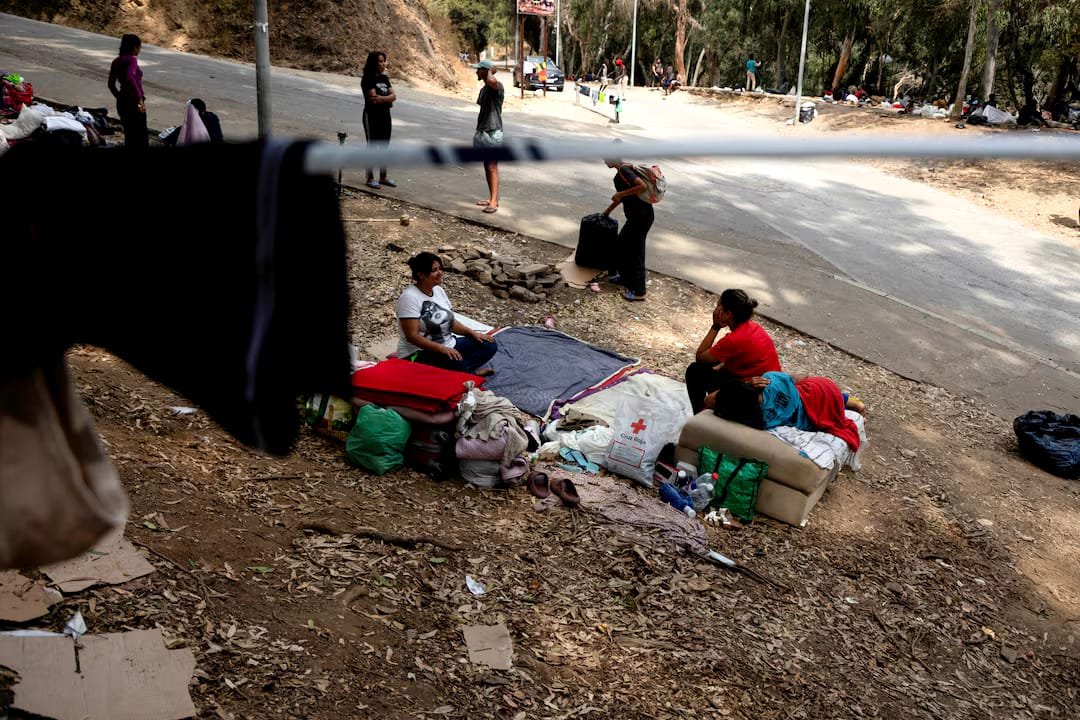
More than a dozen migrant women have established a makeshift camp near the government-run reception centre by El Trampolin beach. They are sleeping outdoors alongside hundreds of other migrants from Morocco, sub-Saharan Africa and South Asia.
Local authorities say the reception facility is currently accommodating about 700 people, around 200 more than its intended capacity. Limited space has placed additional pressure on services responsible for receiving and registering migrants.
Reuters spoke to three women staying at the outdoor camp who described an atmosphere of fear and repeated harassment by some men living nearby.
Women Describe Fear and Lack of Privacy
Wafae Atid, a 28-year-old migrant from Morocco, told Reuters that women had created a temporary camp using cardboard boxes, inflatable mattresses and blankets near a police vehicle stationed at the entrance of the reception facility.
The women said they had chosen the location because they felt safer close to police presence. Atid said some women were being followed when they went to use toilet facilities, adding to their fear at night.
She said the women were from different nationalities and that the situation had made sleeping difficult. According to her account, she often rested during daylight hours because she was afraid at night.
The women also said they did not have access to separate shower facilities, highlighting the lack of privacy in the temporary camp.
Police Union Reports 15 Sexual Assault Cases
Spain’s largest police union, the SUP, said 15 sexual assaults of varying severity had been reported in Ceuta since July 30. The union said most of the alleged victims were underage.
According to the SUP, most of the alleged incidents occurred around beaches and wooded areas where migrants were concentrated. The union also said some cases could be difficult to prosecute because victims had provided limited information about the alleged perpetrators.
The Spanish Interior Ministry and police did not confirm the figure of 15 cases or provide further details to Reuters.
Ceuta Courts Confirm Three Cases
Ceuta’s court authorities separately confirmed three sexual-assault cases involving migrant women allegedly committed by Moroccan migrants who entered the enclave during the mass influx.
Two of the cases involved minors. In one case, the court said a minor was allegedly subjected to sexual assault and forced to sell drugs. Another involved allegations of inappropriate sexual touching.
The accused men in those two cases were placed in pretrial detention. In a third case, an adult woman alleged that she had been sexually assaulted, and a judge ordered the alleged assailant’s deportation.
Authorities also ordered the deportation of another man accused of breaking into a private home and entering the bedroom of a local woman.
Ceuta Migration Crisis Puts Services Under Pressure
The latest reports come after a major influx from Morocco into Ceuta. Authorities say between 5,000 and 8,000 people remain in the enclave more than two weeks after the mass crossing.
The vast majority of those who crossed were young men, and many have since returned to Morocco. However, women and children also made the journey and remain among those requiring accommodation and assistance.
Police and social services have been working to expand limited reception facilities. As of Tuesday, authorities had registered 2,168 children, while 500 adult asylum applications had been recorded as of the previous week.
Health Minister Says Safe Accommodation Is Urgent
Spain’s Health Minister Monica Garcia said medical services had treated five women for sexual violence. She identified providing migrants with secure accommodation as the most urgent healthcare challenge.
“The best way to protect women and children is to ensure they are in safe spaces,”
Garcia’s comments came as Spanish authorities worked to increase temporary accommodation capacity in the enclave.
Migration and Social Security Minister Elma Saiz said on Monday that authorities and the Red Cross were distributing 4,000 meals each day along with women’s hygiene kits.
Temporary reception centres providing another 1,500 places were also being established, according to Saiz.
Charities Call for Specialist Protection
Human rights and humanitarian organisations working in Ceuta or specialising in sexual violence have warned that migrant women and girls are particularly vulnerable in overcrowded conditions.
Save the Children, UNICEF and Amnesty International have called for urgent measures including safe accommodation and specialist support for vulnerable migrants.
Lucila Rodriguez-Alarcon, director-general of the PorCausa Foundation, said overcrowded environments involving large numbers of displaced people can increase the risk of sexual violence. She called for separate toilet and shower facilities for women and men and stronger safety measures similar to those used in refugee camps.
Women Say They Need Safer Living Conditions
Dikra Tetouan, a 20-year-old migrant who crossed into Ceuta with her 17-year-old sister Aya, said women at the makeshift camp faced repeated harassment.
She said the women tried to draw attention to themselves by shouting when they felt threatened, hoping other people would gather around them.
Tetouan also said police had told the women that there was little they could do. Spain’s Interior Ministry declined to comment on that account, while requests for comment to Spain’s national police and Civil Guard were not immediately answered.
Previous Sexual Violence Figures in Ceuta
Spanish Interior Ministry figures for 2024, the latest full year cited in the supplied report, recorded 42 sexual assaults and five rapes in Ceuta.
Ceuta is a small Spanish enclave on the North African coast with a population of about 84,000, according to the supplied Reuters report.
The figures provide context for the current allegations, although authorities have not confirmed that all cases reported by the police union are directly connected to the recent migration influx.
Frequently Asked Questions
How many migrants remain in Ceuta after the recent crossing?
Authorities estimate that between 5,000 and 8,000 people remain in Ceuta following the mass border crossing. Many of those who initially entered have returned to Morocco.
What measures are being taken to protect vulnerable migrant women?
Authorities and humanitarian organisations are working to expand accommodation and support services. Spain has announced additional temporary reception places, while organisations have called for safe housing, separate facilities and specialist support for women and children.
What Happens Next?
The immediate challenge for Ceuta authorities is to expand safe accommodation while processing migrants who remain in the enclave. The reported allegations of sexual violence have added another layer of urgency to the pressure on already overcrowded reception services.
Humanitarian groups are calling for stronger protection measures, while Spanish authorities are increasing temporary capacity and support. The reported cases remain subject to the relevant police and judicial processes, and allegations should not be treated as established facts beyond what authorities have confirmed.

Praveen Yadav is the Founder and Editor at The Nation Bulletin. With over 3 years of experience in digital journalism and news reporting, he covers national affairs, governance, and breaking current events with a commitment to factual accuracy and verified reporting.