
WASHINGTON, United States — The US debt has crossed $40 trillion for the first time, underscoring the growing pressure on Washington’s finances as rising interest costs, expanding social-safety-net spending and tax policy continue to widen the gap between federal revenues and expenditures.
The Treasury Department’s latest daily debt statement showed total public debt outstanding at $40.047 trillion on Tuesday. That figure includes $32.266 trillion in Treasury securities held by the public and $7.782 trillion in intragovernmental holdings.
Key Highlights
- US debt reached $40.047 trillion, its highest level ever.
- The debt has more than doubled since January 2017.
- Debt increased by $11.6 trillion across Donald Trump’s two terms so far and by $8.4 trillion during Joe Biden’s presidency.
- Interest expenses have become one of the largest items in the federal budget.
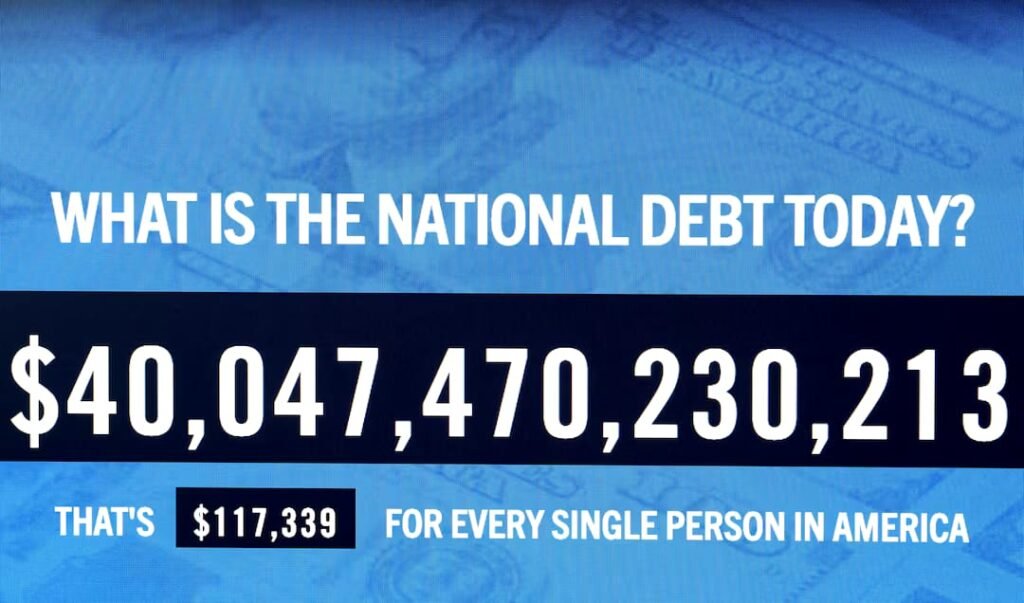
US debt more than doubles in less than a decade
The $40 trillion milestone represents a dramatic increase from the $19.95 trillion recorded when Trump first entered the White House in January 2017. A substantial portion of the increase came during the COVID-19 pandemic, when the government borrowed heavily to finance emergency responses and economic support.
Debt growth continued after the pandemic. Public debt rose by $7.8 trillion during Trump’s first term and has increased another $3.8 trillion since he returned to office in January 2025. Across his two terms, the increase has reached $11.6 trillion.
During Biden’s four-year presidency, public debt increased by $8.4 trillion. Pandemic recovery measures were followed by major spending on infrastructure, clean-energy subsidies and other federal priorities.
Interest costs add pressure to federal finances
The expanding debt burden is becoming increasingly expensive for the federal government. The United States spends about $7 trillion annually, with roughly 60% allocated to mandatory programs such as Social Security, Medicare, Medicaid and veterans’ care.
Interest payments on federal borrowing now account for about $1.1 trillion. During fiscal 2025, debt-service costs exceeded Pentagon spending for the first time. In the first 10 months of fiscal 2026, interest expenses had also surpassed Medicare outlays, becoming the second-largest federal budget line after Social Security.
July brought another warning sign. The federal government recorded a $432 billion deficit, its fourth-largest monthly shortfall on record. The deficit for the first 10 months of fiscal 2026 had already exceeded the full-year gap recorded in fiscal 2025, with two months remaining in the fiscal year.
Bond market faces growing pressure
Rising borrowing needs are also affecting the Treasury market. Foreign investors, who hold nearly one-third of Treasury securities, have reduced their demand over the past year.
Long-term Treasury yields have climbed sharply as investors demand greater compensation amid heavy government borrowing. Higher long-term yields can feed into borrowing costs for households and businesses, including mortgages, auto loans and commercial credit.
Treasury Secretary Scott Bessent responded by announcing that the government would double the size of buybacks for 10- to 30-year Treasury securities to at least $4 billion per operation.
Trump, meanwhile, dismissed concerns about bond-market volatility and again called for lower interest rates. He argued that a strong U.S. economy should be accompanied by lower borrowing costs.
Policy choices remain at the center of the debt debate
Budget watchdogs have warned that the fiscal trajectory could become increasingly difficult to manage without changes to taxation or spending. The combination of weaker revenue growth, expanding entitlement costs and rising interest payments is placing additional strain on federal finances.
Trump’s One Big Beautiful Bill Act is also projected by the Congressional Budget Office to add another $4.7 trillion to federal debt. At the same time, efforts to reduce government spending have largely focused on discretionary programs, which represent a smaller share of total federal expenditure.
What happens next for the US debt?
The $40 trillion milestone puts renewed attention on whether lawmakers can address the structural imbalance between federal spending and revenue. The aging population is adding pressure to Social Security and Medicare, while higher borrowing costs make future deficits more expensive to finance.
Why has US debt risen so quickly?
The increase reflects pandemic-era borrowing, subsequent federal spending priorities, tax-and-spending imbalances and the growing cost of servicing existing debt.
Why do higher Treasury yields matter to Americans?
Long-term Treasury yields influence broader borrowing costs. Higher yields can therefore contribute to more expensive mortgages, car loans and commercial borrowing.
The $40 trillion threshold marks another major turning point in the long-running U.S. fiscal debate, with interest expenses and mandatory spending increasingly shaping the government’s financial outlook.

Praveen Yadav is the Founder and Editor at The Nation Bulletin. With over 3 years of experience in digital journalism and news reporting, he covers national affairs, governance, and breaking current events with a commitment to factual accuracy and verified reporting.