WASHINGTON, United States — The Donald Trump administration is moving to strengthen the United States’ domestic supply of critical minerals with $500 million in federal grants for seven companies developing lithium, cobalt, battery recycling and other materials projects, according to a U.S. Department of Energy funding document.
The latest awards are part of a broader administration effort to expand American mining and mineral processing capacity, reduce dependence on China and establish a more secure supply chain for materials considered important to the economy and national security.
Key Highlights
- The U.S. Department of Energy is awarding $500 million to seven companies working on critical minerals and battery-related projects.
- Lilac Solutions, Jervois and Nth Cycle will each receive $100 million in federal funding.
- The remaining four projects include battery-material processing, electrolyte chemicals and silicon-based battery anodes.
- The grants come as the Trump administration seeks to make the U.S. a global minerals leader and reduce reliance on China.
Trump administration targets domestic minerals supply
The funding represents the latest federal push to expand the United States’ ability to extract, process and recycle minerals needed for modern batteries, electronics and defense equipment.
President Donald Trump has recently outlined an ambition to make the United States the world’s “minerals superpower” while reducing dependence on China, which currently dominates significant portions of global mineral supply chains.
The administration has used a combination of loans, grants and government investments to encourage companies to establish or expand domestic mining and processing operations.
Lilac Solutions gets $100 million for Utah lithium facility
Lilac Solutions is receiving $100 million to develop a direct lithium extraction processing facility at Utah’s Great Salt Lake. The company expects the facility to become operational by 2028.
The planned project is expected to produce 5,000 metric tons of lithium per year. Lilac Solutions is backed by BMW, and Energy Department Assistant Secretary Audrey Robertson said department scientists believe the project could provide the United States with a beneficial domestic source of lithium carbonate.
The latest award follows earlier federal support for lithium projects involving ioneer, Standard Lithium and Lithium Americas.
Jervois to build US cobalt refinery
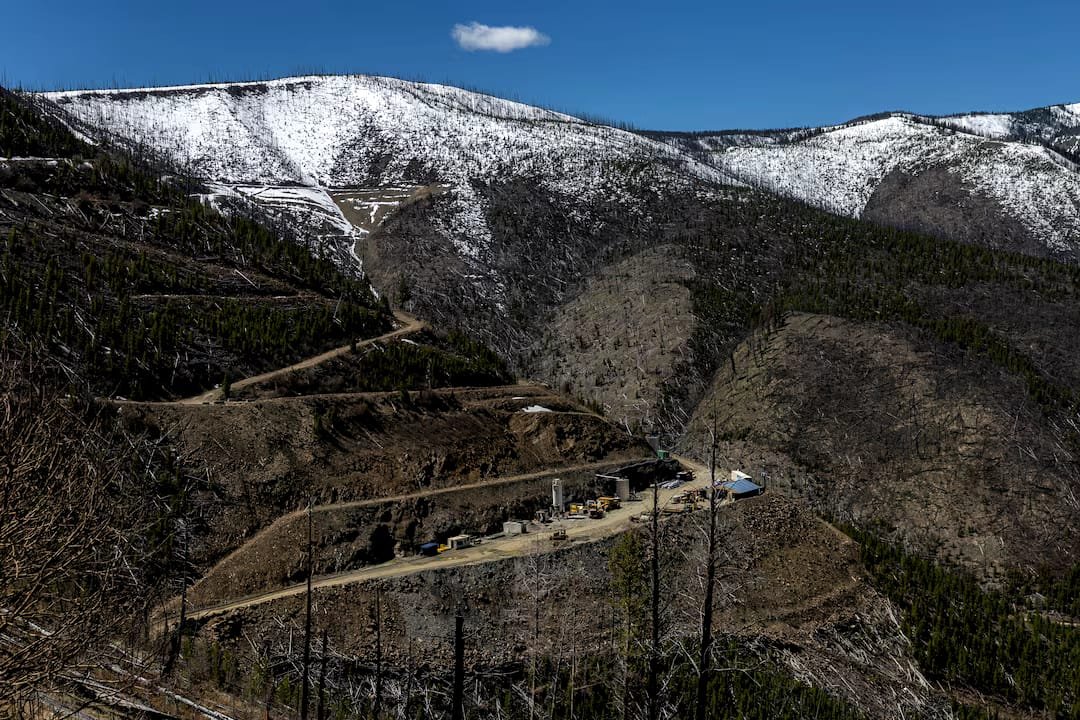
Jervois will also receive $100 million to develop a cobalt refinery in Idaho. The company controls a major cobalt deposit in the state, and the proposed facility would become the only refinery for the metal in the United States.
Cobalt is used in batteries and electronics as well as in a range of weapons, making domestic processing capacity strategically important for both industrial and national-security purposes.
Jervois was taken private last year following a pre-packaged bankruptcy that was attributed to weak market prices. Despite those challenges, the Energy Department said cobalt remains important across multiple sectors. Robertson also said the facility could eventually have the ability to process deep-sea nodules.
Nth Cycle receives $100 million for battery recycling
Battery recycler Nth Cycle, which is backed by Trafigura, will receive another $100 million to establish a facility capable of processing battery-metal scrap known as black mass.
Black mass contains recoverable minerals from used batteries and can serve as a feedstock for recycling and further processing. The administration earlier this month blocked exports of black mass, although Robertson said the new grant was not tied to that decision.
She said the United States needs to develop the infrastructure required to recycle and process batteries and black mass domestically.
Four other battery projects receive federal support
The remaining $200 million will be distributed among four companies developing different parts of the battery-material supply chain.
- Princeton NuEnergy: Receives $50 million to reprocess cathode battery components.
- Arcanum Ventures: Receives $50 million for producing chemicals used in battery electrolytes.
- Coreshell Technologies: Receives $50 million to develop silicon-based battery anodes as an alternative to traditional graphite anodes.
The supplied funding information identifies these three $50 million awards, while the overall program covers seven companies. The three named recipients above account for $150 million of the remaining allocation alongside the three $100 million awards.
Energy Department prioritises battery ecosystem
The grants were awarded during the third round of funding under the Energy Department’s Battery Materials Processing and Battery Manufacturing programs. The department received hundreds of applications before selecting the projects it considered most promising.
Robertson said the selected projects offered the highest potential return for Americans in areas of the battery ecosystem where additional capacity is most needed.
The funding reflects a broader effort to develop a domestic chain that extends beyond mining. Processing, refining and recycling are critical because simply extracting minerals inside the United States does not guarantee that the country can independently supply manufacturers with usable battery and industrial materials.
Mineral security gains urgency amid geopolitical tensions
The administration’s push has gained additional urgency amid the war with Iran, which has highlighted the potential pressure that a major conflict can place on U.S. weapons inventories and the industrial base required to replenish them.
Critical minerals such as lithium and

Praveen Yadav is the Founder and Editor at The Nation Bulletin. With over 3 years of experience in digital journalism and news reporting, he covers national affairs, governance, and breaking current events with a commitment to factual accuracy and verified reporting.