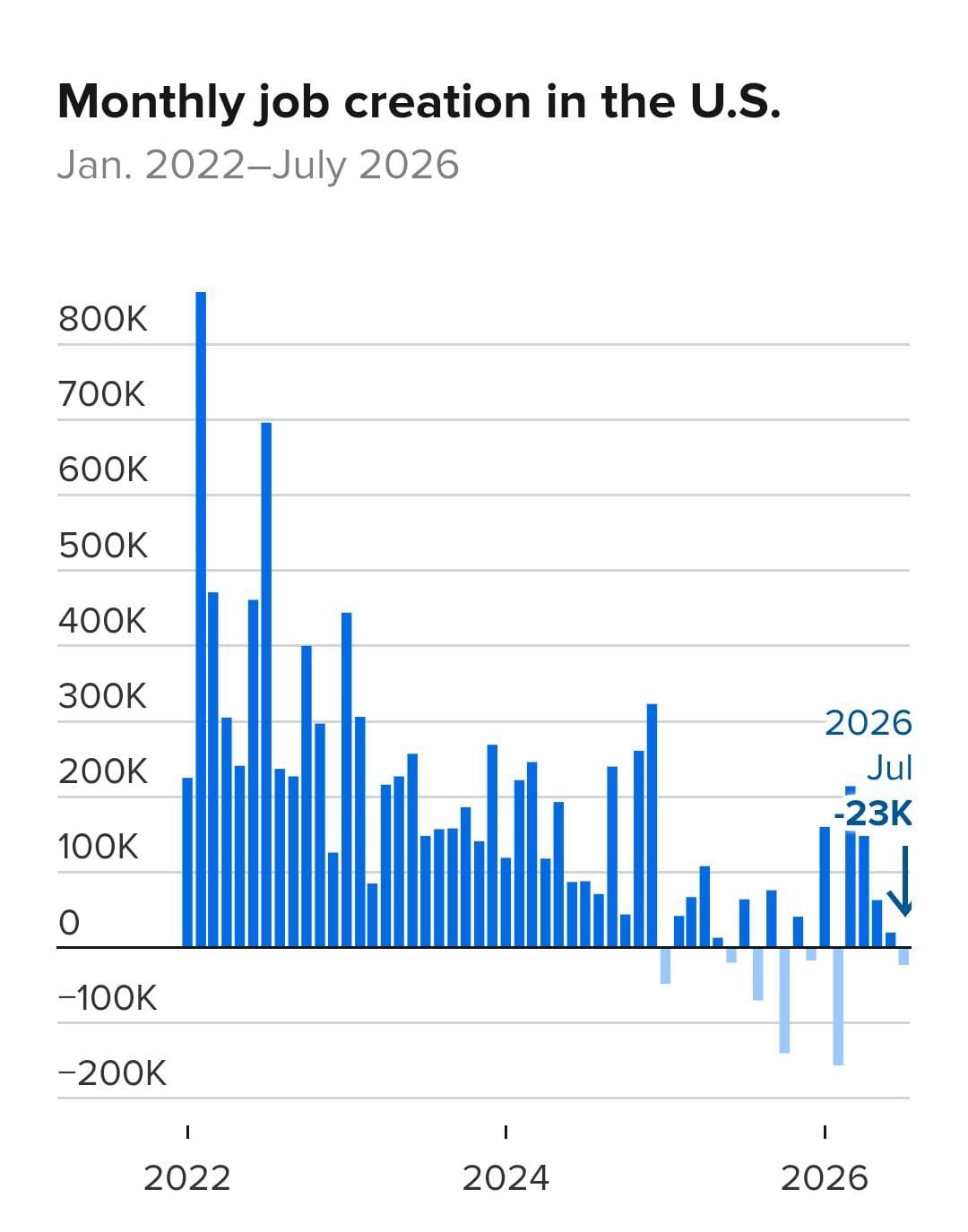
The United States labour market unexpectedly weakened in July as employers cut jobs instead of adding them, signalling a slowdown in hiring at a time when policymakers continue to assess the direction of interest rates and broader economic conditions. According to the latest employment report released by the US Bureau of Labor Statistics (BLS) on Friday, nonfarm payrolls declined by 23,000 jobs during the month, significantly missing market expectations of an increase.
Economists surveyed by Dow Jones had projected that the economy would add around 83,000 jobs in July. Instead, the latest figures revealed a contraction in employment, while substantial downward revisions to previous months’ payroll data painted an even weaker picture of the US labour market than initially reported.
Despite the decline in payrolls, the unemployment rate edged down to 4.1%. However, the improvement was accompanied by another fall in labour force participation, indicating that fewer Americans were actively looking for work. The labour force participation rate slipped to 61.4%, its lowest level in more than five years.
July Employment Report Delivers Unexpected Shock
The July jobs report marked a sharp reversal from expectations and added to concerns that hiring momentum in the world’s largest economy is slowing more rapidly than anticipated. The decline of 23,000 jobs followed a downwardly revised figure of 20,000 jobs added in June, replacing earlier estimates that had suggested stronger employment growth.
The Bureau of Labor Statistics also revised employment data for May, reducing payroll growth to 63,000, a downward adjustment of 66,000 jobs. Combined revisions for May and June removed 103,000 jobs from previously reported totals, reinforcing signs that the labour market has been weaker than earlier estimates indicated.
Following the revisions, the average monthly job creation over the past 12 months dropped to just 34,000 jobs, highlighting a significant moderation in hiring activity compared with previous years.
Key Highlights from the July US Jobs Report
| Indicator | July 2026 |
|---|---|
| Nonfarm Payrolls | -23,000 jobs |
| Market Expectation | +83,000 jobs |
| Unemployment Rate | 4.1% |
| Labour Force Participation Rate | 61.4% |
| Revised June Payrolls | 20,000 jobs |
| Revised May Payrolls | 63,000 jobs |
| Combined Downward Revision (May & June) | 103,000 jobs |
| 12-Month Average Monthly Job Growth | 34,000 jobs |
Labour Market Shows Signs of Cooling
While the lower unemployment rate may appear encouraging at first glance, the accompanying decline in labour force participation suggests that the improvement was partly driven by fewer people remaining in or entering the workforce rather than stronger hiring. Economists often view falling participation alongside weak payroll growth as a sign that labour market conditions may be softening.
The latest employment figures arrive at a time when financial markets and policymakers are closely monitoring the strength of the US economy. Employment data has become one of the key indicators influencing expectations for future monetary policy decisions, particularly as inflation remains above the Federal Reserve’s long-term target while economic growth continues to face uncertainty.
Education and Retail Lead July Job Losses
The decline in overall employment was driven by weakness across several sectors, with local government education recording the largest monthly fall. According to the employment report, payrolls in local government education dropped by 50,000 jobs, making it the biggest contributor to the overall decline in July.
The retail sector also experienced a significant setback, shedding 19,000 jobs during the month. Financial activities followed with a decline of 14,000 jobs, reflecting softer hiring across another key segment of the economy.
Healthcare, which has consistently been among the strongest sources of employment growth in recent months, remained in positive territory but expanded at a slower pace. The sector added 22,000 jobs in July, well below its 12-month average monthly increase of 36,000 jobs.
Sector-wise Employment Performance
| Sector | July 2026 Employment Change |
|---|---|
| Local Government Education | -50,000 |
| Retail Trade | -19,000 |
| Financial Activities | -14,000 |
| Healthcare | +22,000 |
Wage Growth Remains Muted
Alongside weaker hiring, wage growth also showed little momentum. Average hourly earnings increased by just 2 cents during July, indicating limited improvement in workers’ pay despite continued inflationary pressures.
On an annual basis, average hourly earnings rose 3.2%, below the 3.5% increase that economists had expected. The slower pace of wage growth adds another indication that labour market conditions are becoming less robust than earlier in the year.
| Wage Indicator | July 2026 |
|---|---|
| Monthly Increase in Average Hourly Earnings | 2 cents |
| Annual Wage Growth | 3.2% |
| Market Expectation | 3.5% |
Federal Reserve Rate Outlook Shifts After Jobs Data
The employment report was released at a time when Federal Reserve officials remain divided over the future path of interest rates. Inflation continues to stay above the central bank’s 2% target, while labour market conditions have become increasingly mixed, creating a complex backdrop for monetary policy decisions.
According to the report, several Federal Reserve officials have recently indicated support for raising interest rates as early as September if inflation fails to ease. However, the Federal Open Market Committee voted 9-3 at its most recent meeting to leave the benchmark interest rate unchanged.
The weaker-than-expected employment figures prompted investors to reassess expectations for future policy moves. Following the release of the July jobs report, market pricing reflected a lower probability of a September interest rate increase.
Financial Markets React to Weak Employment Report
Traders adjusted their expectations after the release of the labour market data. According to the CME Group’s FedWatch gauge of futures prices, the probability of a September rate hike fell to 44%, while expectations for an October increase stood at 58.3%.
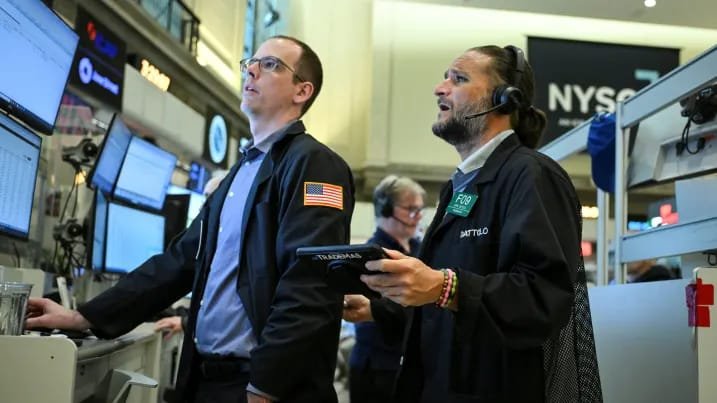
Financial markets responded positively to the prospect of a less aggressive monetary policy stance. Futures linked to the Dow Jones Industrial Average climbed by nearly 200 points following the report, while US Treasury yields fell sharply after trading near unchanged levels earlier in the session.
The market reaction reflected growing expectations that softer labour market conditions could influence the Federal Reserve’s policy decisions in the coming months, even as inflation remains above its long-term target.
Hiring Trends Show a More Uneven Labour Market
Beyond the headline payroll figures, the broader employment picture points to a labour market that is becoming increasingly uneven. According to the Associated Press, hiring had shown signs of recovering in 2026 after a subdued 2025, but recent data indicates that momentum has weakened amid higher energy costs linked to the conflict in the Persian Gulf and changing business conditions.
While overall hiring has slowed, the labour market has not weakened uniformly across all sectors. Some employers continue to face difficulty filling vacancies, while others have reduced recruitment as technology enables businesses to maintain or increase productivity without expanding their workforce.
This divergence has prompted economists to describe current conditions as a “no hire, no fire” environment, where layoffs remain relatively limited but new hiring opportunities have also become harder to find.
Job Security Remains Strong, but Finding Work Has Become More Difficult
Although July’s payroll data showed a decline in employment, layoffs remain historically low by longer-term standards. Many employers have been cautious about reducing staff after experiencing labour shortages in the years following the COVID-19 pandemic, preferring to retain existing employees rather than risk future recruitment challenges.
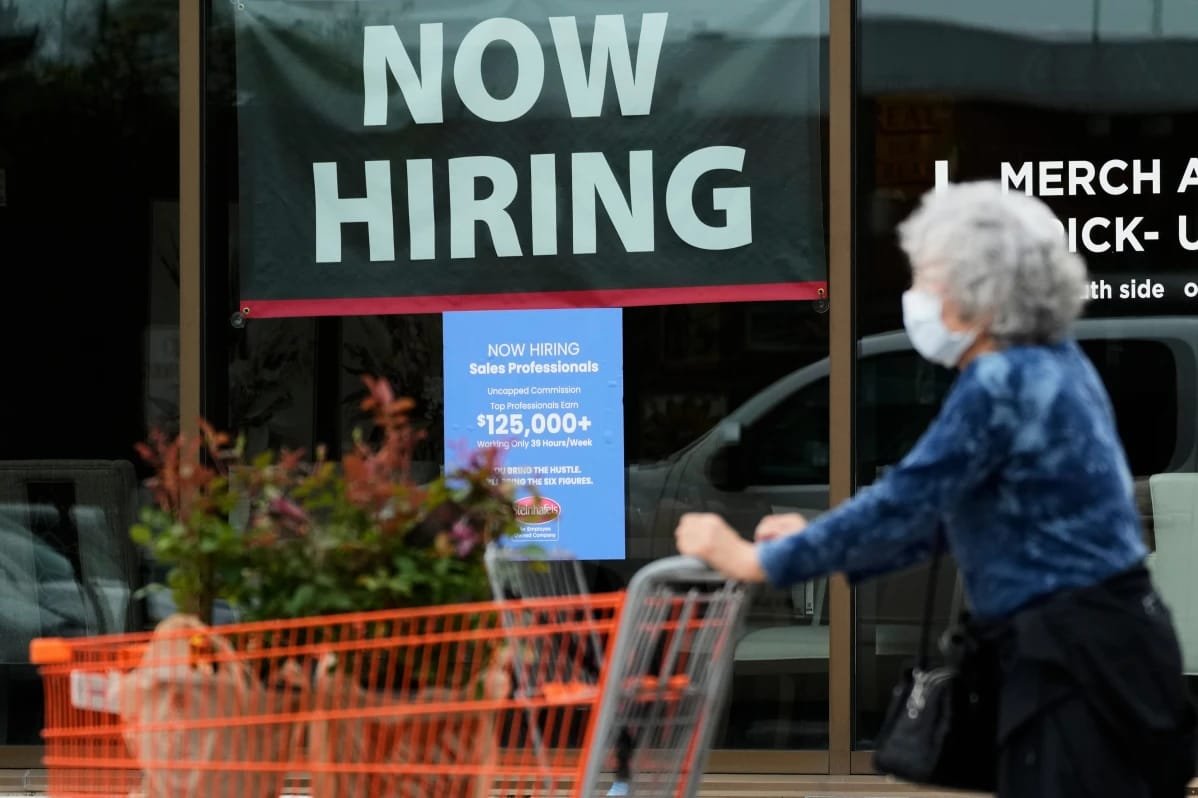
However, the experience has been different for people seeking new employment. According to the AP report, Americans who have lost their jobs or are entering the workforce for the first time are facing a more competitive hiring environment, with a growing share of unemployed workers remaining out of work for extended periods.
Labour market data cited in the report showed that in May, 27.5% of unemployed Americans had been without work for six months, the highest proportion in four and a half years. Although the share eased slightly in June, it remained elevated compared with recent years.
Technology and Workforce Changes Influence Hiring Decisions
Economists quoted by the Associated Press said businesses are increasingly balancing labour shortages with productivity gains driven by technology. Some companies continue to offer higher wages to attract experienced workers where vacancies remain difficult to fill, while others have reduced hiring needs by improving operational efficiency.
Sal Guatieri, Senior Economist at BMO Capital Markets, said fewer people are available to hire because of demographic and labour supply changes. He also noted that companies are producing more with their existing workforce, reducing the need for additional recruitment.
The report also pointed to broader structural factors affecting employment, including President Donald Trump’s immigration crackdown and the continued retirement of baby boomers, both of which have reduced the number of people entering or remaining in the labour force.
Labour Force Data Continues to Raise Questions
Economists are also closely watching changes in labour force participation after unusual movements in recent months. Earlier data showed a significant decline in the number of people participating in the workforce, a trend that can lower the unemployment rate even when hiring weakens.
The AP report noted that an unexpectedly large number of people aged 25 to 34 left the labour force in June. If that decline reflected a temporary statistical fluctuation and participation rebounds in the coming months, the unemployment rate could face renewed upward pressure as more people begin actively looking for work again.
Researchers from the Federal Reserve Bank of San Francisco also observed that finding a new job has become more challenging over the past two years. Their analysis suggested that workers who have historically found employment relatively quickly, including those in their prime working years and college graduates, are now taking longer to secure new opportunities.
Federal Reserve Faces Fresh Challenge as Labour Market Softens
The July employment report adds another layer of complexity for the Federal Reserve as it weighs future monetary policy decisions. While inflation remains above the central bank’s long-term 2% target, the latest labour market data suggests that hiring momentum is weakening and wage growth has moderated.
The combination of declining payrolls, slower wage gains, lower labour force participation and substantial downward revisions to previous employment data is likely to remain a key focus for policymakers ahead of upcoming Federal Reserve meetings. Market participants will also continue to monitor inflation, consumer spending and future employment reports for signs of whether the slowdown is temporary or indicative of a broader cooling in economic activity.
July Jobs Report at a Glance
| Indicator | Latest Reading |
|---|---|
| Nonfarm Payrolls | -23,000 jobs |
| Expected Payroll Growth | +83,000 jobs |
| Unemployment Rate | 4.1% |
| Labour Force Participation Rate | 61.4% |
| Average Hourly Earnings Growth | 3.2% (Year-over-Year) |
| Healthcare Employment | +22,000 jobs |
| Largest Sector Decline | Local Government Education (-50,000) |
| Combined Payroll Revisions (May & June) | -103,000 jobs |
What Comes Next?
Investors, businesses and policymakers will now look ahead to upcoming economic indicators to determine whether July’s weak employment figures represent a temporary setback or the beginning of a broader slowdown in the US labour market. Future inflation readings, additional employment reports and Federal Reserve policy decisions are expected to play a significant role in shaping market expectations over the coming months.
For now, the latest figures indicate that the labour market is losing momentum after earlier signs of improvement in 2026. While unemployment remains relatively low, slower hiring, softer wage growth and declining workforce participation suggest that the employment landscape has become more challenging for job seekers.
Key Takeaways
- US nonfarm payrolls unexpectedly declined by 23,000 in July, against expectations of an increase of 83,000 jobs.
- The unemployment rate edged down to 4.1%, while labour force participation fell to 61.4%, the lowest level in more than five years.
- Payroll figures for May and June were revised downward by a combined 103,000 jobs.
- Local government education, retail trade and financial activities recorded the biggest employment declines.
- Healthcare remained one of the few sectors to add jobs, though hiring slowed compared with its recent average.
- Average hourly earnings increased by only 2 cents, with annual wage growth easing to 3.2%.
- Following the report, expectations of a September Federal Reserve rate hike weakened, while US stock futures rose and Treasury yields declined.
Sources: CNBC, Associated Press (AP)

Praveen Yadav is the Founder and Editor at The Nation Bulletin. With over 3 years of experience in digital journalism and news reporting, he covers national affairs, governance, and breaking current events with a commitment to factual accuracy and verified reporting.