NEW YORK, United States — NFL joint practices have increasingly become a flashpoint ahead of the preseason, with fights and confrontations disrupting sessions that coaches intended to use for valuable competitive repetitions. The latest incidents have involved several teams, including the New York Giants, Miami Dolphins, Dallas Cowboys, New Orleans Saints, San Francisco 49ers and Tennessee Titans.
- Jameis Winston was involved in a fight during the Giants-Dolphins joint practice on Thursday.
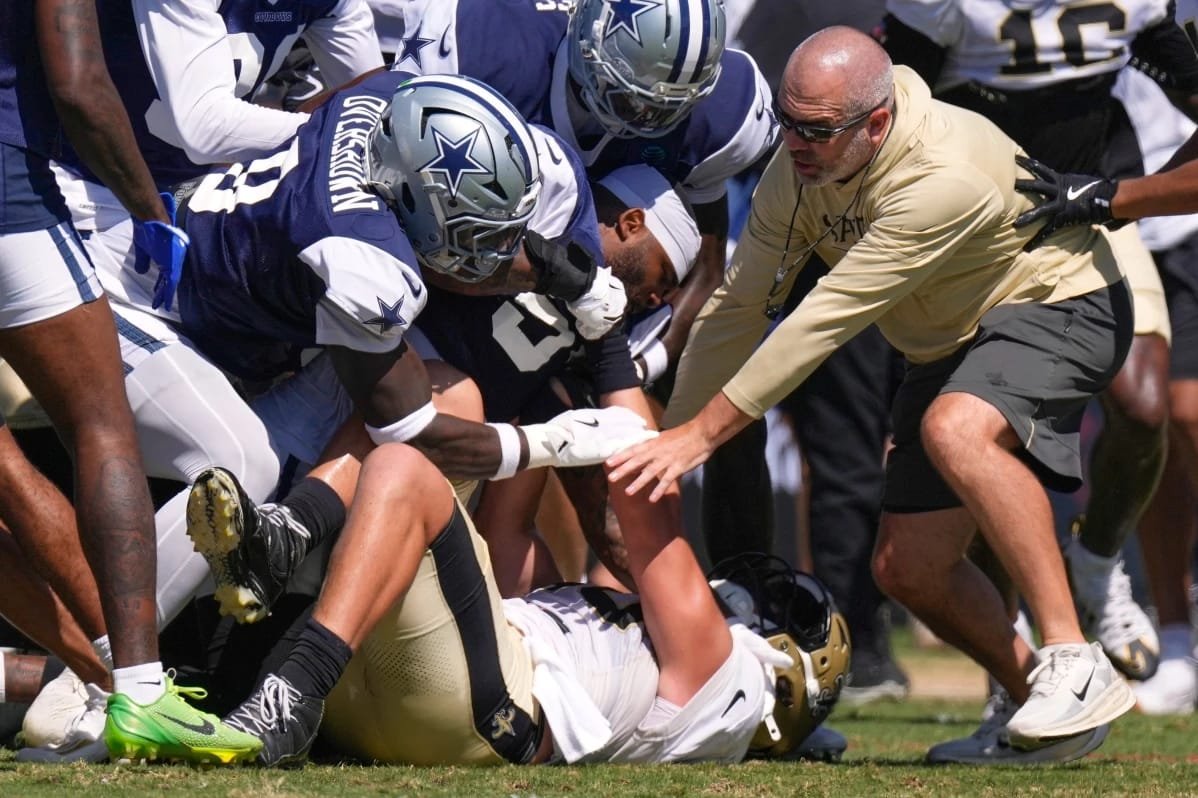
- The Cowboys and Saints were each fined $500,000 after a brawl-filled joint practice.
- Several 49ers and Titans players were ejected from their practice following repeated skirmishes.
- Twenty-eight of the NFL’s 32 teams are holding joint practices this year.
NFL joint practices face growing problems with fights
Joint practices are designed to give players meaningful work against an opponent before the regular season begins. Instead, repeated confrontations have created concerns about whether the sessions are becoming too heated.
The latest high-profile incident came Thursday when Winston, a quarterback viewed as generally easygoing on the field, became involved in a fight between the Giants and Dolphins. The confrontation added to a growing list of incidents during this year’s joint-practice schedule.
The situation has become particularly notable because joint practices are intended to provide controlled competition. Teams use the sessions to create game-like repetitions while limiting the physical demands and injury risks associated with preseason games.
Cowboys and Saints punished after brawl
The NFL has already taken disciplinary action following one of the most serious incidents of the preseason. The Dallas Cowboys and New Orleans Saints were each fined $500,000 by the league after their joint practice Tuesday descended into multiple fights.
The financial penalties underline the league’s concern about confrontations during these sessions. Coaches have repeatedly emphasized that fights can interrupt practice plans and reduce the value of the work being done by both teams.
The San Francisco 49ers and Tennessee Titans also experienced several skirmishes during their joint practice last week. The incidents resulted in two players from each team being removed from the session.
Why teams continue to hold joint practices
Despite the problems, joint practices remain an important part of many teams’ preseason preparations. Twenty-eight of the NFL’s 32 teams are scheduled to participate in joint practices this year.
The sessions allow starters to face players from another organization in a competitive environment. That has become increasingly valuable as coaches often prefer to limit the number of preseason game snaps given to important starters.
For coaches, joint practices can provide repetitions that resemble game situations while allowing teams to control the structure of the work. Offenses and defenses can test specific situations against unfamiliar opponents before the regular season begins.
Coaches warn players against fighting
Coaches across the league have made clear that fighting is not an acceptable part of joint practices. Philadelphia Eagles defensive coordinator Vic Fangio said his team does not tolerate players fighting during the sessions.
Fangio explained that players should view opponents at joint practices as temporary teammates who are helping each side improve. The focus, he said, should remain on individual development and team preparation rather than confrontation.
The Eagles conducted two joint sessions with the New England Patriots this week. One minor scuffle occurred during those practices, but the incident did not overshadow the sessions.
Physical nature of football complicates the issue
The difficulty for coaches is finding the balance between allowing players to compete physically and preventing situations from escalating. Giants coach John Harbaugh pointed to the nature of football and the absence of the same formal boundaries that exist during an actual game.
Harbaugh said players can interpret an opponent’s actions as crossing a line, which can quickly lead teammates to intervene. He also said the Giants had decided that any player who threw a punch during their scrimmages would be treated as though the incident had happened in a game.
That approach reflects the broader effort to establish clear consequences without eliminating the competitive edge that makes joint practices useful. Players need physical intensity to prepare for the season, but uncontrolled confrontations can turn productive work into a distraction.
Players also questioning the value of heated sessions
The frustration is not limited to coaches. Eagles star running back Saquon Barkley expressed his dislike of joint practices after Philadelphia’s sessions with New England, saying: “I hate joint practices, to be honest.”
His comments reflect the tension surrounding a practice format that has become increasingly common across the NFL. With 28 teams participating this year, joint practices remain a major component of preseason preparation even as fights continue to raise questions about how much physicality is appropriate.
For teams, the objective remains clear: gain valuable repetitions against outside competition while keeping players healthy for the regular season. The recent incidents show how quickly that balance can be disrupted when competitive intensity turns into fighting.

Praveen Yadav is the Founder and Editor at The Nation Bulletin. With over 3 years of experience in digital journalism and news reporting, he covers national affairs, governance, and breaking current events with a commitment to factual accuracy and verified reporting.