Union Minister Chirag Paswan has demanded the resignation of Jitan Ram Manjhi and his son Santosh Kumar Suman over their call for changes to the existing SC reservation system, intensifying differences between the two NDA allies.
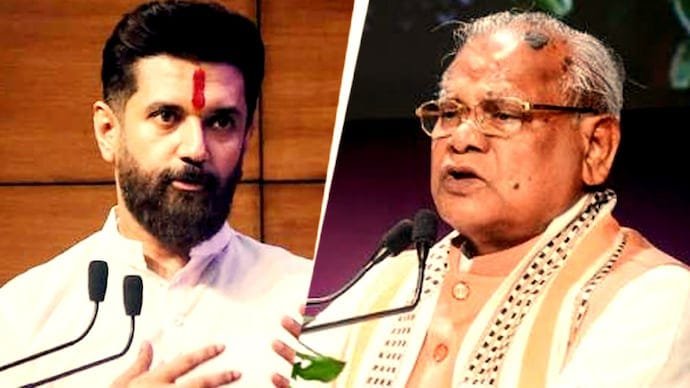
NEW DELHI, India — The reservation policy dispute between Union Ministers Chirag Paswan and Jitan Ram Manjhi escalated on Saturday, with Paswan asking Manjhi to resign after his party HAM (Secular) backed a review of the reservation system. The confrontation has sparked discussion about differences within the NDA at a time when reservation has again become a major political issue amid anti-quota protests at Delhi’s Jantar Mantar.
Key Highlights
- Chirag Paswan demanded the resignation of Jitan Ram Manjhi and Santosh Kumar Suman over their position on reservation reforms.
- HAM (Secular) has backed sub-quotas within the existing reservation system for SCs and STs.
- HAM has argued that reservation benefits among Dalits have remained concentrated among some communities while others remain underrepresented.
- The dispute is linked to a 2024 Supreme Court judgment allowing states to sub-classify SCs and STs for distributing quota benefits.
- Paswan has opposed both sub-quotas and the introduction of a creamy layer within SC reservation.
Chirag Paswan demands Manjhi’s resignation
Chirag Paswan, whose LJP (Ram Vilas) is an NDA ally in Bihar and at the Centre, directly challenged Manjhi’s position on reservation. He said that if Manjhi and Suman support the introduction of a creamy layer or sub-quotas within SC reservation, they should first resign from their ministerial positions.
“Those asking why there should not be a creamy layer should first give up the benefits of reservation. If Jitan Ram Manjhi believes in the creamy layer concept, he should first resign. His son should resign too,”
Paswan said his party has consistently opposed sub-quotas and maintained that communities within the Scheduled Caste category have remained united. He also argued that the Constitution does not provide for determining SC reservation on economic grounds.
Why the reservation policy dispute began
The disagreement emerged after Manjhi’s HAM (Secular) supported sub-quotas for SCs and STs within the existing reservation framework. Bihar minister Santosh Kumar Suman said a review was needed so that reservation benefits could reach communities considered more vulnerable and historically marginalised.
“We are not talking about ending reservation. We are talking about making reservation more just, effective and ensuring that it actually reaches those who are deprived,”
HAM has argued that the benefits of Dalit reservation have remained concentrated among a few communities, including Paswans and Ravidas, while several other communities continue to be underrepresented. Suman also pointed to the Mushahar community, to which Manjhi belongs, saying that not a single person from the community had become an IAS officer.
2024 Supreme Court judgment at the centre of the debate
The current dispute has its roots in a 2024 Supreme Court judgment that allowed states to sub-classify SCs and STs to ensure that reservation benefits reach more backward castes within these groups.
The debate intensified further after a petition was filed in the Supreme Court last month seeking the exclusion of socially and economically advanced individuals from reservation benefits. The petition argued that affluent families within SC and ST categories were monopolising reservation benefits.
Citing the 2024 judgment, the plea said four of the seven judges on the Constitution bench had suggested extending the creamy layer principle to SCs and STs. However, the Centre told the Supreme Court in an affidavit that the creamy layer concept cannot be extended to SCs and STs, noting that the principle has been applied only to OBCs.
Paswan opposes sub-quotas and creamy layer within SC reservation
Paswan said introducing sub-quotas or a creamy layer within SC reservation could affect the purpose of social justice. He argued that dividing Dalit communities on such grounds could weaken their collective position while discrimination against Dalits continues.
“Otherwise, the way society will be divided, the fight for social justice will lose its meaning. Dalits would continue to face discrimination,”
Paswan reiterated that if Manjhi wanted a creamy layer based on economic criteria within SC reservation, he should be the first to step aside. The remarks have brought the disagreement between the two Bihar leaders into direct confrontation, with both sides maintaining opposing positions on how reservation benefits should be distributed.

Sonu Yaduvanshi is a Senior Content Specialist and Digital News Editor at The Nation Bulletin with over 5 years of editorial experience. He specializes in government recruitments, competitive exams, public policy, and national affairs, focusing on source-verified reporting and factual clarity for readers.