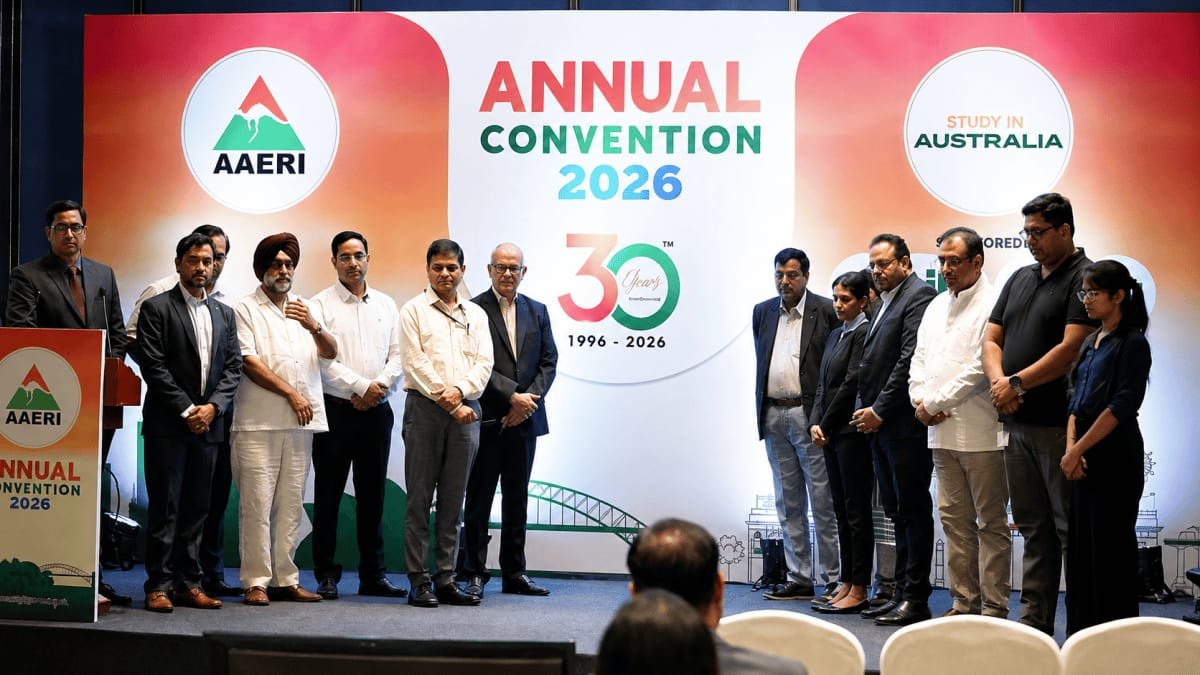
NEW DELHI, India — Indian students applying to Australian universities will have access to a new digital document verification system after the National e-Governance Division (NeGD) under the Ministry of Electronics and Information Technology (MeitY) partnered with the Association of Australian Education Representatives in India (AAERI) to launch AAERI Verify.
- AAERI Verify was unveiled at the AAERI Annual Convention in New Delhi on August 7.
- The platform is integrated with DigiLocker for secure, consent-based document verification.
- The system introduces separate Student Check and Sponsor Check stages.
- DigiLocker has more than 72 crore registered users, according to the supplied report.
New digital system targets admission document checks
AAERI Verify has been developed to help Australian higher education institutions authenticate credentials submitted by Indian applicants. Its integration with DigiLocker allows students to share digitally signed records issued by authorised institutions.
The system is designed to reduce dependence on physical documents and manual verification during the admission process. Students can provide access to their records with explicit consent, allowing institutions to verify documents directly from authorised sources.
Two-stage verification process introduced
The new workflow divides document authentication into two stages. The first stage, known as the Student Check, takes place before a university application is submitted.
A second stage, called the Sponsor Check, begins after a student receives an admission offer. This stage focuses on checking the authenticity of financial documents associated with the student’s sponsorship.
The digital process is intended to make credential checks more efficient while addressing concerns around fraudulent documents and the handling of students’ personal information.
DigiLocker integration enables consent-based verification
Through the integration, participating Australian universities can access digitally signed records from authorised issuers when a student gives explicit consent. This creates a direct verification route instead of relying solely on documents supplied in physical or manually processed formats.
The initiative is also intended to improve data privacy by giving students control over the sharing of their digital records while allowing institutions to verify their authenticity.
NeGD highlights India’s digital public infrastructure
NeGD Director JL Gupta said the partnership demonstrates how India’s Digital Public Infrastructure can be applied to challenges beyond domestic government services.
This collaboration demonstrates how India’s Digital Public Infrastructure (DPI) is solving real-world global challenges.
Gupta said integrating DigiLocker with AAERI Verify would create a secure and paperless framework for the international admission process.
During the AAERI Annual Convention, Gupta also presented details about NeGD’s role in developing and coordinating India’s digital public infrastructure.
What is NeGD and what does it do?
NeGD was established as an independent business division under MeitY in 2009. It supports project management, policy formulation and technology appraisal for major government digital initiatives.
The division manages technology platforms supporting public workflows across several statutory and government organisations, including the Union Public Service Commission, Ministry of External Affairs and NITI Aayog.
DigiLocker expands role in international education
DigiLocker is a flagship Digital Public Infrastructure initiative under MeitY’s NeGD. The platform allows citizens to store, share and verify authentic digital documents issued by authorised organisations.
Developed under the Digital India programme, DigiLocker has crossed 72 crore registered users, according to the supplied information. It supports the issuance, storage, sharing and real-time verification of digitally signed documents.
The AAERI partnership extends the use of this infrastructure into the international education sector, with the immediate focus on credential verification for Indian students seeking admission to Australian universities.
What happens next?
AAERI Verify is expected to provide Australian higher education institutions with a digital route for checking academic, identity and financial credentials submitted by Indian students.
By connecting university verification workflows with issuer-verified DigiLocker records, the initiative aims to reduce manual checks and make the document authentication process more streamlined for students and institutions.

Praveen Yadav is the Founder and Editor at The Nation Bulletin. With over 3 years of experience in digital journalism and news reporting, he covers national affairs, governance, and breaking current events with a commitment to factual accuracy and verified reporting.