The global economy has absorbed the Gulf energy shock better than the IMF feared, but persistent inflation, rising borrowing costs and elevated government debt are creating fresh risks.
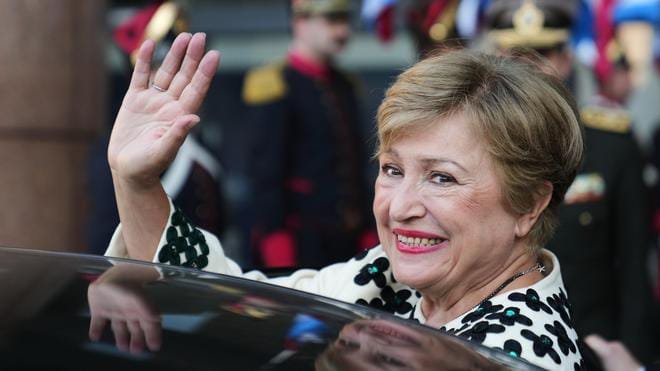
WASHINGTON, US — The global economy has shown greater resilience than expected despite the energy shock linked to the Iran war and the closure of the Strait of Hormuz, IMF Managing Director Kristalina Georgieva said ahead of next week’s G20 finance leaders’ meeting.
Georgieva said the outlook was caught in a “tug of war” between higher Gulf energy prices and strong investment in artificial intelligence. While risks have become more balanced than they were in April, she said they remain tilted to the downside.
Key Highlights
- The IMF says the global economy has weathered the Strait of Hormuz energy shock better than expected.
- AI investment is emerging as an important support for growth, spreading from the US to other economies.
- Higher bond yields, stubborn inflation and elevated debt are increasing fiscal and monetary policy pressures.
Global economy shows resilience despite energy shock
Several factors have helped reduce the immediate impact of the energy disruption. Countries have drawn down oil and gas reserves, while supplies from outside the Gulf have increased and energy demand has weakened.
Greater renewable energy capacity has also provided some support, although some countries have increased coal-fired power generation. These developments have helped economies absorb higher energy costs without a larger-than-expected hit to global activity.
AI investment supports global growth
Georgieva said the artificial intelligence investment boom is providing a significant counterweight to the economic drag caused by the conflict and energy disruption.
US spending on AI is supporting corporate earnings and consumer demand, while other countries are expanding data-centre and AI hardware investment. Economies connected to AI supply chains are also benefiting as demand spreads beyond the United States.
The IMF cut its 2026 global growth projection to 3% in July, down from 3.5% growth recorded in 2025. The fund is scheduled to release fresh forecasts during its annual meetings in Bangkok in October.
IMF warns energy shock is not over
Georgieva cautioned policymakers against assuming that the energy crisis has ended. Brent crude prices have remained around $80-$90 a barrel since mid-June, below the spring peak of more than $118.
She warned that another increase in oil prices could intensify inflation and force central banks to keep interest rates higher for longer. That could raise borrowing costs for governments and put additional pressure on economic activity.
Georgieva also pointed to shrinking oil and gas reserves and the approaching winter in the northern hemisphere as factors that could increase pressure on energy markets.
Fiscal strain becomes a growing concern
The IMF chief urged governments to address deteriorating fiscal conditions and establish credible plans to put debt and deficits on sustainable paths.
Her comments came after a sharp rise in US long-term Treasury yields, which recently reached their highest level in 19 years. The IMF has repeatedly called on Washington to address its widening fiscal deficit.
Georgieva also urged central banks to remain focused on price stability. Persistent inflation, she said, could restrict their ability to reduce interest rates even as governments face higher financing costs.
Global imbalances add to economic pressure
Georgieva said excessive global economic imbalances were contributing to trade tensions and called for a more balanced economic model to support global growth.
The IMF is examining the forces behind these imbalances, including the relationship between macroeconomic trends, trade policies and industrial policies. Georgieva acknowledged that reducing these imbalances is becoming more difficult as the global economy grows increasingly fragmented.
For now, the stronger-than-expected response to the energy shock has offered some relief. But renewed oil disruption, persistent inflation and high public debt could test that resilience in the months ahead.
Frequently Asked Questions
What is the IMF’s current outlook for global growth in 2026?
The IMF projected 3% global growth for 2026 in July, compared with 3.5% growth in 2025. Fresh forecasts are expected in October.
Why is AI investment important for the global economy?
AI investment is supporting US corporate earnings and consumer demand while encouraging data-centre, infrastructure and AI hardware spending in other economies.
What are the main risks highlighted by Kristalina Georgieva?
The IMF chief highlighted renewed energy-price increases, persistent inflation, rising bond yields, high debt levels and prolonged tight monetary policy as key risks.

Praveen Yadav is the Founder and Editor at The Nation Bulletin. With over 3 years of experience in digital journalism and news reporting, he covers national affairs, governance, and breaking current events with a commitment to factual accuracy and verified reporting.