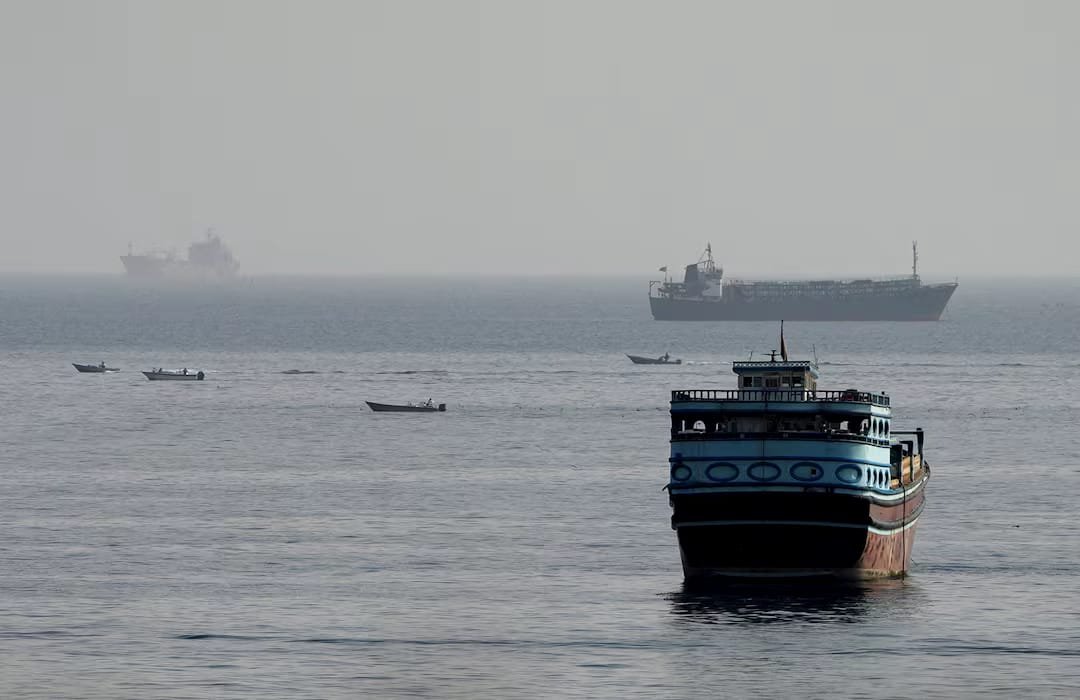
Iran is seeking greater authority over shipping movements through the Strait of Hormuz under a temporary proposal being discussed with Oman to reopen the strategically important waterway, according to a senior Iranian source familiar with the negotiations.
According to Reuters, the proposal under discussion would allow Tehran to exercise control over inbound maritime traffic entering the Strait of Hormuz while maintaining visibility over outbound vessels. The arrangement would also give Iran the ability to intervene in shipping movements if deemed necessary.
Proposal outlines separate roles for Iran and Oman
The senior Iranian source involved in the negotiations said the current framework being discussed would place inbound shipping under Iranian control. Outbound vessels would follow a designated route between Iran and Oman, with final exit clearance issued by Omani authorities after notifying Tehran.
“The general idea currently being discussed” is for Iran to oversee vessels entering the waterway while coordinating outbound traffic with Oman, the source told Reuters.
The source added that Tehran has already softened its earlier position. Initially, Iran had sought complete authority over shipping traffic in both directions through the Strait of Hormuz. However, officials now consider the revised proposal a compromise while maintaining that Iran is unlikely to move further from its current stance.
Security concerns remain central to negotiations
Last month, Iran rejected an earlier proposal from Oman that would have divided transit routes equally between the two countries. According to the Reuters report, Tehran argued that the proposal failed to adequately address its security concerns and insisted that long-term regional stability must be considered before accepting any permanent arrangement.
The future management of shipping through the Strait of Hormuz has become one of the most sensitive issues in diplomatic efforts aimed at resolving the conflict involving Iran, the United States and Israel.
Strategic waterway remains largely blocked
The Strait of Hormuz has remained largely blocked since fighting began in late February, disrupting one of the world’s most strategically significant maritime trade routes. The waterway serves as the primary passage connecting the Persian Gulf with the Indian Ocean and is responsible for carrying roughly one-fifth of global oil supplies along with other critical cargo, including fertilisers and commercial goods.
Despite ongoing negotiations, disagreements over control of the shipping corridor continue to be one of the main obstacles to fully restoring maritime traffic through the region.
Disagreement over war agreement continues
Reuters reported that differing interpretations of a memorandum of understanding reached in June have further complicated efforts to reopen the Strait of Hormuz. Washington maintains that the agreement, which helped halt active hostilities, requires Iran to restore normal shipping through the strategic waterway.
Iran, however, has taken a different view. According to the senior Iranian source cited by Reuters, Tehran believes the memorandum explicitly preserves its authority over shipping traffic in the Strait of Hormuz, allowing it to continue exercising oversight for security purposes.
The disagreement has become one of the central issues in ongoing diplomatic discussions aimed at restoring commercial navigation through the region.
Why the Strait of Hormuz matters
The Strait of Hormuz is one of the world’s most important maritime chokepoints. Stretching about 34 kilometres (21 miles) at its narrowest point, it connects the Persian Gulf with the Gulf of Oman and the Indian Ocean.
The route is critical for global energy markets, as approximately one-fifth of the world’s oil supplies pass through the strait. In addition to crude oil and liquefied natural gas shipments, the waterway also handles large volumes of fertilisers, petrochemicals and other international trade cargo.
Any disruption to shipping in the Strait of Hormuz has the potential to affect global energy prices, freight costs and international supply chains.
Current shipping system dates back decades
Before the conflict, commercial vessels moved freely through the Strait of Hormuz under an internationally recognised traffic separation scheme. The routing system was established in 1968 by the United Nations’ shipping agency with the agreement of regional countries.
The arrangement created separate inbound and outbound navigation corridors through the territorial waters of both Iran and Oman, helping commercial vessels transit the narrow waterway safely while maintaining orderly maritime traffic.
Although the strait passes through the territorial waters of both countries, it has generally been regarded as an international waterway supporting global trade.
Talks continue without a final agreement
Negotiations between Iran and Oman remain ongoing, and no final agreement has been announced. According to Reuters, discussions continue over a temporary mechanism that could allow shipping to resume while addressing Tehran’s security concerns and preserving safe navigation through one of the world’s busiest maritime routes.
The outcome of the negotiations is expected to be closely watched by governments, shipping companies and global energy markets, given the Strait of Hormuz’s critical role in international trade and oil transportation.
Source :Reuters

Praveen Yadav is the Founder and Editor at The Nation Bulletin. With over 3 years of experience in digital journalism and news reporting, he covers national affairs, governance, and breaking current events with a commitment to factual accuracy and verified reporting.