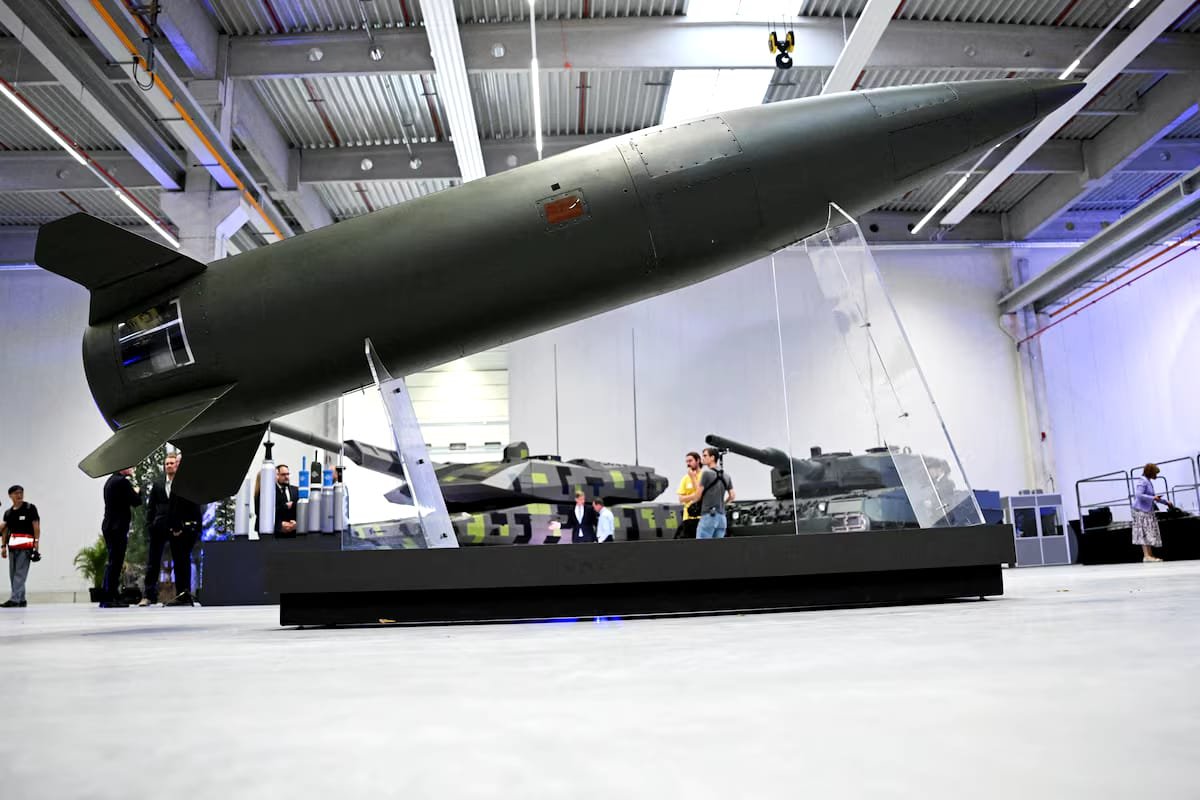
The United States has used a significant portion of its long-range precision missile inventory during the five-month conflict with Iran, according to multiple people familiar with internal military data. The reported depletion of key missile stockpiles has sparked concerns among some officials and analysts about the U.S. military’s readiness to respond to future conflicts involving other major adversaries.
According to Reuters, the weapons most heavily used include the Army Tactical Missile System (ATACMS) and the newer Precision Strike Missile (PrSM), both of which are designed to deliver accurate long-range strikes against strategic targets. Two sources familiar with the matter told Reuters that the U.S. Army has expended “virtually all” of its available inventory of these land-based precision weapons during operations linked to the Iran conflict.
Precision missile stockpiles under pressure
ATACMS and PrSM are among the U.S. Army’s most advanced surface-to-surface missile systems. These weapons enable forces to strike distant targets with high precision while reducing risks to pilots and manned aircraft. ATACMS has also been supplied to Ukraine, where it has been used to strike military targets inside Russia, while the newer PrSM is gradually replacing the older missile system with improved range and capabilities.
Sources familiar with the situation declined to disclose the exact number of missiles remaining in U.S. inventories. However, they said the current level of consumption has significantly reduced available stockpiles after months of sustained military operations.
Officials express concern over future military readiness
The prolonged conflict has prompted discussions within the Trump administration over whether continued military operations could weaken the United States’ ability to respond to crises elsewhere. According to three people familiar with internal deliberations, some officials fear that reduced inventories of precision-guided munitions could limit America’s capacity to deter or respond to potential threats involving countries such as China or Russia.
A fourth source told Reuters that while U.S. Central Command has nearly exhausted the land-based missile stockpiles it had available at the beginning of the conflict, additional weapons have been transferred from military inventories located elsewhere around the world to sustain ongoing operations.
White House says US arsenal remains strong
Responding to Reuters’ questions, the White House released a statement from President Donald Trump dismissing concerns about the country’s military inventory.
“Our defense companies are, at this moment, making more munitions than they have ever made before, in addition to expanding their plants and equipment at record levels,” Trump said.
Trump also stated that the United States possesses “far more munitions than anyone in the world” and “far more than we need.”
Pentagon chief spokesperson Sean Parnell also defended the military’s preparedness, saying America’s armed forces retain the capabilities required to execute operations whenever directed by the President while maintaining sufficient resources to protect national interests.
Shift toward stand-off weapons influenced military strategy
One source familiar with the discussions said the heavy use of long-range precision missiles reflected a strategic decision to rely on stand-off strikes instead of sending piloted aircraft into heavily defended Iranian airspace. Such weapons allow commanders to attack strategic targets from safer distances while reducing risks to aircrews.
Analysts note that these missile systems would also play an important role in any future conflict involving advanced air defense networks, particularly in the Indo-Pacific region.
Defensive missile inventories also reported to be declining
Alongside long-range strike weapons, several defensive missile systems have also seen substantial usage during the conflict, according to people familiar with U.S. military assessments. Officials cited concerns over shrinking inventories of Patriot air defense interceptors and Terminal High Altitude Area Defense (THAAD) interceptors, both of which are designed to counter incoming ballistic missile threats.
A recent report by the Center for Strategic and International Studies (CSIS) estimated that between February and July, approximately 65% of U.S. Patriot interceptor stockpiles had been expended. The report also estimated that inventories of THAAD interceptors had declined by at least 38% during the same period.
Reuters reported that while it could not independently verify those estimates, two sources familiar with internal government data said the CSIS figures broadly matched assessments circulating within the U.S. government.
Tomahawk cruise missile supplies also affected
According to one source cited by Reuters, the U.S. military has also used a little less than half of its global inventory of Tomahawk cruise missiles since the conflict with Iran began. Reuters said it was unable to independently verify that estimate.
The Tomahawk, primarily operated by the U.S. Navy, is launched from destroyers, cruisers and submarines and has long been regarded as one of America’s principal long-range strike weapons against heavily defended targets without exposing pilots to combat risks.
Raytheon, a business unit of RTX, has reached a tentative multi-year agreement with the Pentagon aimed at increasing Tomahawk missile production as part of broader efforts to replenish critical weapons inventories.
Production increasing as Pentagon seeks to rebuild inventories
Although officials acknowledge that production of several key munitions is expanding, analysts caution that rebuilding stockpiles after months of sustained combat operations could take considerable time. Precision-guided missiles such as the PrSM are relatively new, and production volumes remain lower than those of more established weapons.
The U.S. Army has already begun transitioning away from the older ATACMS missile system in favor of the next-generation Precision Strike Missile. According to previous Army plans referenced in the Reuters report, larger procurement orders for PrSM are expected in 2027 as production capacity continues to expand.
Defense manufacturers including Lockheed Martin, which produces both the ATACMS and PrSM missile systems, did not immediately respond to Reuters’ requests for comment regarding current stockpile levels or production capacity.
Debate continues over prolonged military operations
The reported decline in missile inventories has fueled broader discussions within Washington over the sustainability of prolonged military campaigns. According to Reuters, internal conversations within the administration have focused on balancing ongoing military requirements in the Middle East with maintaining sufficient capabilities for potential crises in other regions.
The conflict has also intensified debate over President Donald Trump’s authority to continue military operations against Iran without formal congressional authorization. Reuters noted that no request for a declaration of war or an Authorization for Use of Military Force (AUMF) related to the conflict has been submitted to the U.S. Congress.
What comes next
While the White House and Pentagon continue to insist that U.S. military readiness remains strong, the reported drawdown of long-range precision weapons highlights the logistical challenges of sustaining extended high-intensity operations. With production lines being expanded and procurement plans already underway, rebuilding inventories of advanced missile systems is expected to remain a key priority for the U.S. defense establishment in the coming years.

Praveen Yadav is the Founder and Editor at The Nation Bulletin. With over 3 years of experience in digital journalism and news reporting, he covers national affairs, governance, and breaking current events with a commitment to factual accuracy and verified reporting.