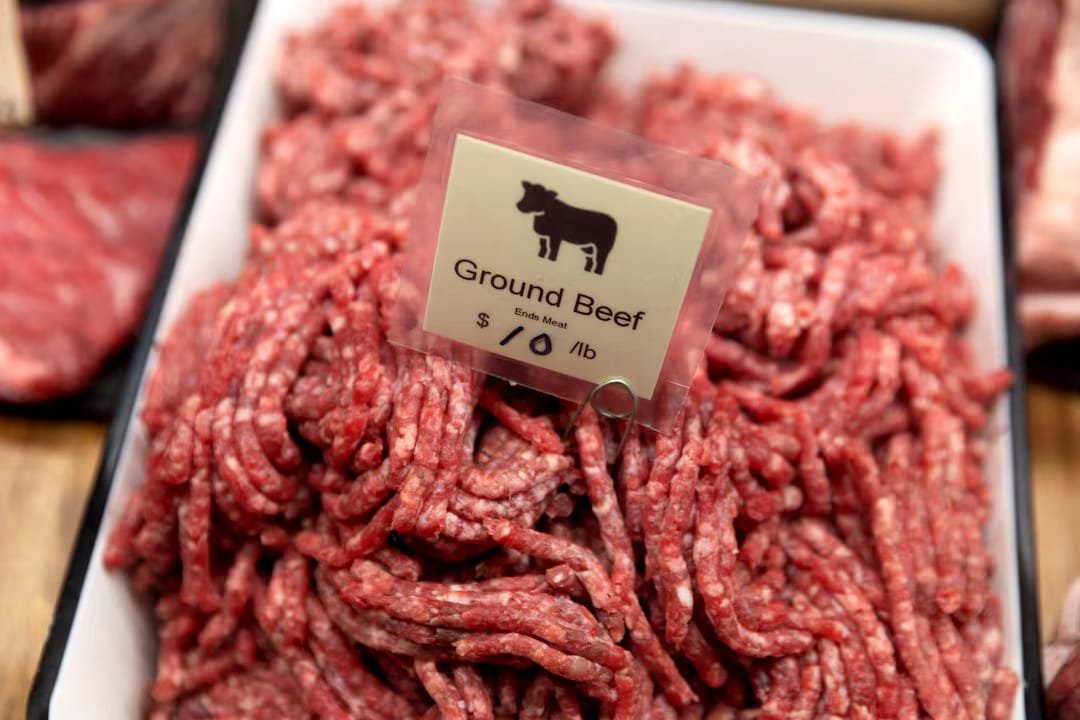
Chicago/Washington, United States — President Donald Trump plans to temporarily ease U.S. beef tariffs by allowing an additional 300,000 metric tons of ground beef to enter the country at lower import tariffs for 90 days, a move the White House says is intended to reduce prices for consumers but one that has drawn strong opposition from U.S. cattle producers.
- Key Highlights:
- The White House says an executive order will expand lower-tariff ground beef imports by 300,000 metric tons.
- The measure is expected to remain in effect for 90 days.
- Trump said imported beef would be sold 25% below current market prices under the plan.
- U.S. cattle groups warned cheaper imports could discourage producers from rebuilding domestic herds.
- Economists and traders questioned whether the additional imports are large enough to significantly reduce beef prices.
Trump Plans Temporary Beef Tariff Relief
The White House said Trump will sign an executive order within the next two weeks to increase the amount of ground beef that can enter the United States under lower tariff rates. The additional 300,000 metric tons would be permitted over a 90-day period.
Trump said the measure was designed to address high food prices as American consumers continue to face pressure from elevated grocery bills. In a social media post, he said he had a commitment that imported beef under the arrangement would be sold at 25% below current market prices.
The president did not provide further details about the proposed arrangement. The White House also did not respond to questions about which countries would supply the additional beef or whether exporters would be expected to reduce their prices.
Cattle Producers Warn of Damage to US Herd Rebuilding
The announcement immediately drew criticism from organizations representing American cattle producers. The National Cattlemen’s Beef Association, which represents U.S. ranchers and cattle feeders, argued that increasing supplies of lower-priced imported beef could undermine efforts to rebuild the domestic cattle herd.
Association CEO Colin Woodall said U.S. cattle producers also want affordable groceries for consumers but argued that government-supported, below-market imports would not address the underlying challenge facing the cattle industry.
The United States Cattlemen’s Association also criticized the plan. Its president, Justin Tupper, said the policy could weaken cattle markets and raised concerns about food safety.
The disagreement highlights a difficult balance for policymakers. Consumers are facing high beef prices, while cattle producers are attempting to rebuild herds after years of reduced supplies.
US Cattle Supplies Remain Historically Tight
U.S. beef prices have remained close to record levels as cattle inventories have fallen to their lowest point in 75 years. The decline followed years of drought that damaged grazing land and increased feed costs, prompting ranchers to reduce the size of their herds.
The supply situation was further affected after the United States suspended imports of Mexican cattle last year because of concerns over the northward spread of a flesh-eating pest affecting livestock.
At the same time, U.S. meatpackers have been closing processing plants as cattle costs have risen. The combination of tight cattle supplies and higher production costs has placed additional pressure on the beef market.
Economists Question Impact on Beef Prices
Economists and traders questioned whether the additional 300,000 metric tons of imports would be sufficient to produce a meaningful decline in prices. The planned volume would be spread across a 90-day period and represents a relatively small portion of overall U.S. beef consumption.
Some countries also have not yet reached the maximum amounts they can already export under existing tariff-rate quotas, further limiting the expected impact of the new measure.
Independent trader Dan Norcini described the proposed increase as too small to resolve the fundamental supply problem facing the U.S. cattle industry. The central issue, he argued, is the reduced number of cattle available domestically, which cannot be quickly corrected through additional imports.
Cattle Futures Fall After Announcement
The announcement also triggered a sharp reaction in cattle markets. Cattle futures on the Chicago Mercantile Exchange fell to eight-month lows on Friday after news of Trump’s plan emerged.
The market response reflects concerns among traders that increased access to lower-tariff imported beef could place pressure on domestic cattle prices, even if economists remain skeptical about the policy’s ability to substantially reduce prices for consumers.
Food Prices Add Political Pressure
The beef announcement comes as persistent food inflation has become an important political issue ahead of the November midterm elections. Republicans are seeking to protect their congressional majorities amid voter frustration over the cost of living.
Trump’s proposal therefore puts consumer affordability and the interests of domestic cattle producers directly against each other. The administration is presenting additional imports as a way to provide relief at grocery stores, while cattle organizations argue that the policy could weaken incentives for ranchers to expand the U.S. herd.
With domestic cattle inventories already at a 75-year low, the debate is ultimately centered on how quickly additional beef supplies can reach consumers without undermining the longer-term effort to rebuild U.S. cattle production.

Praveen Yadav is the Founder and Editor at The Nation Bulletin. With over 3 years of experience in digital journalism and news reporting, he covers national affairs, governance, and breaking current events with a commitment to factual accuracy and verified reporting.