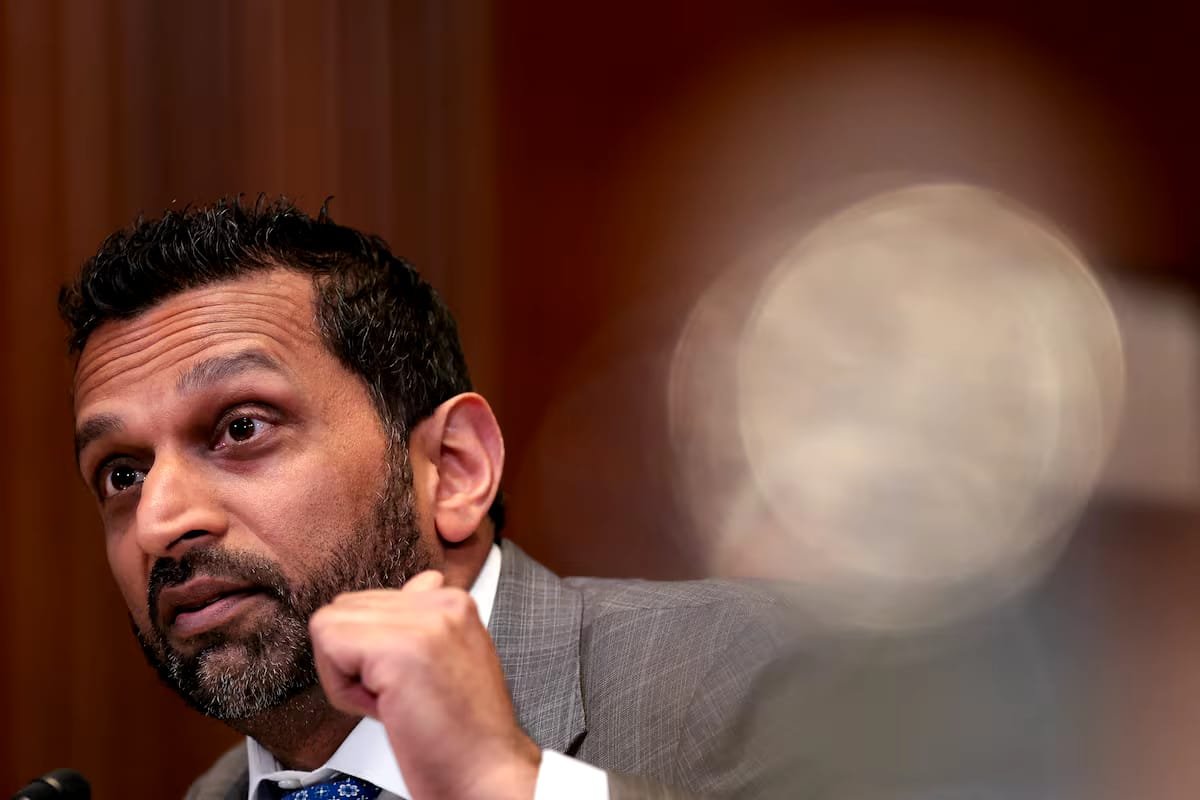
The U.S. Federal Bureau of Investigation has established new law enforcement partnerships with China and Russia under FBI Director Kash Patel, marking a significant shift in the agency’s approach to tackling transnational crime. According to Reuters, the initiatives focus on issues including fentanyl trafficking, cyber fraud, violent crimes against children and fugitive investigations, while also prompting debate within the U.S. counterintelligence community over the risks of working closely with two of Washington’s principal geopolitical rivals.
Patel said the collaborations are limited in scope and are intended to address specific criminal threats that extend across international borders. While the partnerships represent an unprecedented level of engagement with Chinese and Russian law enforcement agencies, he maintained that they do not alter the United States’ broader intelligence posture toward either country.
New Working Groups Mark a Major Policy Shift
In exclusive interviews with Reuters, Patel described the relationships with China and Russia as “new and dynamic,” explaining that the FBI has created specialised working groups dedicated to selected areas of transnational crime. These include cyber fraud, counternarcotics investigations, violent crimes against children and efforts to locate fugitives operating across international jurisdictions.
According to Patel, the partnerships are designed to pursue practical law enforcement objectives rather than broader intelligence cooperation. He said the FBI has deliberately restricted information sharing to investigations where both sides have a common interest in dismantling criminal networks that threaten public safety.
“They are both new and dynamic relationships, and we are extremely mindful of their adversarial approach on many matters,” Patel told Reuters. “They are not going to stop, but if we can go and have wins for America, then we must engage.”
The initiative represents a notable departure from previous U.S. policy, under which China and Russia were primarily viewed through the lens of espionage, national security threats and strategic competition. The new framework instead seeks limited cooperation on criminal investigations while maintaining broader security safeguards, according to Patel.
Personnel Exchanges Expand FBI Engagement With China
One of the most significant aspects of the partnership has been the exchange of law enforcement personnel between the United States and China. Reuters reported that officials from China’s Ministry of Public Security have visited FBI facilities in the United States, while FBI personnel have travelled to China to work alongside their counterparts on selected investigations and exchange intelligence related to agreed areas of cooperation.
Patel recently returned from Beijing following meetings aimed at strengthening operational coordination. FBI officials also told Reuters that a similar visit to Russia has been tentatively planned for October as discussions continue on expanding cooperation against organised criminal networks.
The FBI director said communication between investigators has become far more frequent than at any previous stage in the relationship.
“Every month, they send their working-level MPS officers here, and the following month we go there. They are speaking with us daily, which has also never happened before.”
According to Patel, these exchanges remain focused exclusively on agreed criminal investigations and do not extend to broader intelligence-sharing arrangements involving U.S. national security operations.
Joint Operations Already Produce Results
The expanded cooperation has already led to several joint investigations involving international law enforcement agencies. Reuters reported that one of the most prominent operations took place in May, when the FBI, China’s Ministry of Public Security and Dubai police worked together in “Operation Sand Dollar,” targeting a major cyber scam centre operating in Dubai.
According to the FBI, the operation resulted in approximately 300 arrests, the seizure of assets valued at around $300 million and the rescue of thousands of trafficked workers who had allegedly been forced into online fraud operations. Chinese state media also reported that at least one suspect accused of serious violent crimes was repatriated from China to the United States under the new framework.
Officials describe these early operations as examples of how limited international cooperation can be used against criminal organisations that operate across multiple jurisdictions, even as broader geopolitical tensions between Washington, Beijing and Moscow continue.
Patel Says Cooperation Is Carefully Limited, Not a Replacement for Traditional Allies
While the FBI’s engagement with China and Russia represents a significant departure from previous practice, Kash Patel stressed that the partnerships are narrowly focused and should not be viewed as a broader intelligence realignment. According to Reuters, the cooperation is confined to specific categories of transnational crime where both sides have shared law enforcement interests.
Patel said the current relationship with China began after President Donald Trump’s visit to Beijing in May 2025 and has since expanded through multiple rounds of discussions involving senior law enforcement officials. The FBI director has made two trips to China as part of those efforts, with cooperation now organised through four dedicated working groups covering cyber fraud, violent crimes against children, counternarcotics and fugitive investigations.
According to Patel, investigators from China’s Ministry of Public Security and the FBI now maintain regular communication while exchanging operational information relevant to ongoing investigations within those agreed areas.
Operation Sand Dollar Highlights Practical Cooperation
One of the clearest examples of the new partnership came during “Operation Sand Dollar,” a multinational law enforcement operation carried out in May involving the FBI, China’s Ministry of Public Security and Dubai police.
According to the FBI, the operation targeted a major cyber scam centre in Dubai and resulted in around 300 arrests, the seizure of assets worth approximately $300 million and the rescue of thousands of trafficked workers. Chinese state media also reported that one suspect accused of “serious violent crimes” was repatriated from China to the United States during the course of the cooperation.
Patel said such operations demonstrate how countries with broader geopolitical differences can still work together against criminal organisations operating across international borders.
China Responds to Growing Law Enforcement Engagement
Responding to questions about the expanding cooperation, a spokesperson for the Chinese Embassy in Washington said Beijing supports dialogue and practical engagement on issues of mutual concern.
“We have always believed that dialogue and negotiation are the right way forward, and that military means offer no solution.”
The comments came as Patel continued meetings with senior Chinese officials aimed at strengthening operational coordination on transnational crime. During his visit to Asia in late July, he met Chinese Minister of Public Security Wang Xiaohong and Vice Minister Xu Datong. According to Chinese state media, the discussions focused on expanding what Beijing described as “practical cooperation” across a range of criminal investigations.
Five Eyes Intelligence Partnership Remains Unchanged
Despite the unprecedented engagement with China, Patel insisted the FBI’s traditional intelligence relationships remain unchanged. He rejected any suggestion that cooperation with Beijing or Moscow would replace the longstanding “Five Eyes” intelligence alliance involving the United States, Canada, the United Kingdom, Australia and New Zealand.
“Five Eyes will always be our most important intelligence relationship. No one is trying to replace that,” Patel said.
He argued that the FBI occupies a distinct position within the U.S. government because its primary responsibility is law enforcement rather than foreign intelligence collection, allowing it to pursue limited cooperation in areas where criminal investigations overlap.
“Unlike military and traditional intelligence agencies, we have a unique lane to drive this dynamic change with law enforcement, which is an apolitical mission.”
According to Patel, the new working groups have been designed to achieve practical law enforcement outcomes while maintaining strict limits on the type of information exchanged, reflecting an effort to balance international cooperation with U.S. national security considerations.
Former FBI Officials Warn of Counterintelligence Risks
The FBI’s expanding engagement with China and Russia has prompted concern among former intelligence and law enforcement officials, who argue that cooperation with two of America’s principal geopolitical rivals carries significant counterintelligence risks.
Jeff Crocker, a former FBI supervisory agent who retired in 2024, told Reuters that both countries continue to pose major threats to U.S. national security despite the limited law enforcement framework described by Patel.
“China and Russia are our enemies, period. They are actively trying to harm our country physically, economically and militarily.”
Crocker said allowing officials from either country access to U.S. government facilities could provide opportunities to gather intelligence or attempt infiltration. He argued that such visits create additional security challenges for agencies responsible for protecting sensitive information and infrastructure.
“So this is great cover for them.”
Responding to those concerns, Patel said every foreign delegation visiting FBI facilities is subject to extensive security screening and monitoring. He said the Bureau applies counterintelligence measures, conducts background vetting and closely tracks official visits to minimise security risks.
“We know exactly who is coming here, and we vet them.”
Three former FBI employees also told Reuters that visits by representatives from countries considered major U.S. adversaries are typically accompanied by enhanced electronic and physical surveillance as part of established counterintelligence procedures.
Cooperation Extends to Russia and Fentanyl Investigations
Patel said the Bureau has also spent months working behind the scenes with Russian authorities on investigations targeting violent criminal organisations operating across international borders.
“This stuff doesn’t happen overnight. We’ve been at this for 15 months.”
According to an internal FBI memo reviewed by Reuters, cooperation with China’s Ministry of Public Security has also supported multiple operations targeting Chinese pharmaceutical companies linked to fentanyl precursor chemicals. The memo said the investigations resulted in the arrest of nine individuals, the closure of two chemical production facilities and three associated websites, along with the seizure of precursor chemicals that were believed to have been destined for the United States. The memo did not specify where those operations took place.
Experts See Benefits but Urge Realistic Expectations
Reuters reported that Vanda Felbab-Brown, a senior fellow in foreign policy at the Brookings Institution, believes cooperation with China may have contributed to the decline in fentanyl overdose deaths in the United States, while cautioning that it is difficult to measure the precise impact.
“I think that the cooperation is useful, should be fostered, and that it contributed to some extent. But how much is really hard to know, and there are a lot of complexities to it.”
Felbab-Brown noted that overdose deaths have fallen significantly since the winter of 2022, although she said several factors—including wider availability of the overdose-reversal medication Naloxone—have likely played a role alongside international cooperation.
Joint Child Protection Operation Highlights Expanding Collaboration
The FBI’s growing engagement with Chinese authorities has also extended to investigations involving crimes against children. According to the internal memo viewed by Reuters, Chinese law enforcement worked with the FBI’s Omaha field office during an operation in June that dismantled a multinational child sexual abuse materials network.
The operation resulted in the arrest of 16 suspects, illustrating how the working groups have expanded beyond narcotics and cybercrime into other forms of transnational criminal activity.
U.S. Secretary of State Marco Rubio offered a measured assessment of cooperation on fentanyl precursor chemicals during a visit to the Philippines last month. While acknowledging progress, he indicated that further work remains necessary.
“I think we’ve made some progress on that front, but not entirely where we need to be.”
Balancing Security and International Crime Fighting
Patel said the approach developed with China and Russia could eventually serve as a model for carefully structured law enforcement partnerships with other countries where mutual interests exist in combating organised crime. He argued that narrowly focused cooperation can deliver tangible public safety benefits without replacing traditional U.S. intelligence alliances or weakening national security safeguards.
“The fact that we did it with China, when everyone said, ‘Don’t do it,’ and, ‘You can’t do it,’ shows what we can do with almost anyone.”
As the FBI continues to expand its international law enforcement engagement, the initiative is likely to remain under close scrutiny. Supporters view it as a pragmatic effort to tackle global criminal networks that operate beyond national borders, while critics continue to question whether the operational gains outweigh the long-term counterintelligence risks of closer engagement with strategic rivals such as China and Russia.

Praveen Yadav is the Founder and Editor at The Nation Bulletin. With over 3 years of experience in digital journalism and news reporting, he covers national affairs, governance, and breaking current events with a commitment to factual accuracy and verified reporting.