Alphabet has announced a major restructuring of its artificial intelligence leadership, with Google DeepMind CEO Demis Hassabis stepping away from his day-to-day management role to become the company’s first chief scientist. The changes also include the departure of several senior AI leaders, marking one of the most significant leadership shake-ups at Google as competition in the AI industry intensifies.
The overhaul comes at a critical time for Google DeepMind, with the company’s next flagship Gemini AI model still unreleased despite an expected launch earlier this year. The delay has fueled concerns among investors and industry observers as competitors such as Anthropic and OpenAI continue to strengthen their positions in the rapidly evolving artificial intelligence market.
Demis Hassabis Takes on New AI Leadership Role
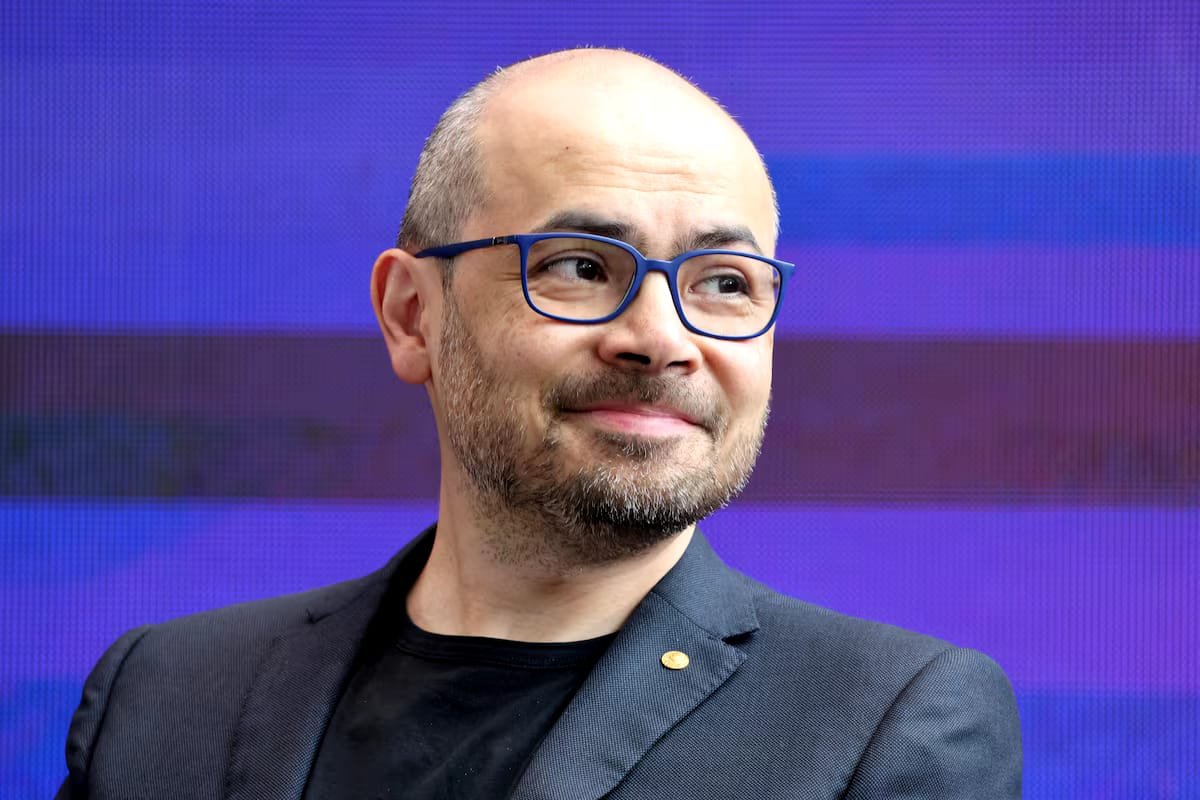
According to Alphabet, Nobel Prize-winning scientist Demis Hassabis will relinquish his role as CEO of Google DeepMind and transition to the newly created position of Alphabet Chief Scientist. He will also serve as chairman of Google DeepMind, allowing him to focus more directly on long-term artificial intelligence research and strategy.
In a memo to employees, Hassabis said the approaching era of artificial general intelligence (AGI) influenced his decision to shift responsibilities. The new role is intended to give him greater freedom to concentrate on scientific research and the broader societal implications of advanced AI systems.
Sundar Pichai Backs Leadership Transition
Alphabet CEO Sundar Pichai described the move as the result of ongoing discussions about how Hassabis could make the greatest contribution to the company’s AI ambitions.
“(Hassabis) and I have been long discussing a role that allows him to put his full attention on actively shaping the future of AGI. It’s work that is vitally important to Alphabet and humanity, and I can’t imagine a better person than Demis to do it,” Pichai said in a company-wide memo.
Alphabet said Hassabis will devote more time to advancing research into artificial general intelligence while also helping shape the company’s long-term AI strategy. A company spokesperson told Reuters that his new position will involve exploring the societal impact of AGI and overseeing broader research priorities with fewer direct management responsibilities.
Koray Kavukcuoglu to Oversee Daily Operations
As part of the leadership transition, Google DeepMind Chief Technology Officer Koray Kavukcuoglu will assume responsibility for the unit’s day-to-day operations. He will become Senior Vice President of the AI division while continuing to serve as Alphabet’s Chief AI Architect.
The appointment is expected to strengthen collaboration between Google DeepMind and Google Cloud, the company’s primary AI revenue business. According to Reuters, Kavukcuoglu has already played a key role in integrating DeepMind’s research with Google’s commercial AI products, and his expanded responsibilities are expected to accelerate the development and commercialization of the Gemini family of AI models.
Jeff Dean and Senior AI Leaders Leave Google to Launch Discovery Loop
Alongside the leadership changes, Alphabet confirmed that several of Google’s most prominent artificial intelligence and engineering figures are leaving the company. Veteran engineer Jeff Dean, along with Sanjay Ghemawat, Oriol Vinyals and Quoc Le, has departed to establish a new startup called Discovery Loop.
The new company will operate as a public benefit corporation and focus on advancing research in machine learning, science and engineering. Although Alphabet did not explain what prompted the simultaneous departures, Google has invested in the startup and entered into a partnership with Discovery Loop through its cloud division to provide computing resources.
Dean has long been regarded as one of Google’s most influential engineers and played a central role in the company’s AI development for more than a decade. His departure, along with those of several other senior researchers, represents a significant change in Google’s AI leadership structure.
Leadership Changes Come as Gemini Faces Delays
The restructuring comes during a challenging period for Google DeepMind. Reuters reported that the latest flagship version of Google’s Gemini AI model has yet to be released despite a planned launch in June, raising concerns among investors that the company could be losing momentum in the race against rivals OpenAI and Anthropic.
Following the announcement, shares of Alphabet fell 4%, reflecting investor concerns about both the leadership changes and the competitive landscape in artificial intelligence.
According to Reuters, some senior leaders within Google Cloud welcomed Koray Kavukcuoglu’s expanded role, believing his closer involvement with commercial AI products could help accelerate the rollout of Gemini and strengthen Google’s efforts to translate research into revenue-generating products.
Hassabis to Continue AI Research and Isomorphic Labs Work
Although he is stepping away from managing Google DeepMind’s daily operations, Hassabis will continue leading long-term AI research while spending more time with Isomorphic Labs, the AI-driven drug discovery company that spun out of DeepMind and where he remains chief executive.
In his memo to employees, Hassabis highlighted what he described as significant progress in Google’s AI models, including work on an unreleased upgrade known as Gemini 4. He also reiterated his belief that healthcare remains one of artificial intelligence’s most important applications.
“I’ve always believed the No. 1 application of AI should be to improve human health. It’s time for AI to prove its unequivocal value to the world, and what better way to demonstrate that than to help finally cure diseases like cancer,” Hassabis said.
Google’s AI Evolution and Intensifying Competition
Demis Hassabis and Jeff Dean have been central figures in Google’s artificial intelligence journey for more than a decade. Hassabis co-founded DeepMind in 2010 before Google acquired the London-based AI company for about $650 million in 2014. He continued to lead the research lab following the acquisition.
Dean, meanwhile, co-founded Google Brain in 2011 alongside Sanjay Ghemawat. The U.S.-based research group operated independently from DeepMind for years and became responsible for many of Google’s foundational AI and infrastructure advances.
Following the rapid success of OpenAI’s ChatGPT in late 2022, Alphabet reorganized its AI operations. In 2023, CEO Sundar Pichai merged Google Brain and DeepMind to form Google DeepMind, appointing Hassabis as chief executive and Dean as chief scientist to accelerate the company’s AI development.
Talent Departures Add to Google’s Challenges
Google’s leadership changes come after several high-profile AI researchers left the company in recent months. Reuters noted that former Gemini co-leader Noam Shazeer joined OpenAI in June, less than two years after Google spent billions to bring him and his research team back to the company.
During the same period, senior research scientist John Jumper, who shared the 2024 Nobel Prize with Hassabis, announced he would leave Google to join Anthropic. These departures have intensified concerns about talent retention as competition for leading AI researchers continues to grow.
Gemini Development Faces Greater Pressure
Before the recent changes, Dean, Oriol Vinyals and Noam Shazeer jointly led development of Google’s Gemini AI models. Under their leadership, the company released Gemini 3 in November last year, a model that industry observers viewed as significantly narrowing the performance gap with leading AI systems from OpenAI and Anthropic.
However, competitors have continued to advance rapidly, while lower-cost open-source AI models from Chinese developers have increased competitive pressure. At Google’s annual developer conference in May, company executives highlighted Gemini’s cost efficiency rather than claiming industry-leading performance.
Analyst Sees Difficult Road Ahead
Market analysts believe Google’s deep engineering bench will help the company navigate the transition, but replacing several influential AI leaders will take time. Brian Mulberry, chief market strategist at Zacks Investment Management, said the simultaneous departures could affect both innovation and execution.
“Google has a deep bench of talent but losing these four individuals will leave a mark for some time. Getting innovation and execution back online is not going to be easy and losing key contributors won’t make it any better,” Mulberry said.
Despite the leadership overhaul, Alphabet is continuing to invest heavily in artificial intelligence through research, product development and strategic partnerships. With new leadership responsibilities in place and growing competition from OpenAI, Anthropic and other AI companies, Google’s ability to execute its AI strategy will remain closely watched by investors and the technology industry.
Source: Reuters

Praveen Yadav is the Founder and Editor at The Nation Bulletin. With over 3 years of experience in digital journalism and news reporting, he covers national affairs, governance, and breaking current events with a commitment to factual accuracy and verified reporting.