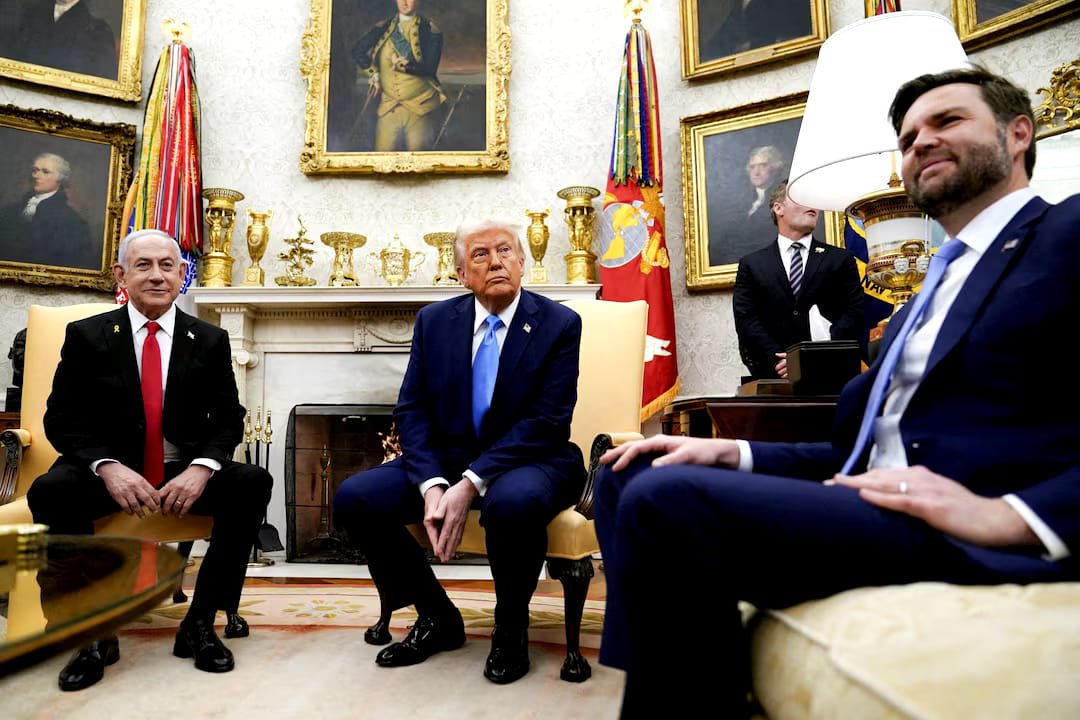
JERUSALEM/CAIRO — Israeli Prime Minister Benjamin Netanyahu said Sunday that Israel will not withdraw its forces from Gaza until Hamas gives up its weapons, rejecting key elements of U.S. President Donald Trump’s latest 15-point plan even as Israeli military operations in the territory have been scaled back under U.S. pressure.
Key Highlights
- Netanyahu said Israeli forces will not withdraw from Gaza until Hamas is fully disarmed.
- Israel and Hamas remain divided over the sequence in which withdrawal, disarmament and other commitments should be implemented.
- Hamas says it remains committed to the roadmap agreed with mediators in Cairo and wants Israel to fulfil its commitments first.
- Israeli attacks in Gaza have been significantly reduced since Monday, while Netanyahu faces political pressure ahead of an October 27 election.
Netanyahu Rejects Key Elements of Trump’s Gaza Plan
Speaking to his right-wing cabinet in televised remarks, Netanyahu said Israel does not accept the 15-point document proposed as part of Trump’s efforts to end the Gaza war. He said Israeli troops would not begin withdrawing until Hamas had been disarmed.
Netanyahu said the requirement covered both heavy and light weapons and stressed that Israel was seeking what he described as genuine rather than symbolic disarmament. He added that Israel was continuing discussions with Washington over the proposal.
“They have ideas, some of which are acceptable to us and some of which are unacceptable to us,” Netanyahu said, without providing further details about the differences.
Dispute Over Timing Threatens Gaza Roadmap
Trump announced last month that Israel and Hamas had agreed to a framework aimed at ending the conflict. Under the proposal, Israeli forces would withdraw as Hamas disarms, while an International Stabilization Force would work alongside a new Palestinian police force to provide security in Gaza.
The central disagreement now concerns the order in which the commitments should be carried out. Israel says its troops should not withdraw until Hamas disarms, while Hamas insists Israel must first stop attacks before it implements the part of the agreement concerning its weapons.
The dispute over sequencing has complicated efforts to translate the broader framework into concrete steps on the ground.
Hamas Says It Remains Committed to the Roadmap
Basem Naim, a senior Hamas official, told Reuters on Sunday that the group remained committed to the roadmap agreed with mediators in Cairo 10 days earlier.
Naim called on mediators and the United States, which Hamas described as the guarantor, to pressure Netanyahu’s government to follow the roadmap rather than obstruct the process for domestic political and electoral reasons.
Hamas has avoided using the term “disarmament”. The group has said it agreed to hand over its weapons for storage under a U.S.-backed Palestinian technocrat administration that would oversee governance in Gaza under Trump’s Board of Peace.
Hamas has said it accepted the proposal to prevent another escalation of the war, while maintaining that implementation depends on Israel first meeting its own obligations, including the withdrawal of Israeli forces.
Israeli Far Right Pushes Against Withdrawal
Netanyahu’s position is supported by members of his far-right coalition, who remain opposed to any military withdrawal that could occur before Hamas is dismantled.
Finance Minister Bezalel Smotrich praised Netanyahu and said the destruction of Hamas remained the central objective of the war. He argued that Israeli forces should not withdraw from Gaza before Hamas has been completely dismantled and demobilized.
Israeli Military Operations Have Been Scaled Back
Despite Netanyahu’s public rejection of parts of the U.S. proposal, Israel has reduced its military activity in Gaza since Monday. The change followed a meeting between Netanyahu and Nikolay Mladenov, the Gaza envoy for Trump’s Board of Peace, which oversees the Gaza ceasefire.
A source familiar with Israel’s position said the Israeli military had agreed to act only against what it considers immediate threats in Gaza and to stop targeted assassinations, which had previously taken place on a near-daily basis.
The reduction in attacks represents a significant shift in military activity while negotiations over the implementation of Trump’s plan continue.
Netanyahu Faces Political Pressure Ahead of Election
The dispute over Gaza comes as Netanyahu prepares for an election scheduled for October 27. He is under pressure from far-right members of his government who oppose concessions, while Trump, a key U.S. military and political backer, is pressing for progress towards ending the conflict.
The competing pressures leave Netanyahu balancing demands within his coalition against Washington’s push for movement on the peace framework.
Human Cost of the Continuing Conflict
Since the U.S.-mediated agreement reached in October to end the war, Israel had continued to say it would pursue militants involved in the October 2023 attack before ending targeted operations. Israeli attacks have nevertheless continued to take a heavy toll.
According to Gaza health officials cited in the supplied report, more than 1,250 people have been killed in Israeli attacks since the ceasefire, most of them civilians. Hamas has not disclosed how many of its fighters were killed.
Israeli troops currently occupy and have depopulated two-thirds of Gaza, according to the report. Nearly all of the territory’s population of more than 2 million people has been confined to a narrow coastal area controlled by Hamas, with many living in tents or damaged buildings.
The Bigger Picture
The immediate challenge for the Gaza peace framework is no longer simply whether Israel and Hamas support the broader proposal, but how and when each side will fulfil its commitments. Israel is insisting on disarmament before withdrawal, while Hamas says Israeli withdrawal and an end to attacks must come first.
With Washington pushing for progress and Netanyahu facing pressure from both his coalition and the U.S. administration, the next stage of negotiations will depend heavily on whether the parties can resolve that sequencing dispute.
Frequently Asked Questions
Why is Israel refusing to withdraw from Gaza?
Netanyahu says Israeli forces will not withdraw until Hamas has been genuinely disarmed, including the removal of both heavy and light weapons.
What does Hamas say about Trump’s Gaza proposal?
Hamas says it remains committed to the roadmap agreed with mediators in Cairo. It has said implementation depends on Israel first meeting its own commitments, including withdrawal from Gaza.
What Happens Next
Israel and Hamas remain committed to different sequences for implementing the proposed Gaza framework. Israel is continuing discussions with the United States, while Hamas is calling on mediators and Washington to ensure that the agreed roadmap is followed.
Meanwhile, the reduction in Israeli military operations since Monday could provide space for further diplomatic efforts, but Netanyahu’s rejection of key provisions and the unresolved dispute over disarmament and withdrawal remain major obstacles to the plan.

Praveen Yadav is the Founder and Editor at The Nation Bulletin. With over 3 years of experience in digital journalism and news reporting, he covers national affairs, governance, and breaking current events with a commitment to factual accuracy and verified reporting.