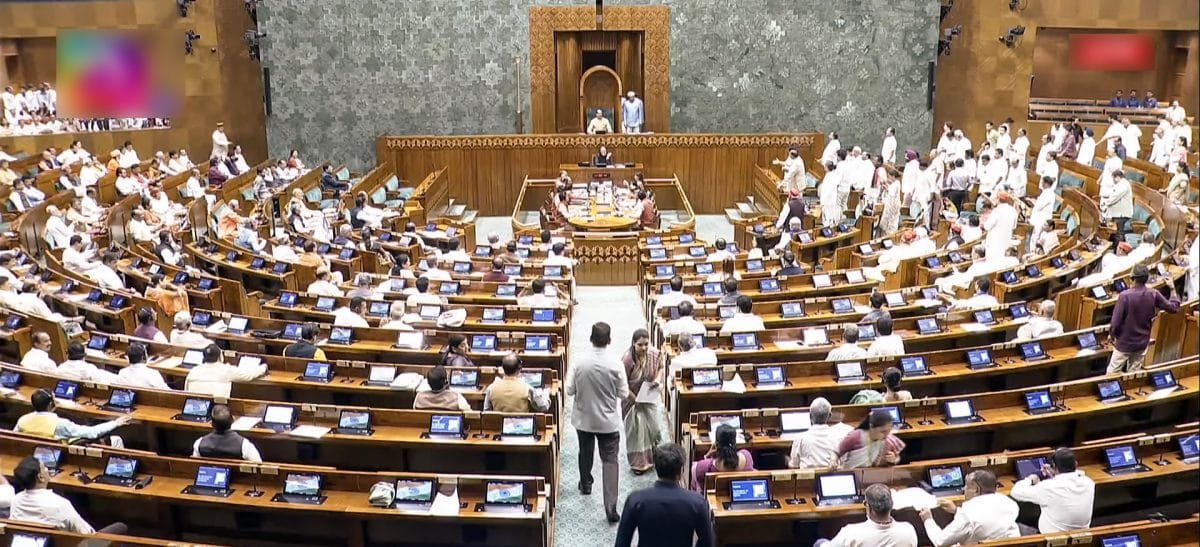
NEW DELHI, India: Parliament Monsoon Session Ends:- Parliament’s Monsoon Session concluded on Thursday after 19 sittings over 25 days, with both Houses passing 12 Bills across areas including public examinations, national honour, birth and death registration, banking records, MSMEs, taxation, tribunals, mining and cooperative development. However, repeated disruptions and low productivity limited the time available for substantive debate.
- 12 Bills were passed by Parliament during the 25-day Monsoon Session.
- The session included major legislation on public examinations, MSMEs, banking records, tribunals and mining.
- The Foreign Contribution (Regulation) Amendment Bill, 2026 was referred to a Joint Committee of both Houses.
- Rajya Sabha recorded 39.17 per cent productivity, while Lok Sabha recorded approximately 19 per cent.
Parliament Passes 12 Bills During Monsoon Session
The session began on July 20 and saw 11 Bills introduced in the Lok Sabha and two in the Rajya Sabha. Among the legislative measures passed was the Public Examinations (Prevention of Unfair Means) Amendment Bill, 2026, which seeks to strengthen the integrity of public examinations.
The legislation provides for investigation of offences within two months and trials within three months. It also allows States and Union Territories to designate Special Fast Track Courts and appoint Special Public Prosecutors. The Bill has received the President’s assent.
Key Bills Cover Examinations, National Honour and Registration
The Prevention of Insults to National Honour (Amendment) Bill, 2026 seeks to extend legal protection to Vande Mataram. Under the measure, intentionally obstructing its singing or disturbing an assembly engaged in singing it would become punishable under the relevant law.
The Registration of Births and Deaths (Amendment) Bill, 2026 introduces additional verification requirements for delayed registrations. Registrations made after one year and up to two years would require approval from the competent Executive Magistrate, while those delayed beyond two years would require approval from a Judicial Magistrate of the First Class.
MSME and Banking Record Reforms
The MSME Development (Amendment) Bill, 2026 provides for a national digital platform allowing free and voluntary registration of micro, small and medium enterprises. It also seeks to improve access to finance, speed up the resolution of delayed payment disputes and support ease of doing business.
The Bankers’ Books Evidence Bill, 2026 updates the legal framework governing banking records. Its definition of bankers’ books covers physical, electronic, digital, virtual and cloud-based records, creating a technology-neutral framework for their authentication and production.
Tribunals, Mining and State Name Change
The Tribunals Reforms Bill, 2026 aims to improve the efficiency, independence and transparency of tribunals while providing for a National Tribunals Commission.
The Mines and Minerals (Development and Regulation) Amendment Bill, 2026 seeks to provide greater certainty and predictability in the fiscal regime governing the mineral sector.
Another significant measure was the Kerala (Alteration of Name) Bill, 2026. It seeks to amend the First Schedule to the Constitution to change the name of the state from “Kerala” to “Keralam”.
Foreign Contribution Bill Sent to Joint Committee
Not all proposed legislation completed the parliamentary process during the session. The Foreign Contribution (Regulation) Amendment Bill, 2026 was referred to a Joint Committee of both Houses for examination and report.
Parliament also considered the Demands for Excess Grants for 2022-23. The related Appropriation Bill was passed by the Lok Sabha on August 4 and returned by the Rajya Sabha on August 6.
Disruptions Hit Parliamentary Productivity
Repeated disruptions became a defining feature of the session. Rajya Sabha Chairman C. P. Radhakrishnan expressed regret in his valedictory remarks, saying disorder affected scheduled business and reduced opportunities for discussion and debate.
The Rajya Sabha functioned for 37 hours and 49 minutes, recording productivity of 39.17 per cent. Of the 285 Starred Questions, 380 Zero Hour submissions and 380 Special Mentions listed during the session, only 16 questions, 52 Zero Hour submissions and 93 Special Mentions were taken up.
The Lok Sabha recorded approximately 19 per cent productivity during the session, according to the information provided by DD India.
Government and Opposition Clash Over Disruptions
The disruptions also triggered sharp exchanges between the government and Opposition. Parliamentary Affairs Minister Kiren Rijiju criticised the Congress over repeated obstruction of proceedings.
Rijiju said the government was dissatisfied that substantive discussions on important Bills could not take place because of the interruptions. The session therefore ended with a mixed record: Parliament completed legislation across several sectors, but the limited productivity curtailed wider debate and parliamentary scrutiny.
Frequently Asked Questions
How many Bills were passed during the 2026 Monsoon Session?
Both Houses passed 12 Bills during the Monsoon Session, which lasted 25 days and included 19 sittings.
What was the productivity of Parliament during the session?
Rajya Sabha recorded 39.17 per cent productivity, while Lok Sabha recorded approximately 19 per cent productivity.
What the Session Leaves Behind
The Monsoon Session produced legislation covering a wide range of areas, from examination reforms and MSMEs to banking records, tribunals, mining and the proposed change in Kerala’s name. At the same time, the scale of disruptions and low productivity remained a central concern as the session concluded.

Praveen Yadav is the Founder and Editor at The Nation Bulletin. With over 3 years of experience in digital journalism and news reporting, he covers national affairs, governance, and breaking current events with a commitment to factual accuracy and verified reporting.