DUBAI/WASHINGTON, United States — US President Donald Trump said on Tuesday that no negotiations with Iran were taking place or scheduled, while insisting that the Strait of Hormuz was open to shipping. Iran disputed that position, saying the strategically important waterway remained closed until conditions agreed with Washington were met.
- Trump said no talks with Iran were underway or scheduled.
- Iranian negotiator Mohammad Baqer Qalibaf said the Strait of Hormuz would remain shut until specific US conditions were fulfilled.
- Shipping activity remained limited, with preliminary data showing crossings in single digits on Monday.
- A vessel was struck by an unknown projectile in the strait, leaving one crew member as a casualty, according to the UKMTO.
Strait of Hormuz dispute overshadows diplomacy
The disagreement over the Strait of Hormuz came after a temporary ceasefire expired on Monday, raising fresh concerns about the prospects of a wider settlement between Washington and Tehran. Trump said in a post on Truth Social that the naval blockade remained in place but claimed the waterway was operating and that water mines had been removed or detonated.
The statement contrasted with comments from Iran, where senior officials said the strait would not reopen under the current conditions. The dispute has become a central obstacle to efforts aimed at resolving the broader conflict and negotiating an agreement covering Iran’s nuclear programme and US sanctions.
Iran links Hormuz reopening to US concessions
Mohammad Baqer Qalibaf, Iran’s top negotiator, said the waterway would remain shut until Washington met conditions contained in an interim agreement signed in June. According to comments published by Iranian state media, Tehran is seeking the lifting of the US blockade on Iranian ports, removal of oil sanctions, release of frozen Iranian assets and an end to military threats and operations.
The memorandum of understanding signed on June 17 established a 60-day period for reaching a broader agreement. That period expired on Monday, while Trump indicated that he had no plans to extend it.
Shipping remains disrupted despite US claim
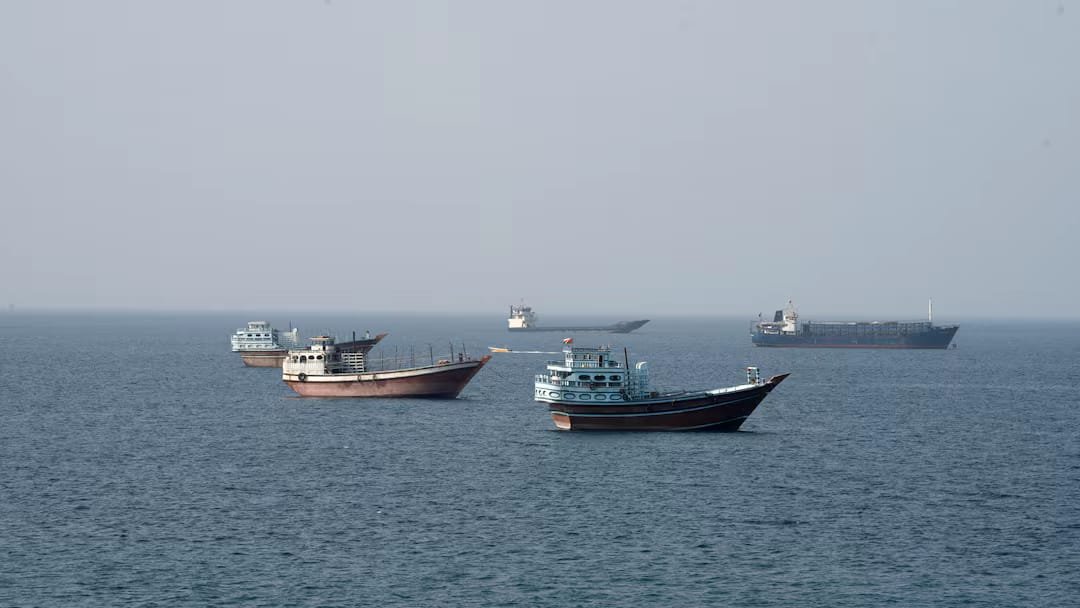
Available shipping data offered a different picture from Trump’s assertion that the waterway was operating normally. Preliminary figures showed that the number of vessels crossing the Strait of Hormuz remained in single digits on Monday.
The United Kingdom Maritime Trade Operations also reported on Tuesday that a vessel travelling outbound through the strait had been struck by an unknown projectile. The incident caused damage to the engine room and resulted in a crew casualty, while the remaining crew received assistance from the Omani Coast Guard.
The disruption carries wider economic implications because the Strait of Hormuz is a major route for global oil and liquefied natural gas shipments. Before the conflict, about a fifth of global oil and LNG flows passed through the waterway, according to the supplied Reuters report.
Iran says dialogue remains possible
Despite the hardening military posture, Iranian officials have continued to signal that diplomacy has not been completely abandoned. Mohammad Mokhber, an adviser to Iran’s supreme leader, said Iran remained open to dialogue with the United States but would not equate negotiations with surrender, according to the semi-official Fars news agency.
Mokhber also said military pressure and sanctions would not force Iran to abandon its position. He said Tehran would defend its security, dignity and allies while not seeking war.
The diplomatic uncertainty has already affected financial markets. Oil prices rose again on Tuesday as expectations for a near-term agreement weakened, while stock markets declined and borrowing costs for major economies reached multi-decade highs amid concerns over inflation and government finances.
Oil prices and fuel costs remain under pressure
Brent crude futures reached $126 a barrel during the conflict, about 75% above pre-war levels. The benchmark settled at slightly above $91 a barrel on Tuesday, after gaining 20 cents during the session.
US motorists have also faced higher fuel costs. Gasoline prices climbed above $4 per gallon, compared with less than $3 before the war, according to the automotive group AAA.
What happens next in the Iran-US standoff?
The immediate dispute centres on whether the Strait of Hormuz can return to normal shipping conditions and whether Washington and Tehran can revive negotiations. Trump has ruled out scheduled talks for now, while Iranian officials continue to attach conditions to any reopening of the waterway.
The conflict began after US and Israeli strikes against Iran on February 28 and has since caused thousands of deaths, mainly in Iran and Lebanon, according to the supplied report. With the ceasefire expired and the two sides maintaining sharply different positions, the status of the waterway remains closely tied to the wider diplomatic and military confrontation.
Frequently Asked Questions
Why is the Strait of Hormuz important?
The waterway is a major international energy route. Before the conflict, around a fifth of global oil and liquefied natural gas flows passed through the Strait of Hormuz.
What conditions has Iran linked to reopening Hormuz?
Iranian negotiator Mohammad Baqer Qalibaf said Tehran’s conditions include ending the US blockade of Iranian ports, lifting oil sanctions, releasing frozen assets and ending military threats and operations.
Source: Reuters report supplied for publication by The Nation Bulletin.

Praveen Yadav is the Founder and Editor at The Nation Bulletin. With over 3 years of experience in digital journalism and news reporting, he covers national affairs, governance, and breaking current events with a commitment to factual accuracy and verified reporting.