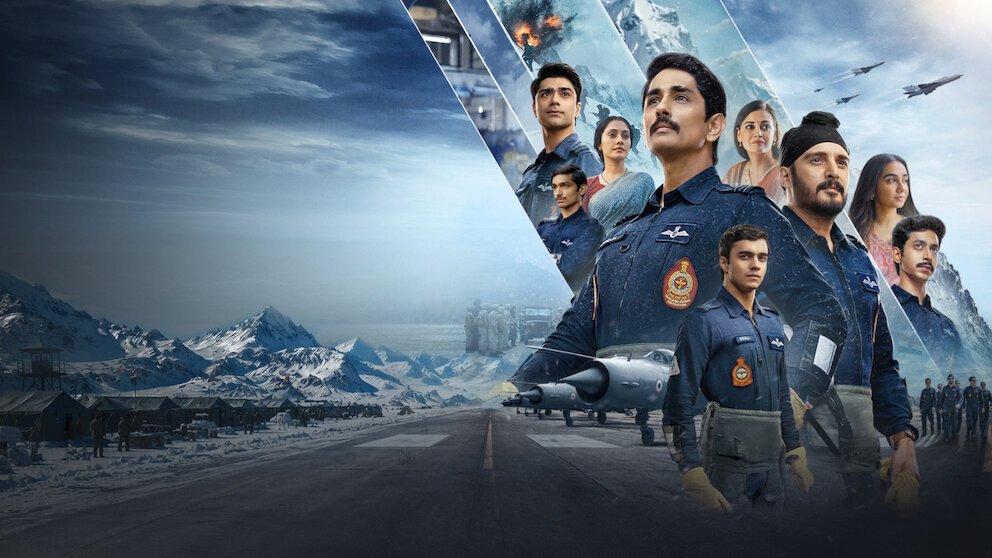
NEW DELHI, India — The makers of Netflix’s Operation Safed Sagar were given an unusually specific instruction by Indian Air Force fighter pilots during the series’ research: avoid portraying them as larger-than-life cinematic heroes. The pilots reportedly objected to the familiar slow-motion walk away from fighter jets and urged the creators to keep their portrayal grounded in reality.
- Key Highlights:
- IAF fighter pilots advised the makers of Operation Safed Sagar to keep their portrayal authentic.
- Pilots specifically objected to slow-motion, hero-style exits from fighter aircraft.
- The makers conducted around 100 hours of interviews with pilots involved in the 1999 Kargil War.
- The six-part series focuses on the Golden Arrows squadron and the human stories behind the conflict.
IAF pilots wanted realism, not cinematic heroics
Showrunner and co-writer Abhijeet Singh Parmar said the demand for authenticity came repeatedly from fighter pilots the team met during its research and recce. Their message, he recalled, was straightforward: the portrayal had to remain realistic.
The pilots had a particular objection to one familiar visual associated with military films. Parmar said several senior officers told the team not to show pilots stepping out of their aircraft in slow motion as if they were action-film heroes.
According to the makers, the pilots explained that the reality after a sortie was very different. They could be physically exhausted and drenched in sweat after operating a fighter aircraft, making a polished cinematic entrance an inaccurate representation of their experience.
The makers said the pilots also told them that they could lose around 1 kg after sorties. Such details influenced the way the series depicts its characters, with the creators choosing to present them as professionals dealing with demanding circumstances rather than as glamorous action figures.
Research shaped Operation Safed Sagar
The realism seen in Operation Safed Sagar followed an extensive research process. The team conducted around 100 hours of conversations with fighter pilots who had served during the Kargil conflict, using their experiences to understand the people and environment behind the military operation.
The production also travelled to difficult high-altitude locations while recreating the world in which the pilots operated. Some filming took place at elevations of around 16,700 feet in Himachal Pradesh.
The writing process expanded considerably during development. The project eventually produced a 200-page beat sheet, while the original concept evolved from a film into a six-part series because the makers believed the material required more space.
Makers wanted the human story at the centre
Co-producer Mehboob Pal Singh Brar said one of the biggest challenges was protecting the emotional core of the story despite the scale of the production.
With fighter jets, military bases, mountains, large locations and an extensive cast forming the backdrop, the creators deliberately kept their attention on the emotions and experiences of the people involved.
The series also takes time to establish its characters before the central conflict begins. The war enters the narrative in the third episode of the six-part series, allowing the audience to understand the people behind the uniforms before the story moves deeper into the conflict.
Vijeta became an IAF benchmark
The Indian Air Force also gave the makers a reference point for the kind of portrayal it expected. According to Brar, the team was directed toward the 1982 film Vijeta and told that Operation Safed Sagar should match or surpass its standard.
That benchmark reflected the production’s wider effort to create a credible representation of the Air Force rather than relying only on conventional military-film imagery.
The production eventually filmed across 11 locations over an 18-month period. The team received access to IAF bases and MiG aircraft, while high-altitude sequences required additional logistical and medical preparations.
High-altitude filming brought its own challenges
Filming at around 16,700 feet required extensive preparation. Medical support, ambulances and physiotherapists were kept available for the production team during the high-altitude shoots.
The creators also worked to make the locations visually convincing. Rocks were transported to recreate military sangars, helping reproduce the terrain associated with the conflict.
The emphasis on physical conditions and military environments was part of the same approach that shaped the portrayal of the pilots. Rather than presenting the conflict solely through spectacular aerial sequences, the makers sought to capture the difficult circumstances surrounding the people involved.
What Operation Safed Sagar is about
Operation Safed Sagar is based on the Indian Air Force’s role during the 1999 Kargil War and focuses on the Golden Arrows squadron and its missions during the conflict.
The series combines the aerial warfare and military operations with the personal stories of the pilots and officers at the centre of the events. Its cast includes Jimmy Shergill, Siddharth, Abhay Verma, Adil Hussain, Mihir Ahuja, Taaruk Raina, Arnav Bhasin, Amrita Bagchi, Dia Mirza and Prajakta Koli.
The series is currently streaming on Netflix.

Praveen Yadav is the Founder and Editor at The Nation Bulletin. With over 3 years of experience in digital journalism and news reporting, he covers national affairs, governance, and breaking current events with a commitment to factual accuracy and verified reporting.