Pakistan’s Prime Minister’s Office shared a cropped SCO summit photograph that placed Shehbaz Sharif at the centre while excluding Narendra Modi, Masoud Pezeshkian and other leaders visible in the full image released by India.
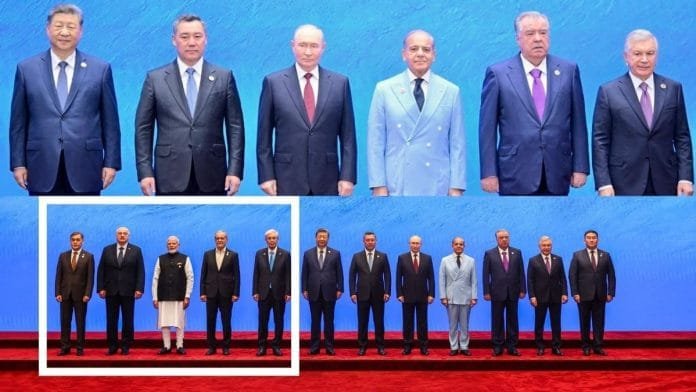
Bishkek, Kyrgyzstan — A photograph shared by Pakistan’s Prime Minister’s Office from the Shanghai Cooperation Organisation (SCO) leaders’ summit has triggered criticism after several heads of member states, including Indian Prime Minister Narendra Modi and Iranian President Masoud Pezeshkian, were cropped out of the image.
Pakistan’s cropped SCO photo puts Shehbaz Sharif at centre
The Pakistan PMO posted the edited group photograph on X while describing it as a picture of Prime Minister Shehbaz Sharif with the heads of state attending the SCO Council of Heads of State Summit in Bishkek on 1 September 2026.
The cropped version left Sharif appearing prominently in the centre of the frame. The full photograph, however, showed a wider group of SCO leaders, including Modi and Pezeshkian.
India’s PMO shared the complete image from the summit. In that photograph, Sharif could be seen standing fourth from the right.
Five SCO leaders reportedly cropped from the image
The Pakistan PMO’s version omitted five leaders who appeared in the wider photograph. Among those excluded were Modi and Pezeshkian, while Sharif’s position became more prominent in the edited frame.
The move quickly drew reactions on social media. Indian journalist Zafar Chowdhury criticised the decision, describing the cropping as “undiplomatic and discourteous” and arguing that the edited image created an impression that the Pakistani prime minister was a central figure at the summit.
Photo controversy comes after Modi’s terrorism message
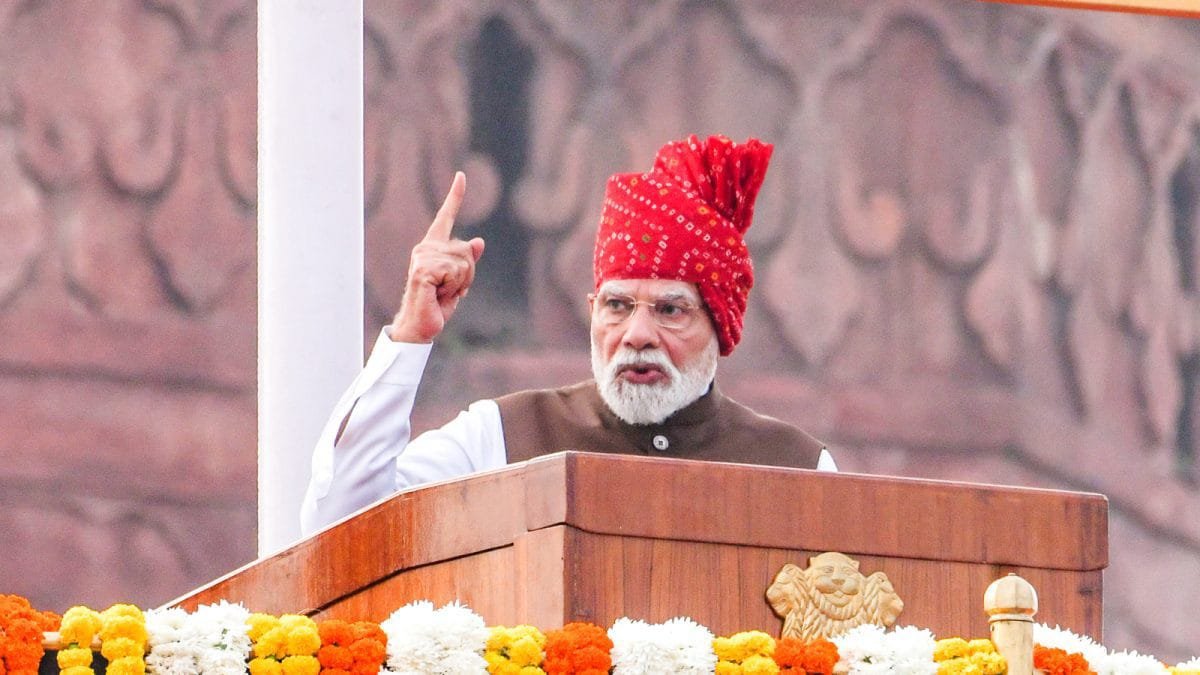
The social-media controversy coincided with Modi’s remarks at the SCO summit, where he warned against terrorism being used as an “instrument of state policy”. He called for action against terror financing, recruitment, radicalisation and safe havens.
Modi also said countries supporting terrorism should receive a clear message that terrorism cannot be treated as a strategic asset.
Pakistan set to take over SCO presidency
The episode comes as Pakistan is set to assume the SCO presidency from the Kyrgyz Republic. Islamabad will consequently host the organisation’s next leaders’ summit.
India has repeatedly raised concerns about cross-border terrorism originating from Pakistan. Relations became more strained after the April 2025 Pahalgam terror attack, in which 26 people were killed after being singled out by religion. India subsequently launched Operation Sindoor and targeted terrorist infrastructure in Pakistan and Pakistan-occupied Kashmir.
New Delhi has not yet stated how prominently it will participate in the SCO while Pakistan holds the presidency. Foreign Secretary-level officials have said that the decision will be taken by the “appropriate authorities at the appropriate time”.
What is the Shanghai Cooperation Organisation?
The SCO is marking 25 years since its founding. The grouping began as the Shanghai Five, comprising China, Kazakhstan, Kyrgyzstan, Russia and Tajikistan.
Uzbekistan joined when the organisation was formally established in 2001. India and Pakistan became members in 2017, while Iran and Belarus joined the grouping later.
Modi calls for tangible SCO results
At the Bishkek summit, Modi said the organisation had established a “strong foundation” during its first 25 years. He called for the SCO to focus on delivering tangible results in its next phase.
The photograph dispute therefore comes against the backdrop of a summit involving competing diplomatic positions and Pakistan’s upcoming role as the organisation’s next president.
Praveen Yadav is the Founder and Editor at The Nation Bulletin. With over 3 years of experience in digital journalism and news reporting, he covers national affairs, governance, and breaking current events with a commitment to factual accuracy and verified reporting.