China has said it is ready to work with India to improve mutual understanding and strengthen bilateral ties, as National Security Adviser Ajit Doval and Chinese Foreign Minister Wang Yi discussed relations, the border dispute and efforts to maintain peace in frontier areas.
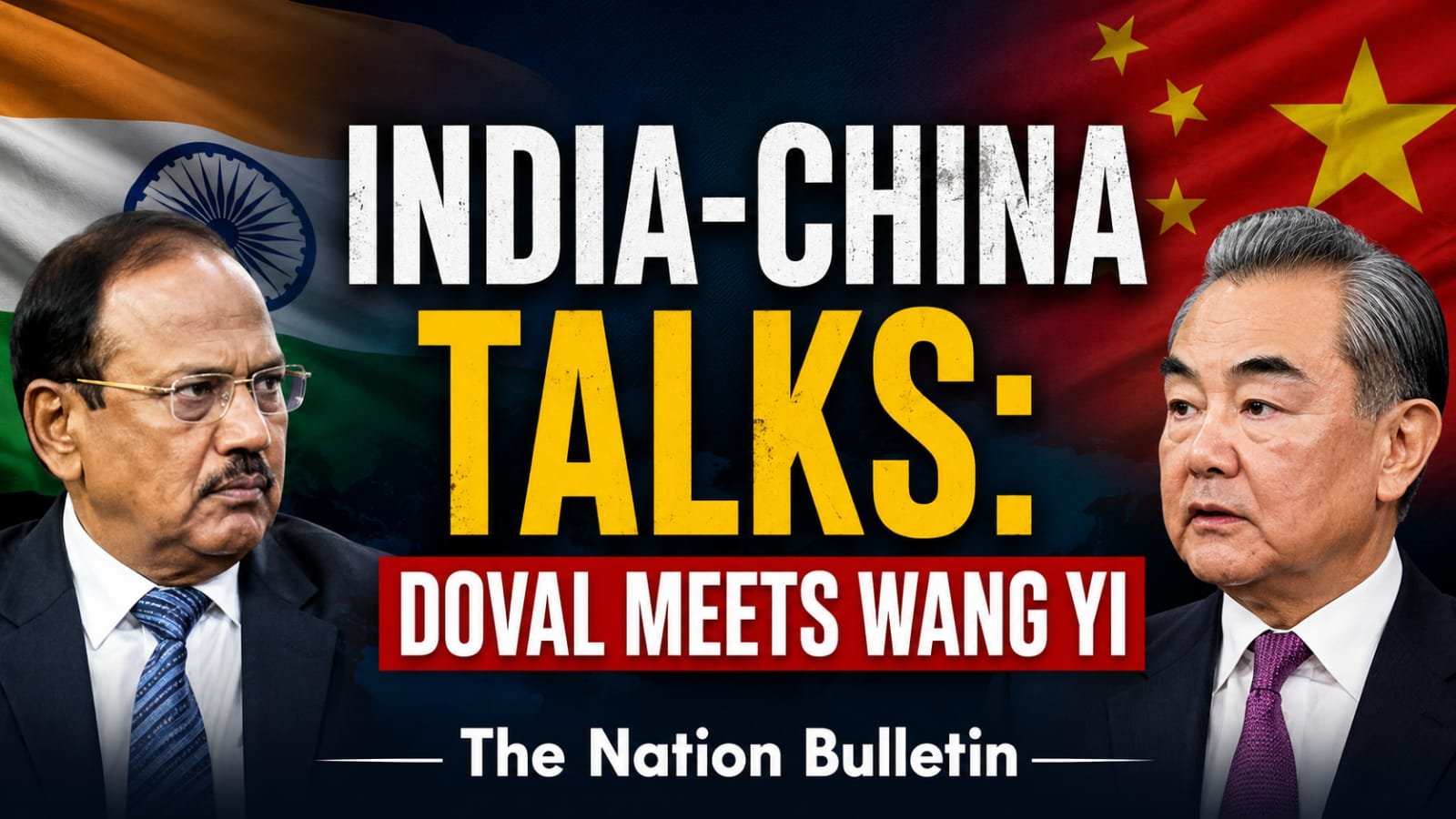
Beijing, China — India-China relations moved into focus again on Tuesday as National Security Adviser Ajit Doval held talks with Chinese Foreign Minister Wang Yi, with both sides discussing bilateral ties, the long-running boundary issue and ways to preserve peace and tranquillity in border areas. Wang said Beijing was prepared to work with New Delhi to improve relations and deepen mutual understanding.
Key Highlights
- Ajit Doval and Wang Yi discussed India-China relations and the boundary dispute during talks in Beijing.
- Both representatives said they would seek a fair, reasonable and mutually acceptable solution to the border issue.
- The discussions also covered border management, confidence-building measures and cross-border cooperation.
China Signals Push for Better India-China Relations
Wang Yi said the healthy and stable development of China-India relations serves the fundamental interests of people in both countries and reflects the shared aspirations of countries in the Global South. He said the relationship has moved beyond a purely bilateral framework and carries global and strategic significance.
The Chinese foreign minister also referred to meetings between Prime Minister Narendra Modi and Chinese President Xi Jinping in Kazan and Tianjin. According to Wang, China is willing to work with India from a long-term and strategic perspective by strengthening dialogue, expanding understanding and addressing differences.
Wang said the two countries should work towards becoming good neighbours and friends as well as partners in mutual success, referring to the idea of making the “dragon and elephant dance” a reality. He added that both sides were implementing understandings reached during Special Representatives’ meetings and remained committed to maintaining peace and tranquillity.
Ajit Doval Says India and China Are Partners, Not Rivals
Doval described India and China as ancient civilisations and important economies, stressing that the two countries are partners rather than rivals. He said India-China relations had returned to the right track.
He also spoke about strengthening strategic dialogue with China, expanding mutually beneficial cooperation and deepening coordination in multilateral forums. The discussions reflected an effort by both sides to improve engagement while managing their unresolved differences through dialogue.
Focus Remains on Border Dispute and Peace in Frontier Areas
The two representatives reiterated their intention to pursue a fair, reasonable and mutually acceptable settlement of the boundary issue. They agreed that the matter should continue to be handled appropriately through talks and consultations while preserving peace and tranquillity in border regions.
The discussions also involved border management, confidence-building measures and cross-border cooperation. The stated objective was to create a positive atmosphere and reduce border tensions ahead of a planned visit by Chinese President Xi Jinping to India for the BRICS summit on September 12-13.
Doval Also Meets Chinese Vice President Han Zheng
Before the talks with Wang, Doval met Chinese Vice President Han Zheng after arriving in Beijing on Monday for a two-day visit. The Indian Embassy said in a post on X that the meeting focused on strengthening peace and stability in border areas.
The two sides also discussed ways to further improve bilateral relations in economic, political and multilateral areas in line with the understandings reached between the leaders of the two countries.
Special Representatives Mechanism Remains Central to Talks
Doval and Wang are the Special Representatives for boundary negotiations. The mechanism was established in 2003 to seek a broader settlement of the dispute involving the 3,488-kilometre India-China border.
While the Special Representatives’ process has not resolved the boundary dispute, officials from both countries continue to view it as a useful channel for dealing with recurring tensions and other issues. Chinese Foreign Ministry spokesperson Lin Jian had announced the Special Representatives-level talks during a press briefing on Monday.
Relations Recovering After Years of Strain
Relations between New Delhi and Beijing became sharply strained after the Galwan Valley clash in 2020 and the prolonged military standoff in eastern Ladakh. Since then, both sides have taken steps aimed at stabilising the relationship.
When asked about Xi Jinping’s reported India visit, Lin Jian did not give a direct response. The latest talks between Doval and Wang, however, placed renewed emphasis on dialogue, managing differences and maintaining stability along the border as both sides continue diplomatic engagement.
Frequently Asked Questions
What did Ajit Doval and Wang Yi discuss in Beijing?
They discussed India-China relations, the boundary dispute, peace in border areas, border management, confidence-building measures and cross-border cooperation.
What is the Special Representatives mechanism between India and China?
Established in 2003, the mechanism brings together designated representatives from both countries to work towards a broader solution to the dispute involving the 3,488-kilometre India-China border.
Both sides have indicated that future engagement will continue to rely on dialogue and consultation, with the immediate focus remaining on maintaining stability and improving the overall atmosphere in bilateral relations.

Praveen Yadav is the Founder and Editor at The Nation Bulletin. With over 3 years of experience in digital journalism and news reporting, he covers national affairs, governance, and breaking current events with a commitment to factual accuracy and verified reporting.