Rakshabandhan 2026 will be celebrated on Friday, August 28, according to the supplied Varanasi Panchang details. The festival falls during a Bhadra-free period, while the Raksha Bandhan day will also coincide with a lunar eclipse that will not be visible in India, according to the source material.
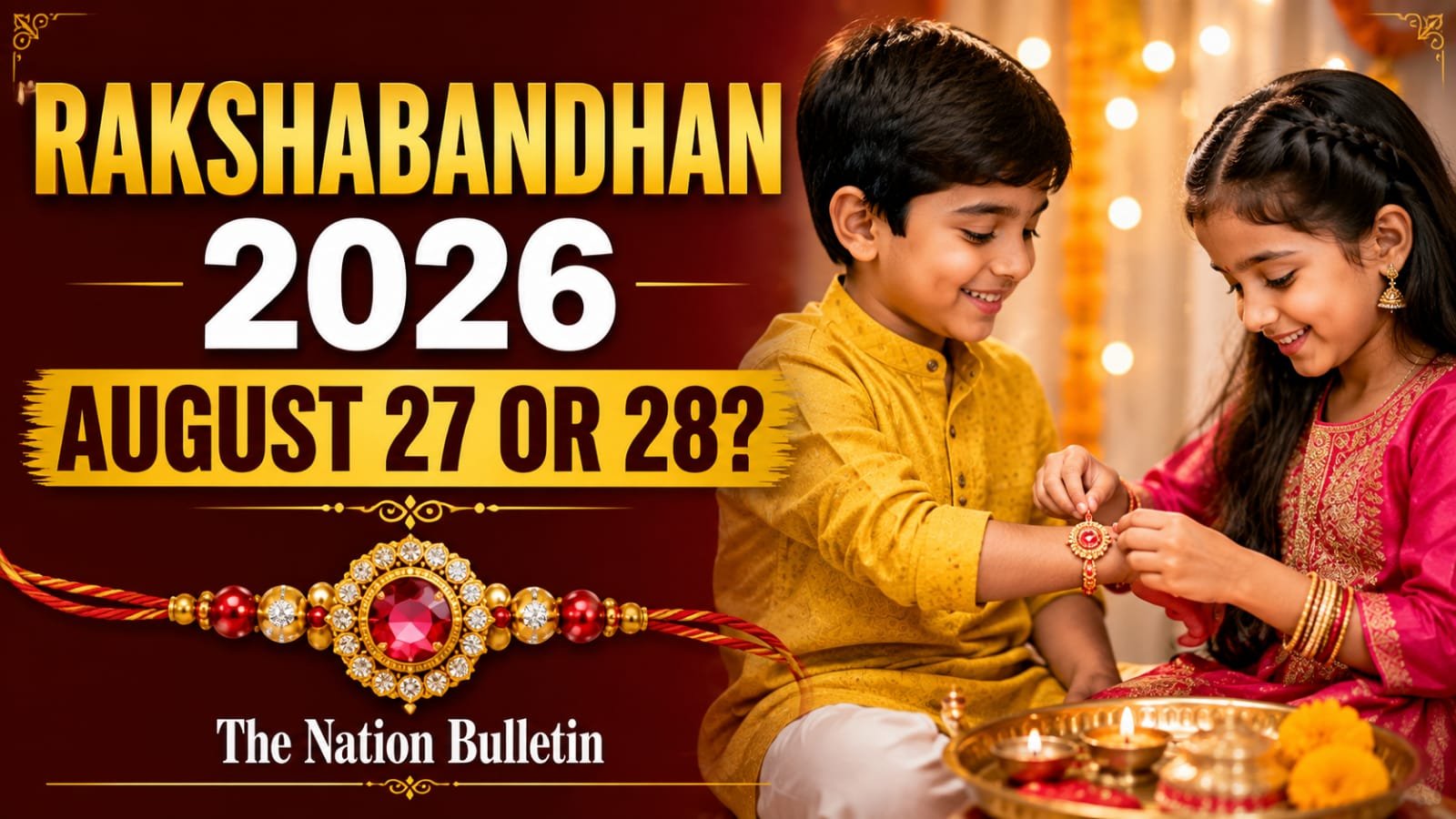
INDIA — Rakshabandhan 2026 will be observed on Friday, August 28, with the Shravan Purnima falling across August 27 and 28. According to the Varanasi Panchang information provided, the Purnima Tithi begins at 8:31 AM on August 27 and continues until 9:18 AM on August 28, while Bhadra ends at 8:54 PM on August 27. This means there will be no Bhadra obstruction during the Rakhi observance on August 28.
Key Highlights
- Rakshabandhan 2026 will be observed on Friday, August 28, according to the Varanasi Panchang details supplied.
- Shravan Purnima begins at 8:31 AM on August 27 and ends at 9:18 AM on August 28.
- Bhadra remains from 8:31 AM to 8:54 PM on August 27, but does not remain during the Rakshabandhan observance on August 28.
- The main Rakhi Muhurat is given as 5:57 AM to 9:48 AM, with Abhijit Muhurat from 11:56 AM to 12:48 PM as another option.
- The supplied material says the lunar eclipse on Rakshabandhan will not be visible in India and therefore there will be no Sutak in the country.
Rakshabandhan 2026 Date: August 27 or 28?
The main question surrounding Rakshabandhan 2026 is whether the festival should be observed on August 27 or August 28. The supplied Varanasi Panchang calculation places the festival on Friday, August 28.
Shravan Purnima begins at 8:31 AM on August 27 and remains in effect until 9:18 AM on August 28. Bhadra, which begins with the Purnima on August 27, ends at 8:54 PM that night.
As a result, the Rakshabandhan observance on August 28 takes place during a Bhadra-free Purnima. According to the supplied explanation of the traditional rule, Rakshabandhan is preferably observed during a sufficiently long Bhadra-free Purnima.
Rakshabandhan 2026 Muhurat for Tying Rakhi
The most prominent Rakhi Muhurat given in the source is from 5:57 AM to 9:48 AM on August 28. This is presented as the preferred period for sisters to tie Rakhi on their brothers’ wrists.
If this period is missed, the supplied Panchang details also give Abhijit Muhurat as an alternative. It will run from 11:56 AM to 12:48 PM on August 28.
The source also states that Rakhi can be tied throughout the day because Bhadra will not be present during the relevant Rakshabandhan period. The exact practice may nevertheless follow the family’s or local tradition.
Why is Bhadra Important on Rakshabandhan?
In the Hindu Panchang system, time is divided into different Karanas, one of which is known as Vishti Karana or Bhadra. Religious traditions regard Bhadra as an intense period and therefore take its position into account for several auspicious activities.
Marriage ceremonies, housewarming ceremonies, Yajna and Upanayana are among the activities for which Bhadra is traditionally considered. Rakshabandhan also takes Bhadra into consideration because the festival is associated with a specific Purnima observance.
In 2026, the supplied calculation places Bhadra on August 27 rather than during Rakshabandhan on August 28. Therefore, the source describes this year’s festival as taking place in a Bhadra-free Purnima.
Raksha Sutra Mantra for Rakhi Ceremony
Rakhi is traditionally understood not merely as a thread but as a symbol of affection, trust, protection and good wishes between siblings. The supplied material gives the following traditional Raksha Sutra mantra:
येन बद्धो बली राजा दानवेन्द्रो महाबलः। तेन त्वामनुबध्नामि रक्षे मा चल मा चल॥
The meaning given in the source is that the Raksha Sutra is associated with the powerful King Bali and is tied with a wish for protection and stability. The ceremony can also include chanting “Om Namo Bhagavate Vasudevaya” while remembering Lord Vishnu.
Simple Rakshabandhan Puja Vidhi
On Rakshabandhan, the brother and sister can bathe and wear clean clothes before preparing the Puja Thali. The supplied list includes Roli or Kumkum, Akshat, flowers, a lamp, incense, sweets and Rakhi.
The suggested sequence begins with worship of the deity, followed by applying Tilak and Akshat to the brother. An Aarti can then be performed before the Rakhi is tied while reciting the Raksha Sutra mantra.
After the Rakhi ceremony, the siblings can wish each other happiness, good health and success. The source also suggests sitting quietly before God for some time, touching parents’ feet and seeking blessings from elders.
The following auspicious verse is also mentioned in the supplied material:
सर्वे भवन्तु सुखिनः, सर्वे सन्तु निरामयाः। सर्वे भद्राणि पश्यन्तु, मा कश्चिद्दुःखभाग्भवेत्॥
Its stated meaning is a prayer that everyone should remain happy and healthy, see auspiciousness in life and be free from suffering.
What If You Do Not Have a Rakhi?
The supplied religious guidance says that a commercially purchased Rakhi is not essential for observing the tradition. A silk thread can be used as a Raksha Sutra, while a red thread used during Puja can also serve the purpose if a silk thread is unavailable.
If neither type of thread is available, the source says the ceremony can still be observed by applying Tilak to the brother and praying for his health, happiness and bright future.
Can a Raksha Sutra Be Tied to an Ishta Devata?
According to the supplied material, women who do not have a brother can tie a Raksha Sutra to their Ishta Devata as an expression of faith. Men can also follow this practice.
Gods and deities mentioned in the source include Lord Ganesha, Goddess Durga, Hanuman, Shri Krishna, Shri Ram and Lord Shiva, along with any deity regarded as one’s personal object of worship. The act is described as a prayer for protection and an expression of devotion.
Who Else Can Wear a Raksha Sutra?
The Raksha Sutra tradition described in the source is not limited to brothers and sisters. A Guru may tie a Raksha Sutra to a disciple, while a wife may also tie one to her husband.
The supplied material refers to the traditional story of Shachi tying a Raksha Sutra to Indra’s wrist during a time of war. This story is presented as one explanation for the association of the Raksha Sutra with protection and auspiciousness.
Rakshabandhan and the Raja Bali Tradition
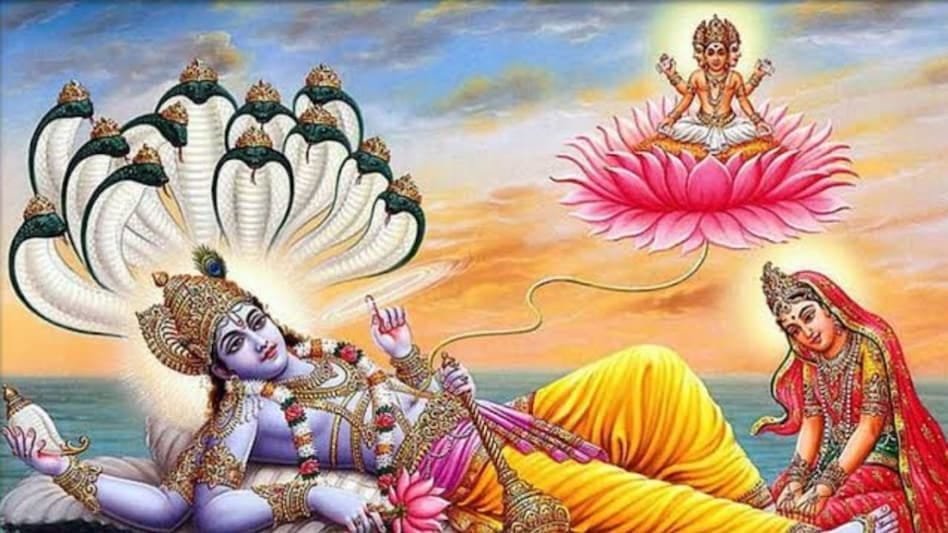
Several religious stories are associated with Rakshabandhan. One of the traditions highlighted in the source involves King Bali and Lord Vishnu.
According to the supplied account, Lord Vishnu took the Vamana incarnation and asked King Bali for three steps of land. Bali accepted. Vamana then covered the Earth and sky in two steps, leaving no space for the third.
Bali offered his own head for the final step. Pleased by his generosity and surrender, Lord Vishnu made Bali the ruler of Patala and offered him a boon.
Bali requested that Lord Vishnu remain in Patala to protect him. Vishnu accepted the request and stayed there, which led to Goddess Lakshmi eventually travelling to Patala to bring him back to Vaikuntha.
Why Goddess Lakshmi Is Linked to the Rakhi Tradition
The supplied story says that Goddess Lakshmi told Bali that she had no brother and wanted to make him her brother by tying a Raksha Sutra. Bali accepted her and asked her to choose a gift.
Lakshmi then requested that Lord Vishnu be released from the promise that kept him in Patala so that he could return to Vaikuntha. Bali honoured his word and allowed Vishnu to leave, completing the traditional story associated with the Raksha Sutra.
What Is the Significance of Rakshabandhan?
The festival represents more than the physical act of tying a thread. The supplied material describes the Rakhi as a symbol of a sister’s wishes for her brother’s health, long life, happiness and success, alongside the brother’s affection, respect and sense of responsibility towards his sister.
The tradition also extends into wider family and community values. Seeking elders’ blessings, praying for family well-being and spending time together are presented as meaningful parts of the festival.
Varanasi and Mithila Panchang: Is There a Difference?
The Varanasi and Mithila Panchang traditions can use different calculation methods. Local sunrise timings and calculation systems may therefore create differences of a few minutes in the stated Muhurat.
However, the supplied material says both traditions point to August 28 as the Rakshabandhan date in 2026. Therefore, it does not indicate a major difference in the principal festival date.
What About the Lunar Eclipse on Rakshabandhan 2026?
The supplied material states that a lunar eclipse will occur on Rakshabandhan this year but will not be visible in India. On that basis, it says that Sutak will not apply in India and religious activities can continue throughout the day.
The source material initially identifies the eclipse and Bhadra as reasons people have been uncertain about the date and timing. Its subsequent explanation, however, places Rakshabandhan on August 28 during a Bhadra-free period.
Frequently Asked Questions
When is Rakshabandhan 2026 in India?
Rakshabandhan 2026 will be celebrated on Friday, August 28, according to the supplied Varanasi Panchang information.
When does Bhadra end on Rakshabandhan 2026?
According to the supplied Panchang details, Bhadra begins at 8:31 AM on August 27 and ends at 8:54 PM on the same day.
What is the best Rakhi Muhurat on August 28, 2026?
The supplied main Rakhi Muhurat is from 5:57 AM to 9:48 AM. Abhijit Muhurat is given as another option from 11:56 AM to 12:48 PM.
Will Bhadra affect Rakhi tying in 2026?
According to the supplied calculations, Bhadra will not be present during the Rakshabandhan observance on August 28, so there is no need to wait for Bhadra to end that day.
Can Rakhi be tied without a traditional Rakhi?
Yes. The supplied guidance says a silk thread or red Puja thread can be used as a Raksha Sutra. If no thread is available, Tilak and a prayer for the brother’s well-being can also be used to observe the occasion.
What can someone without a brother do on Rakshabandhan?
The supplied material says a person without a brother can tie a Raksha Sutra to an Ishta Devata as an expression of devotion and a prayer for protection.
Rakshabandhan 2026 will therefore be observed on August 28 according to the supplied Panchang details, with the festival falling during a Bhadra-free period. Beyond the Muhurat and ritual rules, the occasion is presented as a time for strengthening sibling bonds, seeking blessings and expressing wishes for the well-being of family members.
Praveen Yadav is the Founder and Editor at The Nation Bulletin. With over 3 years of experience in digital journalism and news reporting, he covers national affairs, governance, and breaking current events with a commitment to factual accuracy and verified reporting.