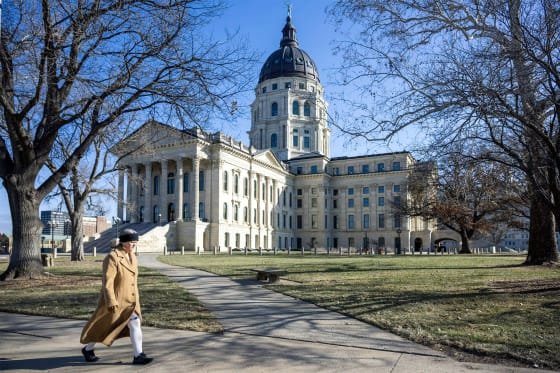
Kansas voters have rejected a Republican-backed constitutional amendment that sought to replace the state’s current judicial appointment system with direct elections for Kansas Supreme Court justices. The Associated Press projected the measure’s defeat after Tuesday’s vote, preserving the existing process under which justices are appointed rather than elected.
The proposed amendment, placed on the ballot by the Republican-controlled Kansas Legislature, would have significantly changed how the state’s highest court is selected. Supporters argued that the change would give voters greater influence over the judiciary, while opponents maintained that it could introduce greater political pressure into judicial elections and undermine the independence of the court.
Existing Judicial Selection System Will Remain in Place
With voters rejecting the amendment, Kansas will continue using its long-standing merit-based judicial selection process. Under the current system, the governor appoints Kansas Supreme Court justices from a list prepared by a nine-member nonpartisan commission.
Since 2019, Democratic Governor Laura Kelly has held the authority to make those appointments after receiving recommendations from the commission. The constitutional amendment proposed replacing that model with direct statewide elections, creating contests that would have more closely resembled elections for other public offices.
The outcome means no immediate changes will be made to the process used to fill vacancies on the Kansas Supreme Court, leaving the existing appointment system intact.
Ballot Measure Followed Years of Debate Over the State Supreme Court
The proposal emerged after several high-profile rulings by the Kansas Supreme Court drew criticism from conservative lawmakers and advocacy groups. Among the most significant was the court’s 2019 decision that the Kansas Constitution protects the right to abortion.
That ruling remained in place after Kansas voters rejected a separate constitutional amendment in 2022 that would have removed abortion protections from the state constitution following the U.S. Supreme Court’s decision overturning Roe v. Wade.
Although Tuesday’s ballot measure focused solely on changing the method of selecting Supreme Court justices, the debate surrounding the proposal unfolded against the backdrop of broader political disagreements over the court’s role in deciding major constitutional issues.
Campaign Drew Millions of Dollars in Advertising
The campaign surrounding the constitutional amendment became one of the state’s most closely watched political contests, attracting substantial financial backing from both supporters and opponents.
According to advertising tracking firm AdImpact, more than $12 million was spent on television and other campaign advertising during the race. Opponents of the proposal outspent supporters by more than two-to-one, making the contest one of the most expensive statewide ballot campaigns in recent Kansas history.
The heavy spending reflected the importance both sides attached to the future structure of the state’s judicial system, with competing campaigns seeking to persuade voters over whether Kansas should continue appointing Supreme Court justices or move to direct elections.
Supporters and Opponents Offered Competing Visions for Judicial Selection
The campaign over the proposed constitutional amendment centered on two contrasting arguments about how Kansas Supreme Court justices should be chosen. Supporters maintained that direct elections would make the state’s highest court more accountable to the public, while opponents argued that judicial independence would be weakened if judges were required to campaign for office.
Those backing the amendment said the existing appointment process gives too much influence to a small group involved in selecting judicial nominees before they are presented to the governor. They argued that allowing voters to elect justices directly would increase transparency and public participation in the judicial system.
One of the leading organizations supporting the amendment, Kansans for Democracy Inc., criticized the current commission-based system in campaign advertising, arguing that decisions about the composition of the Kansas Supreme Court are made outside public view.
“The public can’t see it or control it. Voters like you completely cut out.”
Supporters also pointed to research from the Brennan Center for Justice at New York University School of Law, which says voters in 21 states directly elect their supreme court justices, arguing that Kansas should adopt a similar model.
Opponents Argued Existing System Protects Judicial Independence
Groups opposing the amendment focused their campaign on preserving the current appointment process, arguing that it helps keep judicial decisions separate from electoral politics and large campaign donations.
They emphasized that Kansas voters already play a role in determining whether Supreme Court justices remain on the bench. Under the existing system, justices face a statewide retention vote after serving one year and then every six years thereafter, allowing voters to decide whether they should continue in office.
Opponents said replacing the appointment system with contested elections could expose judicial races to the same political divisions and fundraising pressures seen in other statewide campaigns.
One of the major groups campaigning against the proposal, Kansas United for Impartial Courts, argued that electing justices directly could increase the influence of wealthy donors and partisan political organizations on the state’s highest court.
“‘No’ stops judges from becoming politicians. ‘No’ prevents billionaires from buying seats on the court.”
Campaign Referenced Judicial Elections in Other States
During the campaign, opponents pointed to recent Wisconsin Supreme Court elections as an example of how judicial contests can attract significant political spending despite officially being nonpartisan. They argued that such elections have increasingly drawn national attention and financial support from wealthy donors, transforming judicial races into highly contested political campaigns.
Supporters, however, maintained that direct elections would strengthen democratic accountability by giving Kansas voters the final say over who serves on the state’s highest court, rather than relying primarily on appointments made through the existing commission process.
The competing messages shaped one of Kansas’ most expensive ballot measure campaigns, with both sides presenting sharply different views on how judicial independence and public accountability should be balanced.
Abortion Debate Remained a Key Political Undercurrent
Although campaign advertisements from both supporters and opponents largely avoided directly referencing abortion or other politically sensitive issues, the proposal was widely viewed through the lens of previous Kansas Supreme Court decisions on reproductive rights.
The court’s 2019 ruling that the Kansas Constitution protects the right to abortion became a defining issue in the broader debate over judicial selection. That decision remained in place after voters rejected a constitutional amendment in 2022 that sought to remove abortion protections following the U.S. Supreme Court’s decision to overturn Roe v. Wade.
Democratic leaders in Kansas argued that the latest proposal was closely connected to the future ideological direction of the state’s highest court. They pointed to earlier comments from Kansas Attorney General Kris Kobach, who had publicly supported changing the judicial selection process.
According to the report, Kobach called on lawmakers in 2019 to pursue a constitutional amendment allowing direct elections for Supreme Court justices. In a 2022 interview with The Wichita Eagle, he said such a change would allow anti-abortion justices to be placed on the court “slowly and quietly.”
Democrats Claimed Timing of Vote Favoured Lower Turnout
Opponents of the amendment also questioned the decision to place the proposal on the August primary ballot instead of waiting for the November general election, when voter turnout is typically higher.
Kansas Democratic Party Chair Jeanna Repass argued that the measure was fundamentally linked to abortion policy despite the issue not appearing prominently in campaign advertising.
“This is about abortion. Plain and simple.”
Progressive groups also contended that holding the vote during the primary election would reduce participation compared with a general election, potentially benefiting supporters of the amendment.
Vote Preserves Kansas’ Current Judicial Selection System
With the amendment defeated, Kansas will continue using its existing merit-based process for selecting Supreme Court justices. Governors will remain responsible for appointing justices from a list prepared by the state’s nonpartisan judicial nominating commission, while voters will continue to decide through periodic retention elections whether sitting justices should remain on the bench.
The result represents another significant statewide decision involving the Kansas Supreme Court and ensures that no constitutional changes will be made to the current appointment system. It also reflects voters’ decision to leave the existing judicial selection process unchanged despite months of campaigning and more than $12 million in advertising from both sides.
The outcome is expected to remain an important reference point in future debates over judicial independence, electoral accountability and the role of state supreme courts in deciding major constitutional questions.

Praveen Yadav is the Founder and Editor at The Nation Bulletin. With over 3 years of experience in digital journalism and news reporting, he covers national affairs, governance, and breaking current events with a commitment to factual accuracy and verified reporting.