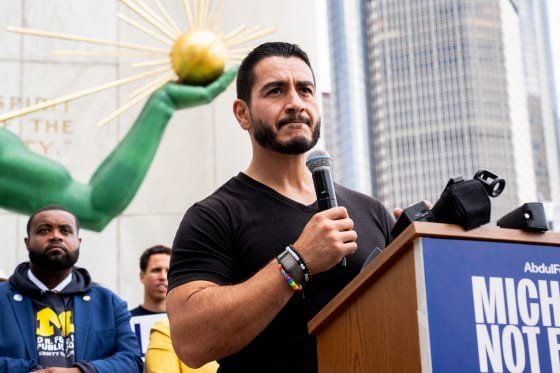
Dr. Abdul El-Sayed’s victory in Michigan’s Democratic primary for the United States Senate has emerged as one of the most closely watched political developments of the 2026 election cycle. Competing against U.S. Representative Haley Stevens in what became the most expensive Senate primary in American history, El-Sayed overcame an overwhelming financial disadvantage to secure the party’s nomination.
The contest attracted nearly $70 million in outside spending, with political action committees, special-interest organizations and advocacy groups investing heavily in the race. Despite being significantly outspent throughout the campaign, El-Sayed relied on an extensive volunteer-driven operation, a progressive economic platform and strong grassroots enthusiasm to edge past Stevens by roughly one percentage point from more than 1.5 million ballots cast.
While the result has been celebrated by progressive Democrats across the country, the narrow victory also highlighted divisions inside Michigan’s Democratic coalition. The county-level results revealed both the strengths that powered El-Sayed to victory and the electoral weaknesses he will need to address before facing Republican nominee Mike Rogers in November.
Historic Primary Defied Spending Disadvantage
Few recent statewide campaigns have faced financial odds comparable to El-Sayed’s. Independent expenditure groups and major political organizations poured unprecedented resources into the race, with opposition advertising dominating television, digital platforms and mail campaigns throughout Michigan.
According to the campaign’s reported figures, El-Sayed’s operation focused less on expensive advertising and more on direct voter engagement. Volunteers knocked on more than 200,000 doors, completed approximately one million phone calls and participated in over 500 campaign events across the state.
This extensive field organization allowed the campaign to maintain direct contact with voters even as outside groups dramatically outspent it on paid media. Rather than competing dollar-for-dollar, the campaign emphasized neighborhood organizing, volunteer recruitment and repeated voter outreach.
Economic Populism Became the Campaign’s Central Theme
Throughout the primary campaign, El-Sayed consistently framed the election around economic concerns affecting ordinary households. His campaign slogan focused on reducing the influence of money in politics while arguing that government policies should lower financial pressure on working families.
Healthcare remained another defining issue. El-Sayed continued advocating for Medicare for All, presenting it as part of a broader vision aimed at reducing healthcare costs while expanding access. His campaign also highlighted tax reforms targeted at wealthier Americans alongside proposals intended to benefit middle-income workers.
In a state where manufacturing, inflation and household affordability remain dominant political concerns, that economic message became one of the campaign’s strongest organizing tools.
Labor Support Added Crucial Credibility
Another important pillar of El-Sayed’s coalition was organized labor. His endorsement from the United Auto Workers (UAW) provided significant momentum during the campaign.
The backing carried particular importance because union endorsements often play a major role in statewide Democratic contests in Michigan. Support from one of the country’s most influential industrial unions helped strengthen El-Sayed’s standing among manufacturing workers and reinforced his emphasis on workers’ rights, wages and economic fairness.
The endorsement also helped his campaign compete in industrial communities where establishment-backed candidates have traditionally performed well.
Progressive Leaders Energized Younger Voters
The campaign also benefited from appearances by nationally recognized progressive figures, including Senator Bernie Sanders and Representative Alexandria Ocasio-Cortez. Their participation brought additional national attention to the race while energizing younger Democratic voters, university students and progressive activists.
Campaign rallies featuring national progressive leaders attracted considerable interest and reinforced El-Sayed’s image as one of the leading voices of the Democratic Party’s progressive wing.
Supporters viewed the primary as more than a contest between two candidates. For many, it represented a broader debate over the future direction of Democratic politics, particularly on economic policy, healthcare, climate action and campaign finance reform.
Foreign Policy Also Mobilized Key Communities
Foreign policy, particularly U.S. military support for Israel’s campaign in Gaza, became another defining issue during the primary.
El-Sayed openly opposed continued unconditional military assistance, making the issue a central part of his campaign platform. That position resonated strongly with Arab-American and Muslim communities across parts of Michigan, particularly in Wayne County and surrounding areas, while also attracting progressive voters who prioritized human rights issues.
Instead of avoiding the subject, the campaign treated foreign policy as a voter mobilization issue, helping increase participation among communities that have become increasingly influential within Michigan’s Democratic electorate.
County-Level Results Revealed the Foundation of Victory
The geographic distribution of votes illustrates how El-Sayed assembled his winning coalition.
His strongest performances came from densely populated urban areas, particularly Wayne County, which includes Detroit and Dearborn. High turnout among working-class voters, progressive activists, Arab-American residents and Muslim communities created a substantial electoral advantage that proved decisive in such a closely fought race.
University communities also delivered overwhelming support. Counties containing major academic institutions, including Washtenaw County and parts of Ingham County, responded positively to El-Sayed’s background in public health as well as his policy positions on healthcare, climate issues and artificial intelligence regulation.
Combined with competitive performances in several industrial communities influenced by organized labor, these urban and university-based strongholds formed the electoral coalition that ultimately carried El-Sayed to the Democratic nomination despite facing one of the most expensive opposition campaigns in modern Senate primary history.
Suburban Weakness Could Become a Major General Election Challenge
Although Abdul El-Sayed succeeded in assembling a winning coalition during the Democratic primary, the election results also exposed several areas where his support was noticeably weaker. Among the most significant was the performance in Michigan’s affluent suburban counties, particularly Oakland County, where Haley Stevens built substantial margins.
These suburban communities have played a decisive role in recent statewide Democratic victories and remain critical battlegrounds in general elections. Many voters in these areas traditionally identify as moderates or center-left Democrats, making them an essential constituency for any candidate seeking to win statewide office.
The primary suggested that while El-Sayed’s progressive platform resonated strongly with urban voters and younger Democrats, some suburban voters expressed greater comfort with Stevens’ more moderate political profile. Expanding support beyond his progressive base will therefore become one of the central tasks of the general election campaign.
Primary Revealed Divisions Within the Democratic Coalition
The Democratic primary was not only expensive but also highly competitive, leaving behind ideological and political divisions that El-Sayed will now need to address.
Haley Stevens and her supporters frequently emphasized questions surrounding electability, arguing that moderate candidates have historically performed well in Michigan’s statewide contests. The campaign also highlighted issues related to representation and appealed strongly to suburban women voters.
Another factor was the support received earlier in the race by Mallory McMorrow, who secured approximately four percent of the primary vote before endorsing El-Sayed. While that endorsement strengthened party unity, translating endorsements into votes requires continued outreach, particularly among moderate Democratic voters who may still have reservations.
Political observers view party unity as one of the defining challenges heading into November, especially in a race expected to be decided by narrow margins.
Rural Counties Present Another Electoral Test
Beyond suburban Michigan, the primary results also indicated limited strength in several rural and outstate counties. These regions frequently become highly competitive during statewide elections and often lean toward Republican candidates.
Issues such as healthcare reform, criminal justice policy and broader progressive priorities are expected to receive increased scrutiny during the general election campaign. Republicans are likely to focus attention on these policy differences while attempting to expand their appeal among independent and undecided voters outside Michigan’s largest metropolitan areas.
For El-Sayed, improving his standing in these regions may not require outright victories, but reducing Republican margins could prove equally important in a closely contested statewide race.
General Election Against Mike Rogers Begins Immediately
With the Democratic nomination secured, El-Sayed now shifts his attention to Republican nominee Mike Rogers in a contest widely viewed as one of the nation’s most competitive Senate races.
The race has been rated as a toss-up by political analysts, underscoring its potential significance in determining future control of the United States Senate. Both national parties are expected to devote considerable financial resources and organizational support to Michigan over the coming months.
Unlike the Democratic primary, where progressive enthusiasm helped drive turnout, the general election will require a broader coalition that includes independents, moderate Democrats and suburban swing voters.
Three Key Priorities Before November
Rebuilding Democratic Unity
El-Sayed has already indicated that unifying Democrats will become an immediate priority following the primary. Turning campaign rhetoric into practical cooperation with former rivals, party leaders and moderate supporters will be essential if Democrats hope to retain the Senate seat.
Countering Republican Attacks
Republican strategists have already begun portraying El-Sayed as too progressive for a politically competitive state like Michigan. His campaign is expected to respond by emphasizing economic issues such as household costs, corporate influence, healthcare affordability and working-class concerns while attempting to reduce the effectiveness of cultural and ideological attacks.
Expanding Beyond the Progressive Base
The coalition that secured victory in the Democratic primary may not be sufficient in November. Winning statewide will likely require stronger performances among suburban professionals, independent voters and moderate Democrats while maintaining enthusiasm among younger, urban and labor-backed supporters.
Why the Michigan Senate Race Matters Nationally
Michigan remains one of the country’s premier battleground states, and the Senate contest is expected to receive sustained national attention throughout the election season. Because control of the Senate could depend on only a handful of competitive races, both parties are likely to intensify campaign efforts, advertising and voter outreach across the state.
The outcome will not only determine Michigan’s next senator but could also influence the balance of power in Washington, making the contest one of the most closely watched races of the 2026 election cycle.
What Happens Next
Abdul El-Sayed’s Democratic primary victory demonstrated that an extensive grassroots organization, labor support and a clear progressive economic message can overcome a significant financial disadvantage. His campaign successfully mobilized urban communities, university towns and key labor constituencies to secure one of the most notable primary victories of the year.
However, the same election also revealed challenges that cannot be ignored. Narrow margins, weaker suburban performance and ideological divisions inside the Democratic coalition suggest that the general election will demand a broader strategy than the one that proved successful in the primary.
Whether El-Sayed can unite Democratic voters, appeal to moderates and compete effectively in suburban Michigan will likely determine not only the outcome of his campaign against Mike Rogers but also the future balance of power in the United States Senate.
Source
Source: Based on the supplied campaign analysis and election reporting provided by the user.

Praveen Yadav is the Founder and Editor at The Nation Bulletin. With over 3 years of experience in digital journalism and news reporting, he covers national affairs, governance, and breaking current events with a commitment to factual accuracy and verified reporting.