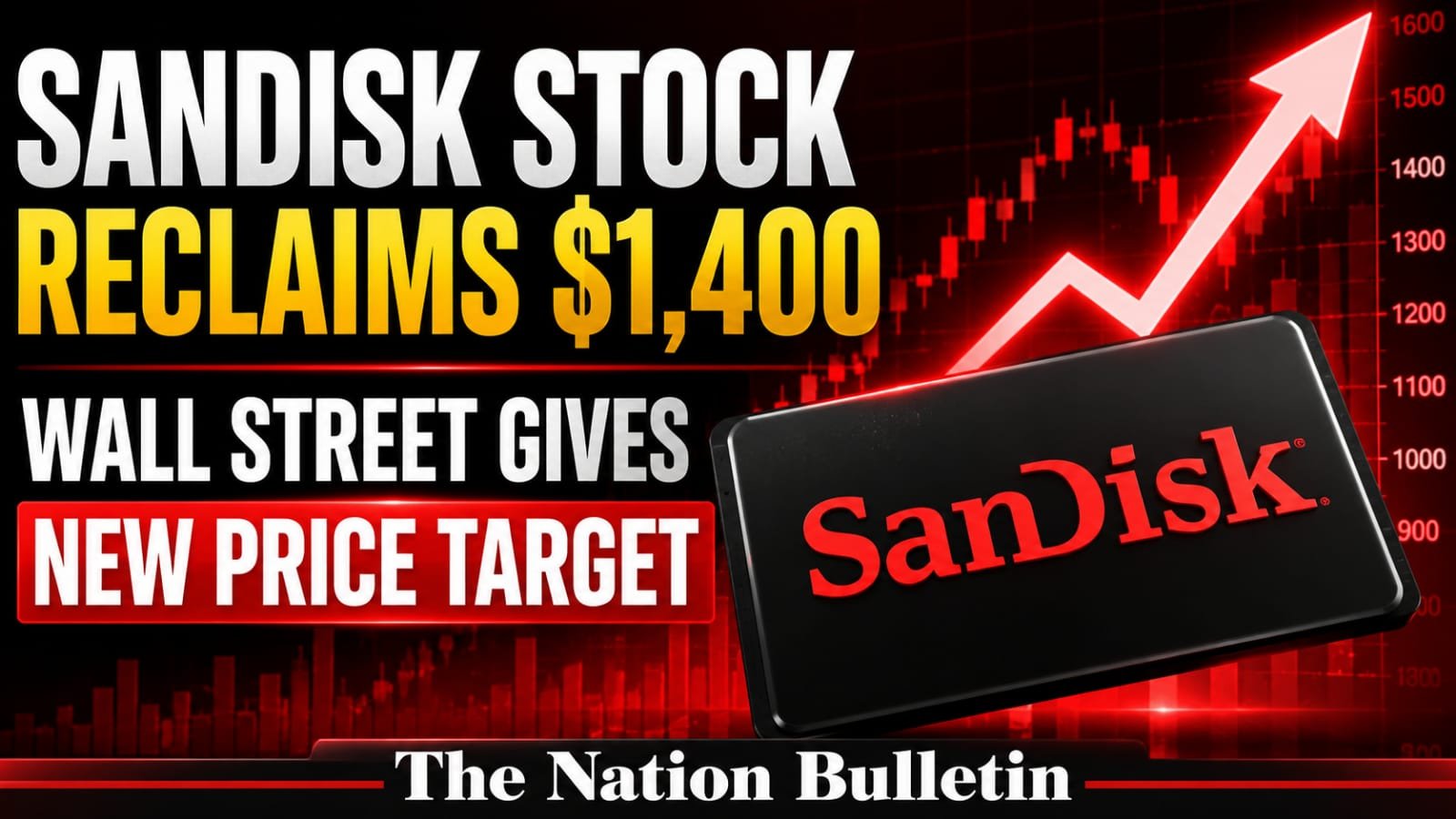
SanDisk (NASDAQ: SNDK) remains one of the most closely watched semiconductor stocks after recovering above the $1,400 mark, even as investors reacted to weaker-than-expected revenue guidance for the upcoming quarter. The memory and storage company has experienced sharp price swings over the past few weeks, highlighting both the opportunities and risks facing investors in the fast-moving semiconductor sector.
The stock had fallen to nearly $998 during the market sell-off in late July before staging a strong rebound in August. Tuesday’s trading session saw SanDisk close at $1,427, recovering much of its earlier losses. However, after the company released its latest quarterly results and forward guidance, the stock came under fresh pressure in after-hours trading.
While SanDisk delivered quarterly revenue and earnings that exceeded Wall Street expectations, investors focused on the company’s softer sales outlook for the current fiscal quarter. That cautious forecast triggered a decline in extended trading despite the company’s strong year-to-date performance.
Quarterly Results Beat Expectations but Guidance Disappoints Investors
SanDisk reported fiscal fourth-quarter revenue of $8.79 billion, surpassing analysts’ expectations of approximately $8.64 billion. According to the company, revenue growth during the quarter was supported by stronger product pricing and higher shipment volumes.
Adjusted earnings also came in ahead of market forecasts. SanDisk posted adjusted earnings per share of $39.25, comfortably above analysts’ consensus estimate of $34.37.
Despite those stronger-than-expected quarterly numbers, management projected first-quarter revenue in the range of $10.3 billion to $10.8 billion. Analysts had been expecting around $11.16 billion, making the guidance the biggest concern for investors.
The company forecast adjusted earnings per share between $44 and $46, compared with Wall Street estimates of approximately $45.58. Although the earnings outlook remains broadly in line with expectations, the revenue forecast suggested demand growth could moderate during the coming quarter.
Wall Street Firms Continue to Back SanDisk Stock
Even after the latest earnings reaction, several major Wall Street firms continue to express confidence in SanDisk’s long-term growth prospects. Their optimism reflects expectations that demand for high-performance memory and storage products will remain strong as artificial intelligence infrastructure expands worldwide.
Investment firm Susquehanna maintained one of the most aggressive outlooks on the stock, assigning a price target of $3,050. Based on SanDisk’s recent closing price of around $1,427, the target suggests potential upside of more than 100% if the forecast is achieved.
Wells Fargo adopted a more cautious stance while maintaining a Hold rating. The bank set a price target of $1,620, implying moderate upside from current trading levels. The target indicates that analysts still expect the company to benefit from continued demand across memory and storage markets despite near-term uncertainty.
According to the supplied market data, Wall Street currently has 25 Buy ratings, five Hold ratings and no Sell ratings on SanDisk shares. The average analyst price target remains above $2,400, reflecting continued confidence in the company’s long-term business outlook.
AI Infrastructure Continues to Support Long-Term Growth Story
SanDisk has emerged as one of the strongest-performing technology stocks in 2026, driven largely by growing investment in artificial intelligence infrastructure. High-speed memory and storage solutions have become increasingly important as companies build larger AI data centers capable of processing enormous amounts of information.
Earlier this week, SanDisk announced a collaboration with memory manufacturer SK Hynix to introduce a new hardware blueprint designed to improve AI system performance while lowering operating costs. According to the supplied information, the initiative aims to establish a shared standard for high-speed memory that could accelerate AI deployment and reduce infrastructure expenses for data-center operators.
The company also announced an expansion of its capital return programme by approving an additional $14 billion share repurchase authorization. Stock buyback programmes are generally viewed as a sign that management believes shares remain attractive over the longer term.
Volatility Remains a Key Risk for Investors
Although SanDisk has recovered significantly from its late-July decline, recent trading has demonstrated how quickly sentiment can shift in semiconductor stocks. The company has gained nearly 490% since the beginning of 2026, making it the best-performing stock in the S&P 500 during that period, according to the supplied market data.
That remarkable rally has also increased investor expectations, meaning even strong quarterly earnings may not be enough if future guidance falls below consensus forecasts. Wednesday’s after-hours decline illustrated that dynamic, with investors reacting more strongly to the weaker revenue outlook than to the company’s earnings beat.
As SanDisk continues to benefit from AI-driven demand, investors are expected to closely monitor upcoming quarterly performance, pricing trends, shipment volumes and execution of its long-term growth strategy to determine whether the recent recovery above the $1,400 level can be sustained.

Praveen Yadav is the Founder and Editor at The Nation Bulletin. With over 3 years of experience in digital journalism and news reporting, he covers national affairs, governance, and breaking current events with a commitment to factual accuracy and verified reporting.