WASHINGTON, United States — Tuesday’s primary elections in Florida and Alaska offered contrasting signals for the two major U.S. parties ahead of the November elections. Republicans strengthened their position in Florida, while Democrat Mary Peltola’s strong showing in Alaska gave Democrats a potential opening in the Senate race. Voters also continued to use mail ballots despite President Donald Trump’s opposition to the practice, while Trump-backed candidates produced mixed results.
- Florida Republicans strengthened their dominance in statewide races and could gain additional House seats under the new congressional map.
- Democrat Angie Nixon pulled off an upset in Florida’s Senate primary against Alex Vindman.
- Mary Peltola led Republican Senator Dan S. Sullivan in Alaska’s nonpartisan Senate primary.
- Trump-backed candidates had mixed results, with some winning nominations and others suffering defeats.
Florida Republicans cement their advantage
Florida continued to demonstrate its transformation from a competitive battleground into a state dominated by Republicans. In Tuesday’s statewide Senate and governor primaries, Republican candidates collectively received roughly 1.6 million votes, compared with about 1.2 million for Democratic candidates.
The election was also the first conducted under a congressional map pushed through by Florida’s Republican-controlled legislature earlier this year. The new boundaries could result in Republicans gaining four additional House seats in November.
If that projection holds, Florida’s congressional delegation could consist of 24 Republicans and just four Democrats. Nonpartisan analysts also view Republicans as strong favourites in the governor’s contest.
Angie Nixon scores Florida Senate primary upset
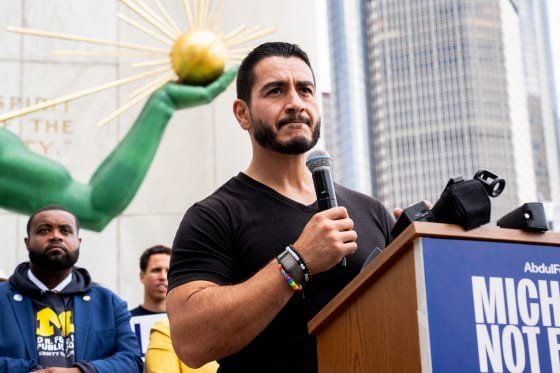
Democratic socialist Angie Nixon delivered one of the biggest surprises of the Florida primaries by defeating Alex Vindman in the Democratic Senate contest. Vindman, a national security expert who became nationally known after testifying during Trump’s first impeachment, raised more than $16 million for his campaign.
Nixon raised less than $1 million but secured the Democratic nomination. The outcome could make the November contest against Republican incumbent Senator Ashley Moody more difficult for Democrats, according to nonpartisan analysts.
Florida already represented a challenging target for Democrats seeking the four Republican-held Senate seats they need to capture control of the 100-member chamber. The state’s voter registration advantage also favours Republicans, who have approximately 1.5 million more registered voters than Democrats.
Progressives record mixed results in Florida
Nixon’s victory adds to a series of primary successes for progressive Democrats who have benefited from frustration among some voters with the party’s leadership.
However, the broader results were not uniformly favourable to the progressive wing. Oliver Larkin, who received backing from the Democratic Socialists of America, lost his primary challenge to centrist Democratic Representative Jared Moskowitz in Florida’s 25th Congressional District.
Progressive candidate Elijah Manley also finished third in the Democratic primary for the neighbouring 20th Congressional District.
Mary Peltola gives Democrats hope in Alaska
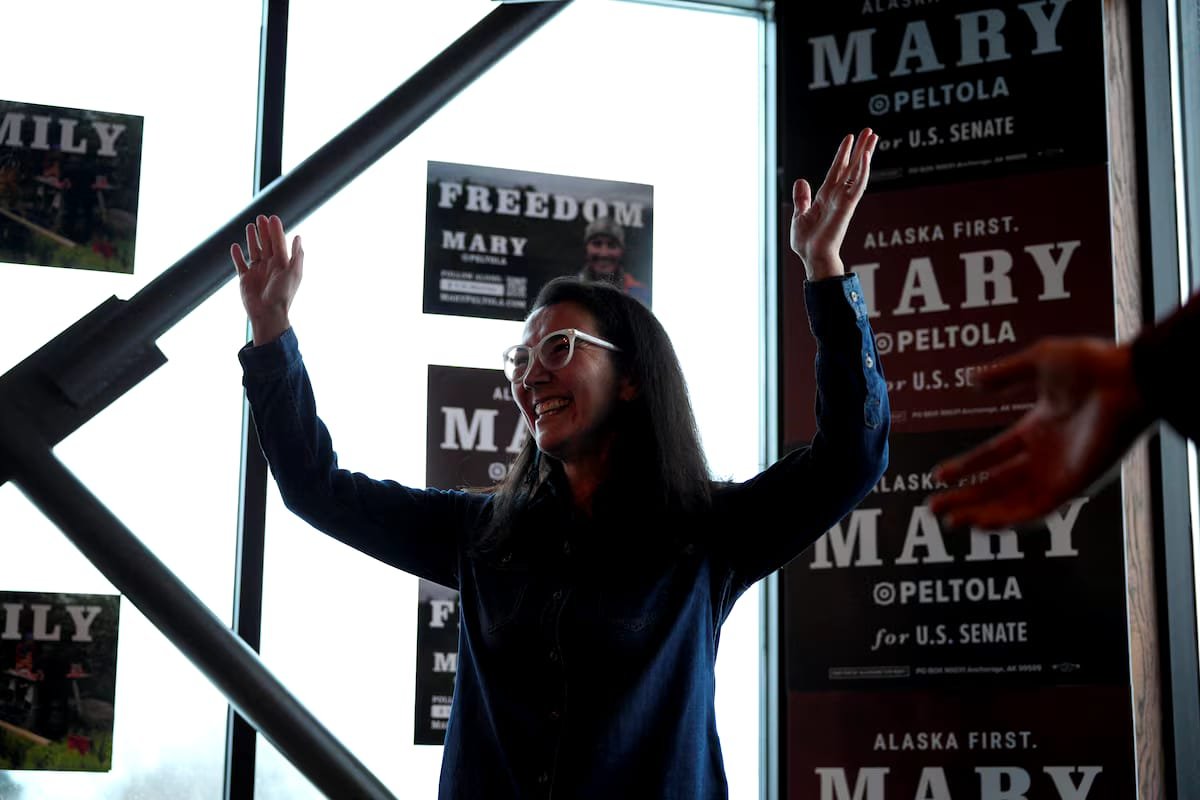
Alaska offered Democrats a more encouraging result. Centrist Democrat Mary Peltola performed strongly in the state’s nonpartisan Senate primary, receiving more votes than incumbent Republican Senator Dan S. Sullivan.
With 93% of precincts reporting, Peltola had 48% of the vote compared with Sullivan’s 42.8%. The two are expected to face each other in November, making the contest one of the opportunities Democrats see for gaining a Republican-held Senate seat.
Alaska has not elected a Democratic senator since 2014, making Peltola’s performance particularly significant for Democrats looking to expand their Senate map.
Second Dan Sullivan creates Republican concern
The Alaska race also features another candidate with a similar name. Dan J. Sullivan, a former schoolteacher, was in third place with 2.4% of the vote and was still awaiting confirmation of whether he would advance among the four candidates moving to the November election.
Republicans have raised concerns that his candidacy could confuse voters and potentially draw support away from incumbent Dan S. Sullivan. According to the supplied Reuters report, the U.S. Justice Department is investigating the matter.
Dan J. Sullivan has said he entered the race because of his dissatisfaction with the incumbent but denied that his intention was to mislead voters.
Florida voters continue using mail ballots
Tuesday’s Florida primary also highlighted the continued popularity of mail voting despite Trump’s repeated criticism of the practice. Trump has questioned the security of mail ballots and has pledged to end their use before the midterm elections.
State figures showed that approximately 1.15 million Floridians voted by mail in Tuesday’s primaries. Another 818,000 voted early in person, while about 1.3 million cast ballots in person on Election Day.
Trump himself voted by mail in Florida, according to media reports. The White House said this did not contradict his position because exemptions would be available for people unable to vote in person.
Trump endorsements produce mixed results
Trump continued his influential role in Republican primaries, but his endorsed candidates experienced both victories and defeats.
His early backing of Byron Donalds helped clear the Republican field in the race to succeed Governor Ron DeSantis. Donalds is now positioned to become Florida’s first Black governor if he defeats Democrat David Jolly in November.
Sydney Gruters, the wife of Republican National Committee Chair Joe Gruters, also won the Republican nomination in a Tampa Bay-area congressional district with Trump’s support.
However, Trump-backed Catalina Lauf failed to secure the Republican nomination in the crowded race for Donalds’ congressional seat. Lauf previously served in Trump’s administration during his first presidential term.
Representative Cory Mills also lost his Republican primary to former television anchor Ryan Elijah despite receiving Trump’s backing. Mills faces an investigation by the House Ethics Committee involving allegations of sexual misconduct and campaign finance violations, which he denies.
Trump endorsed Elijah after Mills refused to leave the race, saying he had urged Mills to withdraw before supporting the eventual winner.
What Tuesday’s primaries mean for November
The Florida and Alaska results point to very different electoral landscapes. Florida remains increasingly difficult territory for Democrats, while Alaska has emerged as a potentially competitive Senate battleground.
The contests also demonstrate the continuing influence of Trump within Republican primaries, although Tuesday’s results showed that his endorsement does not guarantee victory in every race.
Why is Alaska important for Democrats?
Mary Peltola’s strong primary showing against Republican Senator Dan S. Sullivan gives Democrats one of their potential opportunities to gain a Senate seat in November. Alaska has not had a Democratic senator since 2014.
How did Trump-backed candidates perform?
Trump-backed candidates had mixed results. Byron Donalds and Sydney Gruters won their Republican nominations, while Catalina Lauf and Cory Mills lost their respective primary contests.

Praveen Yadav is the Founder and Editor at The Nation Bulletin. With over 3 years of experience in digital journalism and news reporting, he covers national affairs, governance, and breaking current events with a commitment to factual accuracy and verified reporting.