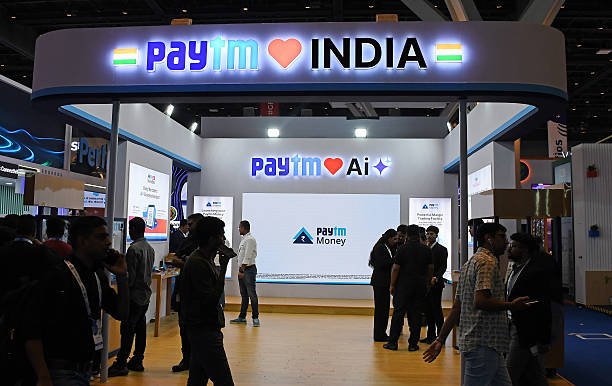
NEW DELHI, India — Paytm shares jumped nearly 9% during Monday’s trading session after global brokerage Bernstein raised its target price for One97 Communications, the parent company of Paytm, to ₹2,200 from ₹1,500. The brokerage retained its ‘Outperform’ rating, citing the potential introduction of Merchant Discount Rate (MDR) on certain UPI transactions and stronger earnings prospects for the fintech company.
- Paytm stock surge: Shares gained as much as 8.62% to ₹1,565.90 on the NSE.
- Bernstein target: The brokerage raised its price target to ₹2,200 from ₹1,500.
- UPI opportunity: Bernstein has factored potential MDR introduction from FY28 into its estimates.
- Earnings outlook: Bernstein’s FY30 EPS forecast is around 30% higher than its previous estimate.
Paytm share price jumps after Bernstein target hike
Paytm shares came into focus on August 10 after Bernstein made a significant upward revision to its valuation target. The stock touched an intraday high of ₹1,565.90 on the NSE, compared with its previous close of ₹1,441.65.
The move represented a gain of more than ₹120 from Friday’s closing level at the day’s high. Bernstein’s revised ₹2,200 target is also more than 52% above the previous closing price, according to the supplied market figures.
The new target has an additional significance because it is now above Paytm’s ₹2,150 IPO price. One97 Communications entered the stock market in November 2021, but its shares subsequently struggled to sustain the issue price amid concerns related to profitability, regulation and monetisation of the payments business.
Why Bernstein raised Paytm share price target
The key factor behind Bernstein’s revised view is the possibility of a change in the economics of UPI payments. The brokerage has incorporated the potential introduction of an MDR on certain UPI transactions from FY28 into its base-case estimates.
MDR refers to a fee associated with digital payment transactions. If such a framework is introduced, it could create an additional revenue opportunity for payment companies and banks while the current framework continues to keep UPI transactions free for consumers.
Bernstein estimates that a potential MDR structure could improve Paytm’s net payments margin by around 3-4 basis points. Although the improvement appears limited when viewed in isolation, the brokerage expects its impact to become more significant as Paytm’s payment volumes expand.
Paytm earnings estimates get a major boost
The brokerage’s revised assumptions have also resulted in a substantial change to its earnings expectations. Bernstein’s FY30 earnings-per-share forecast for Paytm is now approximately 30% higher than its earlier estimate.
The revised outlook indicates that the brokerage is looking beyond short-term stock movements and focusing on the possibility of improved monetisation across Paytm’s large payments ecosystem.
For investors, the important question is whether higher payment monetisation can eventually translate into sustainable earnings growth. The company’s ability to improve margins while maintaining the scale of its payments business will remain important to that assessment.
UPI MDR: Why government clarification matters
The potential MDR discussion gained attention after the government reiterated that consumers would not be charged for UPI transactions. Finance Minister Nirmala Sitharaman had earlier clarified that MDR on digital transactions applies to merchants rather than customers.
The distinction is significant because UPI currently operates without a direct charge to consumers. A future MDR framework could therefore alter the revenue economics for payment companies without necessarily changing the cost faced by customers for making UPI payments.
The finance minister had also pointed to the potential role of such charges in supporting investment by banks and fintech companies in payment infrastructure and security.
What MDR could mean for Paytm
Paytm operates its payments business at significant scale, meaning even a small improvement in revenue generated per transaction could become meaningful as transaction volumes increase.
That potential combination of scale and improved monetisation appears central to Bernstein’s revised estimates. The brokerage’s thesis is not based solely on Paytm processing more transactions but also on the possibility of generating better economics from those transactions.
However, the potential MDR framework is not an immediate earnings driver. The eventual impact would depend on the final policy structure, the types of merchants covered, applicable transaction thresholds and the timing of implementation.
Paytm stock outlook: What investors should watch
The sharp market reaction shows that investors are paying close attention to the possibility of stronger monetisation in Paytm’s payments business. Bernstein’s ₹2,200 target suggests the brokerage sees room for a substantial improvement in the company’s earnings profile over the coming years.
At the same time, the stock’s future performance will depend on more than the potential UPI revenue opportunity. Margin improvement, payments-business monetisation and the company’s ability to convert its ecosystem scale into sustainable earnings will remain key factors.
For now, Bernstein’s upgraded target has placed Paytm back above its IPO price in the brokerage’s valuation framework, giving the stock’s recovery story a new point of focus for market participants.
Frequently Asked Questions
Why did Paytm shares rise today?
Paytm shares rose sharply after Bernstein raised its target price to ₹2,200 from ₹1,500 and retained its ‘Outperform’ rating. The brokerage cited potential UPI MDR and stronger future earnings prospects.
What is Bernstein’s new Paytm share price target?
Bernstein has increased its Paytm target price to ₹2,200 from ₹1,500. The revised target is also above Paytm’s ₹2,150 IPO price.
What is UPI MDR and why is it important for Paytm?
MDR is a fee associated with digital payment transactions. A potential MDR framework for certain UPI transactions could provide payment companies with an additional source of revenue and potentially improve Paytm’s payments margins.
Will customers have to pay for UPI transactions?
The supplied information states that the government has reiterated that consumers would not have to pay charges for UPI transactions. Any potential MDR would be structured around merchant transactions rather than a direct customer charge.
How much has Bernstein increased its Paytm earnings forecast?
Bernstein’s FY30 earnings-per-share forecast for Paytm is around 30% higher than its earlier estimate, reflecting its expectations around improved payment monetisation and future earnings.
Financial disclaimer: This article is intended for informational purposes only and does not constitute investment advice, a recommendation to buy or sell securities, or a guarantee of future returns. Stock prices and brokerage estimates can change rapidly. Investors should conduct independent research and consult a qualified financial adviser before making investment decisions.

Praveen Yadav is the Founder and Editor at The Nation Bulletin. With over 3 years of experience in digital journalism and news reporting, he covers national affairs, governance, and breaking current events with a commitment to factual accuracy and verified reporting.