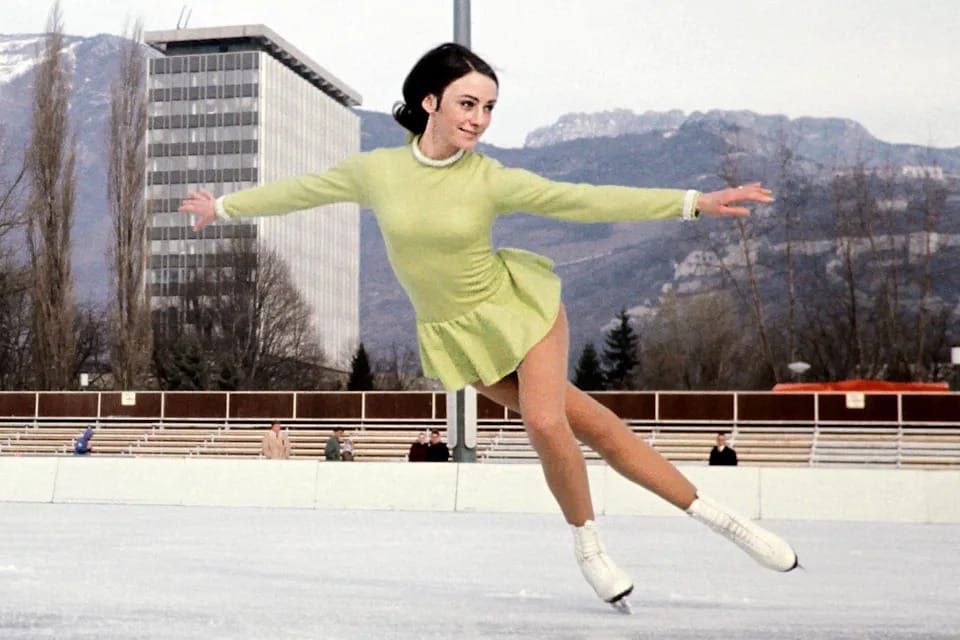
GRENVILLE, France: Peggy Fleming’s journey to Olympic glory remains one of the most remarkable stories in sports history. At just 19 years old, the American figure skater captured the women’s singles gold medal at the 1968 Winter Olympics in Grenoble, France, delivering a moment of triumph that came after one of the darkest chapters in U.S. figure skating.
Fleming’s victory was about much more than winning an Olympic title. It represented the resurgence of American figure skating following the devastating 1961 plane crash that claimed the lives of the entire U.S. World Figure Skating Championships team, along with coaches, officials, judges and family members.
A National Tragedy Changed the Course of Her Career
Fleming began skating at the age of nine and quickly established herself as one of the country’s brightest young talents. However, her career took a dramatic turn in 1961 when tragedy struck the U.S. figure skating community.
The American team was traveling to the World Figure Skating Championships in Prague, Czechoslovakia, when their Boeing 707 crashed while approaching Brussels Airport. The accident claimed dozens of lives, including Fleming’s coach, Bill Kipp, and many of the nation’s leading skaters.
The disaster left a significant void in American figure skating, with an entire generation of elite athletes and coaches lost in a single accident. The responsibility of rebuilding the sport gradually shifted to the next generation, placing enormous expectations on the young Fleming.
“She was the hope for the American future. The pressure was enormous,” sports columnist Christine Brennan said while reflecting on Fleming’s remarkable rise.
New Coach Helped Shape a Future Champion
Following the tragedy, Italian coach Carlo Fassi took over Fleming’s training and played a pivotal role in her development. Under his guidance, she steadily matured into one of the world’s finest figure skaters.
Although she competed at the 1964 Winter Olympics at just 15 years old, Fleming was still developing her competitive experience. Over the following four years, she transformed into a dominant force by winning five consecutive U.S. national titles and back-to-back World Championships before arriving in Grenoble as one of the favorites for Olympic gold.
The Memorable Chartreuse Dress
One of the lasting images from Fleming’s Olympic triumph was the distinctive chartreuse-colored skating dress created by her mother.
Years later, Fleming explained that her mother carefully selected the unusual shade after learning about the French town of Chartreuse, located near Grenoble and famous for its traditional liqueur. The idea was that wearing the color might create a symbolic connection with the host nation.
Fleming later joked that the symbolism may have gone unnoticed by the French audience, but the unique green shade became one of the most recognizable outfits in Olympic figure skating history.
An Emotional Olympic Moment for Peggy Fleming and Her Family
Looking back on her Olympic success, Peggy Fleming has often said that the most unforgettable moment was not standing on the podium but seeing the expression on her mother’s face after her performance.
Her mother had supported every stage of her skating journey, helping her remain focused through years of demanding training and personal challenges. Fleming later recalled that the joy and pride she saw in her mother’s reaction became one of the defining memories of her Olympic experience.
According to Fleming, her mother always believed in her potential and encouraged her to stay mentally strong, qualities that proved invaluable during one of the most pressure-filled competitions of her career.
A Victory That Revived American Figure Skating
Fleming’s gold medal carried significance well beyond personal achievement. It marked the return of the United States to the top of Olympic figure skating after the devastating 1961 air disaster had nearly erased the country’s competitive presence in the sport.
Her success inspired a new generation of American skaters and demonstrated that the national program could recover from unimaginable loss. The victory also helped restore confidence within the U.S. figure skating community, which had spent years rebuilding its coaching structure and athlete development system.
Sports historians continue to regard Fleming’s performance at the 1968 Winter Olympics as one of the most emotionally significant achievements in American sporting history because it symbolized resilience, determination and renewal after tragedy.
Legacy That Continues to Inspire
More than five decades after winning Olympic gold, Peggy Fleming remains one of the most respected figures in international figure skating. Her career is remembered not only for exceptional performances on the ice but also for representing hope during a difficult period for American sports.
Her story continues to inspire athletes across generations, proving that perseverance, discipline and belief can overcome even the most heartbreaking circumstances. Fleming’s 1968 Olympic triumph stands as a lasting reminder that great sporting moments often carry a deeper meaning far beyond medals and records.

Praveen Yadav is the Founder and Editor at The Nation Bulletin. With over 3 years of experience in digital journalism and news reporting, he covers national affairs, governance, and breaking current events with a commitment to factual accuracy and verified reporting.