Pradhan Mantri Jan Dhan Yojana has completed 12 years with 59.09 crore accounts, ₹3.17 lakh crore in deposits and 41.29 crore RuPay cards issued. The scheme continues to expand formal banking access, particularly among women and people in rural and semi-urban areas.
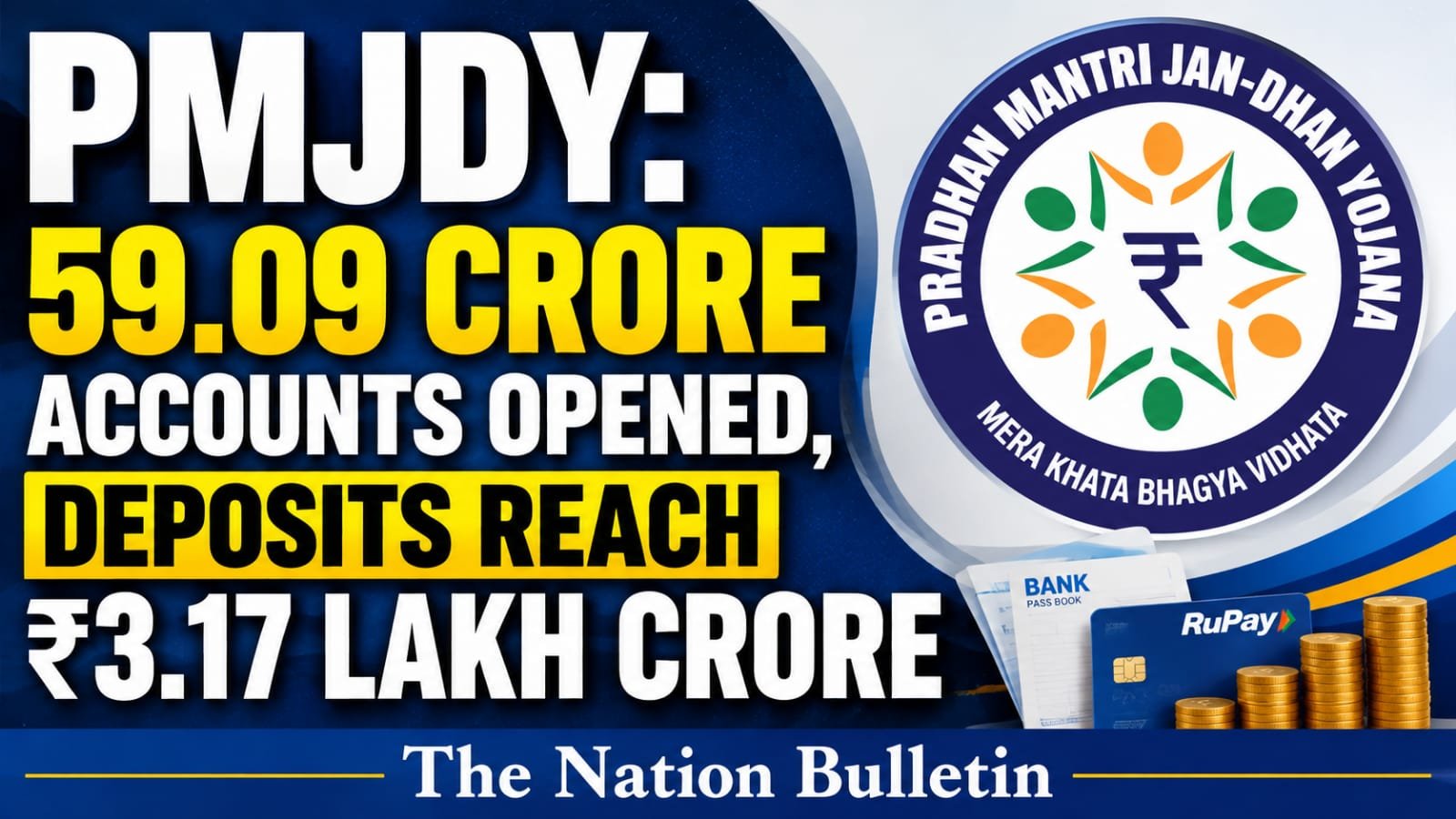
NEW DELHI, India — The Pradhan Mantri Jan Dhan Yojana (PMJDY), launched on August 28, 2014, has completed 12 years with more than 59 crore bank accounts opened across the country. As of August 19, 2026, the scheme had 59.09 crore accounts with total deposits of ₹3,16,514 crore.
The financial inclusion programme has also resulted in the issuance of 41.29 crore free-of-cost RuPay debit cards to account holders. The Ministry of Finance said the scheme has expanded access to formal banking services for unbanked adults without requiring a minimum balance or maintenance charges.
PMJDY Reaches 59.09 Crore Accounts
| PMJDY Milestone | Latest Figure |
|---|---|
| Total PMJDY accounts | 59.09 crore |
| Total deposits | ₹3,16,514 crore |
| Average deposit per account | ₹5,356 |
| RuPay cards issued | 41.29 crore |
| Women account holders | 32.92 crore (55.7%) |
| Rural and semi-urban accounts | 45.95 crore (77.8%) |
Deposits Under PMJDY Reach ₹3.17 Lakh Crore
PMJDY account deposits stood at ₹3,16,514 crore as of August 19, 2026. According to the supplied Ministry of Finance release, deposits have increased about 12.8 times over the last 12 years, while the number of accounts has grown 2.3 times.
The average deposit per PMJDY account was ₹5,356 on August 19. The release said the average deposit has increased 3.4 times over the same 12-year period, indicating increased account usage and saving habits among account holders.
Women and Rural Areas Account for Major Share
Women make up a substantial share of PMJDY account holders. As of August 19, 2026, 32.92 crore accounts, or 55.7%, were held by women.
The scheme has also reached rural and semi-urban populations on a large scale. A total of 45.95 crore accounts, representing 77.8% of all PMJDY accounts, were in rural and semi-urban areas.
RuPay Cards and Overdraft Facility
PMJDY accounts come with a free RuPay debit card that provides accident insurance cover of ₹2 lakh, according to the supplied Ministry of Finance release.
Eligible account holders can also access an overdraft facility of up to ₹10,000. The facility is intended to provide financial support during emergencies while encouraging greater financial security and digital transactions.
JAM Trinity Supports Direct Benefit Transfers
The Jan-Dhan–Aadhaar–Mobile (JAM) trinity has PMJDY at its core and has been used for the direct delivery of financial assistance. The Ministry of Finance described JAM as a diversion-proof mechanism for transferring welfare benefits directly into the bank accounts of underprivileged beneficiaries.
The mechanism is intended to remove intermediaries and reduce delays in the delivery of government welfare benefits.
PMJDY Linked With Jan Suraksha Schemes
PMJDY accounts have also supported the expansion of life and accident insurance coverage through the Jan Suraksha schemes. These include the Pradhan Mantri Jeevan Jyoti Bima Yojana and Pradhan Mantri Suraksha Bima Yojana.
The schemes have helped extend insurance coverage to millions of workers in the unorganised sector through the financial access created by PMJDY accounts.
PMJDY Enters Its 13th Year
Union Minister of State for Finance Pankaj Chaudhary said the importance of PMJDY should be viewed beyond the number of accounts, deposits and RuPay cards. He highlighted the scheme’s role in making financial services accessible to people at the last mile without delays or middlemen.
As PMJDY enters its 13th year, the Ministry of Finance said the programme continues to focus on inclusive growth, digital innovation and economic empowerment, with financial access being extended to people across the country.

Praveen Yadav is the Founder and Editor at The Nation Bulletin. With over 3 years of experience in digital journalism and news reporting, he covers national affairs, governance, and breaking current events with a commitment to factual accuracy and verified reporting.