NEW DELHI, India — The Centre has clarified that users will continue to make UPI payments free of charge, addressing concerns that recent changes proposed under the Payment and Settlement Systems Act could lead to charges on everyday digital transactions. The government said all Person-to-Person (P2P) UPI payments would remain free, while the vast majority of merchant transactions would also continue without charges.
- Consumers will not be charged for everyday UPI transactions, the Centre said.
- All P2P UPI transactions will continue to remain free.
- Any future Merchant Discount Rate (MDR) would apply only to a limited category of merchant transactions above a specified threshold.
- UPI processed 2,366 crore transactions worth Rs 29.9 lakh crore in July 2026, according to the government.
UPI to Remain Free for Citizens, Centre Clarifies
The clarification follows concerns triggered by an amendment proposed to the Payment and Settlement Systems Act, 2007. The government said the change should not be interpreted as a decision to introduce a blanket charge across the UPI ecosystem.
According to the Centre, any Merchant Discount Rate introduced in the future would be restricted to a limited set of merchant transactions crossing a specified threshold. It would also be levied at a nominal rate, which the government said would be significantly lower than MDR generally associated with debit and credit card transactions.
“UPI will remain free for citizens.”
The government reiterated that consumers would not face charges for their routine UPI payments under the proposed framework.
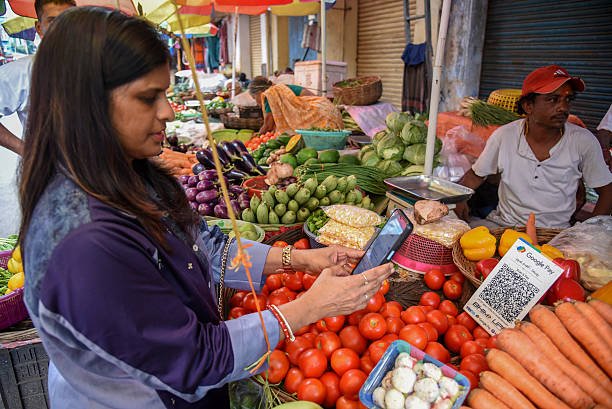
What the Proposed MDR Framework Means for UPI
The proposed changes concern the possibility of introducing MDR on certain merchant transactions. However, the Centre stressed that such a mechanism, if introduced, would not cover the entire UPI ecosystem.
The government said the proposed approach would be threshold-based and restricted to specified merchant transactions. Person-to-Person payments would continue to remain free, while most merchant payments would also remain charge-free.
Once Parliament passes the Taxation and Other Laws (Amendment) Bill, 2026, the UPI and Services Steering Committee, headed by the National Payments Corporation of India (NPCI), would decide on the MDR, if any.
Amendment Described as an Enabling Provision
The Centre said the proposed amendment to Section 10A of the Payment and Settlement Systems Act was intended as an enabling provision rather than an immediate introduction of charges on UPI users.
The government linked the measure to the long-term sustainability of UPI, technological advancement, financial inclusion and the system’s ability to withstand emerging cybersecurity and other digital risks.
It said the rapid expansion of digital payments requires continued investment in infrastructure, cybersecurity and fraud prevention. The proposed framework is intended to support those requirements while keeping UPI affordable and accessible.
Government Points to Sustainability and Investment Needs
According to the Centre, UPI’s exponential growth in transaction volumes has increased the need for ongoing investment in the digital payments ecosystem. It also said greater competition could encourage more companies to expand their operations and invest in the sector.
The government argued that a sustainable revenue model could help support this expansion without depending entirely on government subsidies.
“Reliance on subsidies alone is not viable for the next wave of growth.”
The Centre said the proposed framework would help create a more balanced model capable of supporting technological upgrades, strengthening cybersecurity and expanding digital payments into rural and semi-urban areas.
Centre Rejects Claims of External Pressure
The government also rejected media reports suggesting that external influences were responsible for the proposed policy change. It described such reports as “unfounded, completely false and misleading”.
The Centre pointed to the history of UPI, noting that the system was introduced by the government in 2016 and that it had remained free for citizens and merchants since January 2020.
Since then, UPI has expanded substantially and has developed into what the government described as the world’s largest real-time interoperable payment system. The platform has also expanded beyond India’s borders.
UPI Processes Rs 29.9 Lakh Crore in July 2026
The government highlighted the scale of UPI’s growth while explaining the need to ensure the platform remains sustainable. In July 2026 alone, UPI processed 2,366 crore transactions worth Rs 29.9 lakh crore.
The Centre said UPI is currently operational in 11 foreign countries, while several other countries have expressed interest in adopting or integrating UPI-based systems.
The government described the platform as an Indian innovation that has transformed the country’s digital economy by providing interoperable, real-time payment infrastructure to millions of users and businesses.
UPI Expansion Continues Beyond India
The government said UPI’s growth has extended beyond domestic transactions, with the payment platform now operational in multiple foreign countries. Interest from additional countries, according to the Centre, could further expand the reach of UPI-based payment systems.
The government described UPI as a “national achievement built by Indians, for Indians” and said it would continue supporting the platform’s development and expansion.
Government Advises Users to Follow Official Information
Amid concerns over possible UPI charges, the Centre urged citizens to rely on official information issued by the Ministry of Finance, Reserve Bank of India and NPCI.
The government also advised people against forwarding unverified messages about possible charges on UPI transactions. Its latest clarification reiterates that consumers will continue to have access to UPI without charges for everyday payments.
What Happens Next
The proposed amendment still requires Parliament’s approval. If the Bill is passed, the UPI and Services Steering Committee headed by NPCI will determine the MDR, if any, within the framework outlined by the government.
For consumers, the Centre’s position remains that UPI will continue to be free for everyday transactions. Any future MDR, according to the government, would be nominal and limited to a specified category of merchant transactions above a defined threshold.

Praveen Yadav is the Founder and Editor at The Nation Bulletin. With over 3 years of experience in digital journalism and news reporting, he covers national affairs, governance, and breaking current events with a commitment to factual accuracy and verified reporting.