Yayoi Kusama, the Japanese avant-garde artist whose polka dots, pumpkins and Infinity Mirror Rooms made her a global cultural icon, has died aged 97. Kusama died at a hospital in Tokyo on August 14, according to a statement from her company.
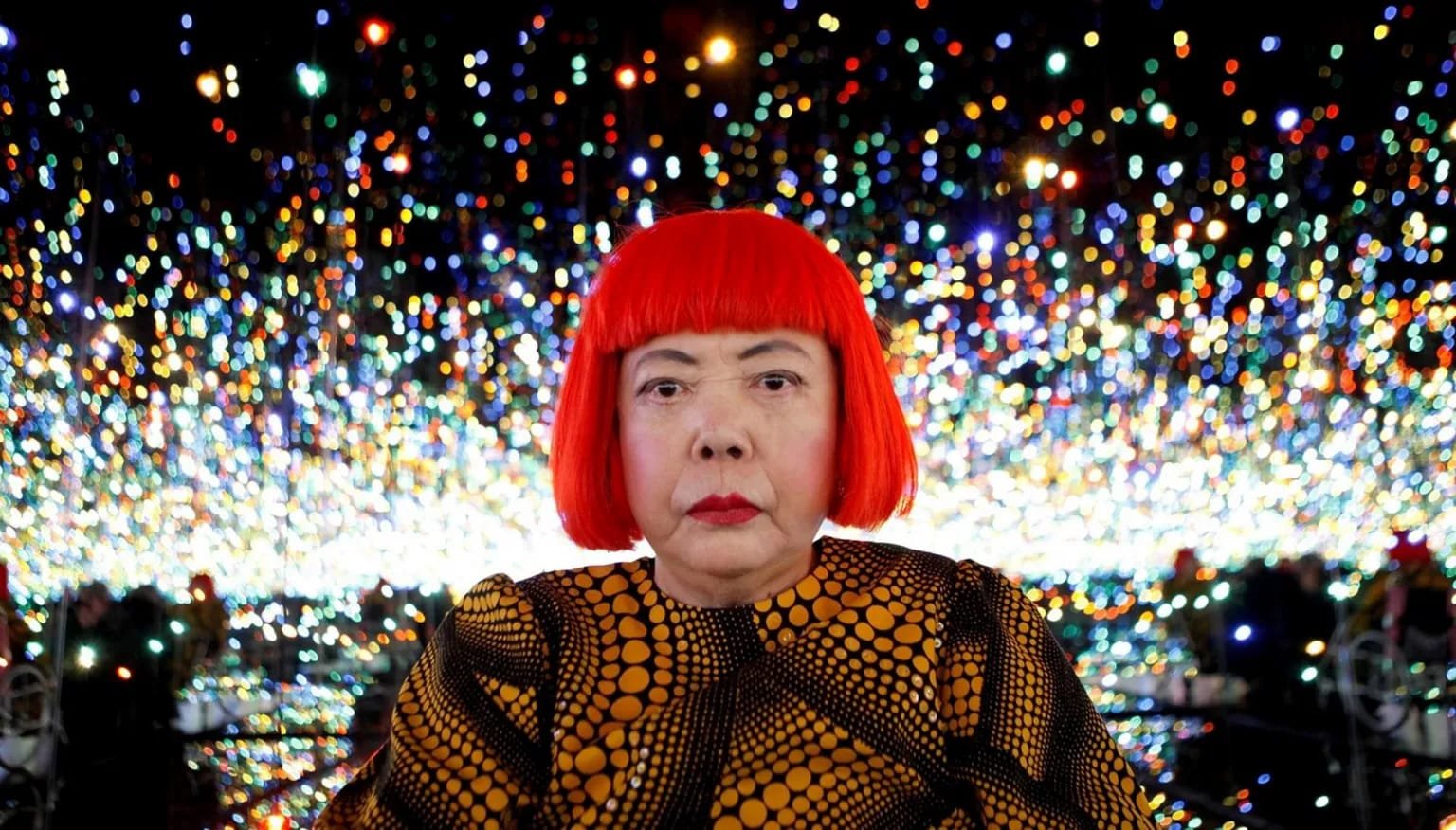
TOKYO, Japan — Japanese artist Yayoi Kusama, whose distinctive use of polka dots, mirrors, lights and oversized sculptures transformed her into one of the world’s most recognisable contemporary artists, has died at the age of 97.
Her company said Kusama continued painting until her final days. Her career stretched across visual art, performance, fiction and poetry, while her installations attracted major audiences around the world.
Key Highlights
- Yayoi Kusama died at a hospital in Tokyo on August 14, aged 97.
- Her Infinity Mirror Rooms became among her best-known works, using mirrors and lights to create seemingly endless spaces.
- Polka dots and pumpkins became defining motifs of her artistic identity.
- Kusama represented Japan as its first solo artist at the 1993 Venice Biennale.
- Her work later entered major museums and high-profile collaborations, including Louis Vuitton.
Yayoi Kusama’s Global Artistic Legacy
Kusama became internationally celebrated particularly in her 80s and 90s, after spending much of her earlier career outside the mainstream art establishment. Her colourful installations eventually drew large crowds and helped turn her visual language into a globally recognised cultural phenomenon.
The Infinity Mirror Rooms became central to that success. Through carefully arranged mirrors and lights, the installations created the impression of vast, seemingly infinite spaces and placed visitors inside the artwork itself.
Polka Dots, Pumpkins and Infinity Rooms
Although Kusama worked across several forms, her repeated patterns and vivid sculptures became especially closely associated with her name. Pumpkins emerged as another signature motif, with the artist describing them as a source of stability, comfort and peace of mind.
Her work also expanded beyond traditional gallery spaces. In Naoshima, visitors arriving by ferry are greeted by her outdoor Red Pumpkin sculpture, covered in bold black polka dots.
Struggles in the New York Art Scene
Kusama moved into a difficult art environment in New York during the 1960s, where her work was poorly received by a predominantly male art scene. She staged exhibitions involving unconventional sculptures and performances, including works featuring nudity, which also attracted criticism in Japan.
She became increasingly distressed as she believed ideas associated with her work were copied or used as inspiration by male contemporaries including Andy Warhol, Claes Oldenburg and Lucas Samaras. Their work, she felt, received greater recognition from prestigious galleries.
Return to Japan and Life at a Psychiatric Hospital
After years in New York, Kusama returned to Japan feeling dejected and distraught. She subsequently entered a psychiatric facility where she received treatment and continued developing her artistic practice.
The secure environment gave Kusama the opportunity to focus on making art. Her work during the 1970s and early 1980s included darker collage series exploring imagery connected with natural life cycles.
From Overlooked Artist to Cultural Icon
Kusama’s standing changed dramatically in later decades. In 1993, she became Japan’s first solo artist to represent the country at the Venice Biennale, decades after she had appeared there uninvited in 1966 with 1,500 mirror balls.
Her growing recognition in Japan and internationally was followed by major cultural honours. She received the Asahi Prize in 2001 for outstanding contributions in cultural, academic and artistic fields.
Record Prices and Major Collaborations
Kusama’s commercial influence grew alongside her museum presence. One of her paintings sold for about $10.5 million at auction in 2022, placing her among the highest-earning female artists.
Her visual style also reached the luxury fashion world through collaborations including Louis Vuitton. In 2023, a large sculpture depicting Kusama stood between the Maison Louis Vuitton headquarters and the Samaritaine department store in Paris, while colourful dots covered the store’s facade.
Social Media Brought a New Generation to Kusama
Interest in Kusama surged further as social media turned her installations into popular settings for photographs and selfies. Her floral forms, reflective surfaces and bright sculptures became highly recognisable images far beyond traditional art audiences.
Her hometown of Matsumoto in central Japan’s Nagano region was where her artistic journey began. As a child, Kusama experienced hallucinations involving flashing imagery and embers, experiences that later influenced how she understood and expressed the world through art.
In a statement following her death, her company said her artistic practice had been devoted entirely to creation and expressed a commitment to carrying forward her wishes through art. Kusama’s distinctive visual language now forms a lasting part of the international contemporary art landscape.

Praveen Yadav is the Founder and Editor at The Nation Bulletin. With over 3 years of experience in digital journalism and news reporting, he covers national affairs, governance, and breaking current events with a commitment to factual accuracy and verified reporting.