WASHINGTON, United States — The Trump administration plans to invest $3 billion in critical minerals and battery projects as it seeks to expand domestic production, strengthen defense supply chains and reduce U.S. dependence on foreign sources, particularly China, President Donald Trump said on Friday.
- The administration announced $3 billion in planned investments in critical minerals and battery projects.
- The Defense Department announced major conditional loans for battery, scandium and magnet projects.
- The Energy Department will provide $100 million in grants to strengthen U.S. mining education.
- The Pentagon will spend another $80 million on projects at three U.S. mining schools.
US targets critical minerals for national security
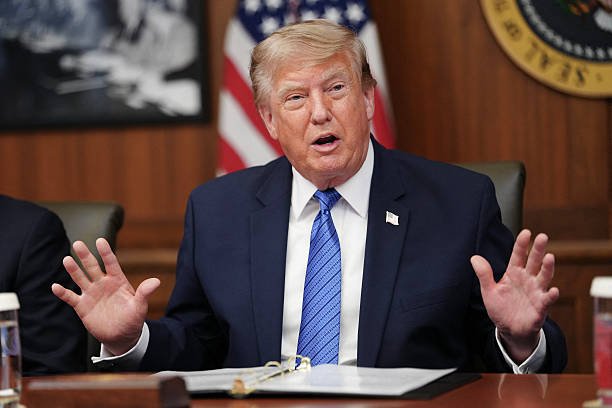
Trump announced the investment package during a State Department roundtable attended by more than 200 mining executives, educators, investors and political figures.
The president said the administration wanted to expand America’s role in global minerals production and bring more mining, refining and manufacturing activity to the United States.
We’re reclaiming America’s rightful place as the minerals superpower of the world.
Trump said critical minerals are essential to both national strength and industrial production, with applications ranging from advanced weapons to automobiles.
Defense Department backs battery and mining projects
The Defense Department’s Office of Strategic Capital announced a $1.4 billion conditional loan for Sila Nanotechnologies, which produces components for lithium-ion batteries.
The office also extended a $400 million conditional loan to Sunrise Energy Metals and a $150 million conditional loan to Niron Magnetics. Sunrise is developing a scandium mining project, while Niron is working on magnet technology.
The U.S. Export-Import Bank is also providing $58 million in lending to Westwater Resources, Global Advanced Metals and 5E Advanced Materials.
Weapons demand increases pressure on mineral supply
The administration’s minerals strategy is closely linked to defense requirements. The White House wants to replenish weapons stockpiles affected during the Iran conflict while reducing reliance on Chinese supply chains.
Defense officials and lawmakers have warned that replacing some weapons inventories could take years because of existing production constraints. The Trump administration has disputed reports that the United States faces significant shortages.
Rare earths, tungsten, germanium and scandium are among the minerals used in advanced military systems. Their applications include precision-guided missiles, fighter aircraft, armored vehicles and infrared sensors.
Mining companies seek larger US supply base
Executives from several major mining and minerals companies attended the White House-backed industry gathering. Among them were representatives of Lithium Americas, NioCorp and Energy Fuels.
Lithium Americas is developing what the supplied report describes as the largest U.S. lithium mine. NioCorp is developing a scandium mine intended to supply defense contractor Lockheed Martin.
Energy Fuels received a $725 million conditional loan from the Office of Strategic Capital in June, according to the report.
Trump administration expands strategic minerals policy
Since returning to office, Trump has pursued a broader strategy aimed at expanding the domestic minerals industry. The administration has launched a $12 billion strategic minerals stockpile, backed equity investments in companies developing U.S. mining and processing facilities, and sought to reduce defense contractors’ dependence on Chinese supplies.
U.S. officials argue that decades of Chinese investment in mining and processing have contributed to Beijing’s dominant position in several strategic mineral markets. Government support is being presented as a way to strengthen alternative supply chains.
Mining schools receive new federal funding
The administration is also seeking to address the workforce needed to expand domestic mining. The Department of Energy hosted representatives from all 14 accredited U.S. mining schools as part of an effort to promote mining careers.
The department announced $100 million in grants for educational programmes and set a goal of doubling the number of mining-related graduates from U.S. universities within two years.
Assistant Energy Secretary Audrey Robertson said changes were needed in how the country encourages students to enter the mining sector.
The Pentagon separately announced $80 million for projects at three U.S. mining schools. Officials have cited China’s network of mining universities as one factor behind its strength in global mineral production.
Australia welcomes Sunrise Energy Metals funding
Australia’s government welcomed the U.S. decision to provide a conditional loan to Sunrise Energy Metals, which is developing a scandium mine in New South Wales.
Australian Resources Minister Madeleine King said the Sunrise project contains the world’s largest and highest-grade known scandium resource and highlighted its potential applications in aerospace, defense and clean energy.
What happens next
The newly announced investments will add to the administration’s existing efforts to expand U.S. mining, mineral processing and related manufacturing capacity. The projects cover battery materials, rare earth-related technologies, scandium and other strategically important resources.
The broader strategy will also depend on developing enough skilled workers to support the industry. Federal funding for mining schools and the goal of increasing graduate numbers are intended to address that workforce challenge alongside the investment in physical supply chains.

Praveen Yadav is the Founder and Editor at The Nation Bulletin. With over 3 years of experience in digital journalism and news reporting, he covers national affairs, governance, and breaking current events with a commitment to factual accuracy and verified reporting.