Democratic leaders, election officials and voting-rights groups are preparing for potential federal interference in the 2026 midterm elections, while experts say courts and existing election safeguards could limit what the Trump administration can do.
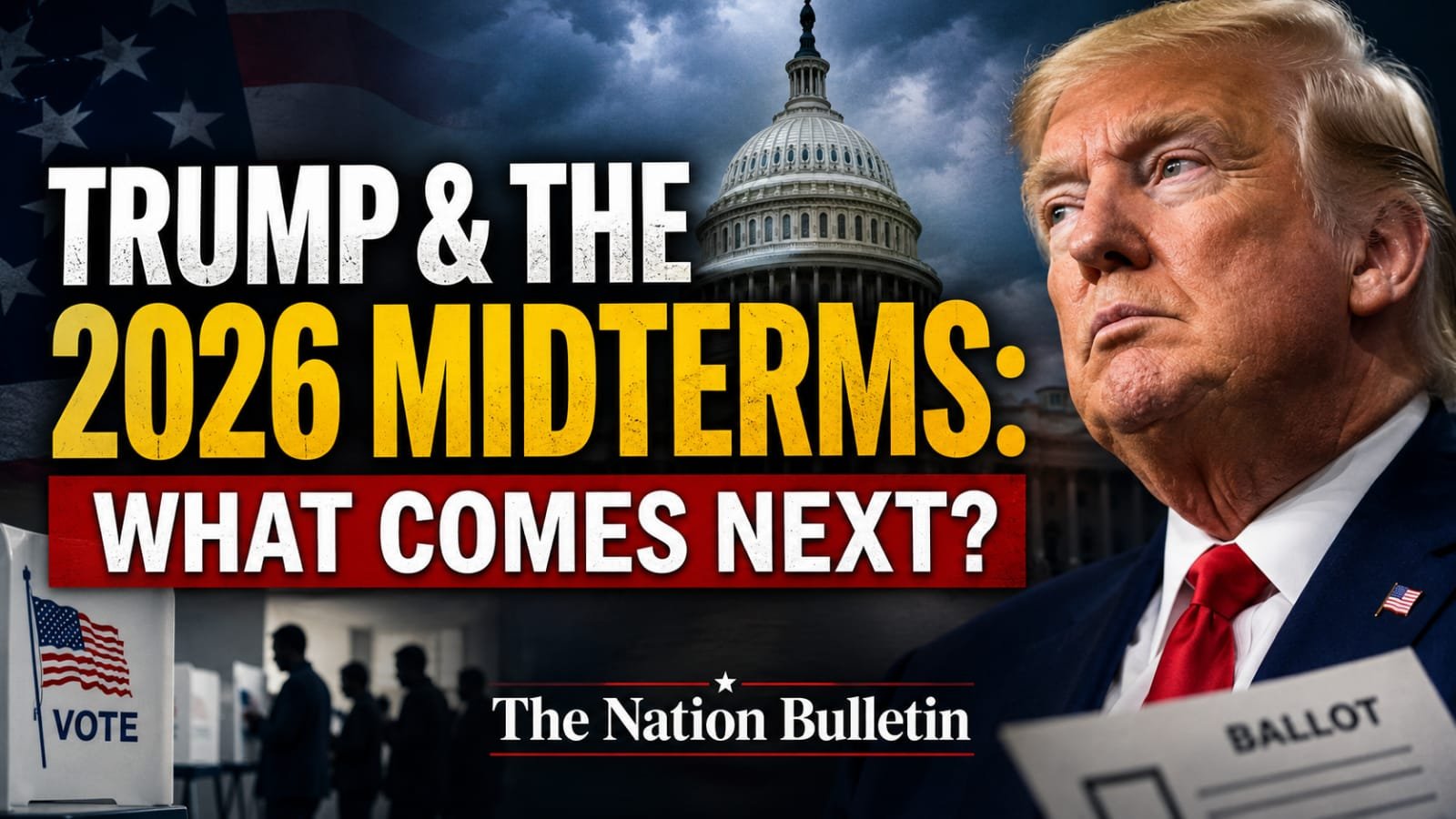
WASHINGTON, United States — Democrats, civic organizations and state and local election officials are quietly preparing for possible attempts by President Donald Trump’s administration to interfere with the November midterm elections, ranging from federal law-enforcement activity near voting centers to challenges against ballot counts and mail voting.
The preparations come as Trump continues to question the integrity of U.S. elections and has declined to rule out extraordinary measures, including emergency declarations and military deployments. Election experts cited in the supplied report say there is no evidence of widespread voter fraud in American elections.
Key Highlights
- Democratic officials and civic groups are preparing legal, political and grassroots responses to possible federal election interference.
- Planned scenarios include immigration raids near voting centers, military deployments, ballot seizures, challenges to vote counts and interference with mail ballots.
- A UC Berkeley Institute of Governmental Studies poll found 61% of California voters considered federal interference in November a major concern.
- Election experts say several Trump administration election initiatives have already faced setbacks in federal courts.
- State officials, congressional aides and voting groups are developing coordinated responses ahead of the November midterms.
Why Democrats Are Preparing for Trump Midterm Interference
The preparations are based partly on Trump’s long history of challenging election results and his continued claims that the U.S. voting system is vulnerable to fraud and interference. Since returning to office, his administration has pursued measures aimed at changing voting rules and increasing federal involvement in elections traditionally administered by states and local governments.
The concern has prompted what election advocates describe as unusually broad preparations. Much of the work is being conducted privately so potential legal and political strategies are not disclosed in advance and voters are not unnecessarily alarmed.
Three Possible Stages of Election Disruption
Justin Vail of Protect Democracy described the concerns as a three-part potential “interference playbook”: influencing voters before Election Day, disrupting the voting process and challenging unfavorable results afterward.
Organizations are preparing for scenarios that could involve immigration agents or troops appearing near polling locations, unrest being used as a justification for emergency action, allegations of fraud in competitive congressional races or federal intervention in mail-ballot delivery.
Democracy Forward president Skye Perryman said organizations are preparing for situations that have not previously been seen in the United States.
Trump Has Continued to Question Election Integrity
Trump has repeatedly disputed his 2020 defeat to Joe Biden despite reviews and audits confirming the result. He has also promoted the SAVE America Act, a Republican-backed proposal involving voter identification and proof-of-citizenship requirements for federal elections.
The administration has also pursued access to state voter rolls, changes involving mail voting, stricter citizenship requirements and other measures affecting election administration. The Justice Department has sought voter rolls from states, although courts have blocked the department in cases cited by election experts.
Trump also recently responded to a suggestion that he could declare a national security emergency to impose new voting restrictions. Rather than rejecting the idea outright, he responded, “Stranger things have happened.”
White House Defends Its Election Efforts
The White House declined to address hypothetical questions about possible action during the midterms but said people who violate voting laws would be held accountable.
White House spokesperson Lauren Bis criticized Democrats for opposing the SAVE America Act and said Trump was correct in arguing that election rules need to be strengthened. The administration has maintained that its election-related actions are intended to protect election integrity.
Experts Warn Against Overstating the Threat
Not all election experts believe the potential threat should be treated as inevitable. David Becker of the nonpartisan Center for Election Innovation & Research said Trump’s executive election orders have been blocked and pointed to the smooth operation of recent primaries as evidence that the administration has so far had limited practical impact.
Kim Alexander of the California Voter Foundation said voters should understand the potential threats without allowing those concerns to discourage participation in elections.
Civic organizations are also encouraging voters to counter misinformation in their communities. Democracy Forward has promoted daily civic actions ahead of the election, while Indivisible is training volunteers to respond publicly to possible interference.
Congress Builds Its Own Election Response Plans
Democratic senators have formed a task force that is studying potential federal interventions and examining election laws in individual states. Members are also developing coordinated messaging for situations involving immigration raids or other federal actions around elections.
Sen. Alex Padilla is helping establish an election observer program for competitive races. He has also said he will seek votes on any election-related emergency declaration issued by Trump, putting senators on record over whether they support or oppose it.
House staffers are separately developing a response roadmap covering possible attempts to disrupt the transition of power, including the January 3 swearing-in of newly elected members of Congress.
California and Local Officials Prepare for Possible Disruption
California Atty. Gen. Rob Bonta said his office is working with other Democratic state attorneys general to prepare for potential federal actions involving ballots, military or federal law-enforcement deployments and mail voting.
Los Angeles County Registrar-Recorder and County Clerk Dean Logan said his office is focused on keeping election operations secure and uninterrupted regardless of the threats it may face. Long Beach Mayor Rex Richardson said cities also have to prepare for tensions surrounding vote centers, voters and election workers.
The preparations reflect a widening divide between federal officials seeking greater influence over election administration and state and local officials determined to maintain control over the voting process.
What Could Happen Before the Midterms?
Several of the scenarios being studied would face significant legal obstacles. Experts cited in the supplied material expect courts to challenge unlawful military deployments or federal actions at polling locations, while previous lawsuits have already limited some administration initiatives.
For Democrats and voting-rights organizations, however, the focus is on being ready before a dispute reaches the courts. Their strategy combines litigation, congressional oversight, public messaging and local organizing in an effort to protect election operations through the November vote.
The preparations are taking place alongside growing Democratic optimism about retaking congressional power, while Trump and his allies continue to emphasize election integrity as a central political issue. The November midterms will test not only the strength of the competing parties but also the ability of federal, state and local institutions to manage disagreements over election administration.
Political news disclaimer: This article summarizes claims, preparations and statements contained in the supplied source material and does not independently establish that any alleged future election interference will occur.

Praveen Yadav is the Founder and Editor at The Nation Bulletin. With over 3 years of experience in digital journalism and news reporting, he covers national affairs, governance, and breaking current events with a commitment to factual accuracy and verified reporting.