The custodial death of 28-year-old Rajesh at Dataganj Kotwali in Uttar Pradesh’s Badaun district has raised questions over detention procedures, medical screening, emergency response, forensic evidence and the competing claims surrounding his death.
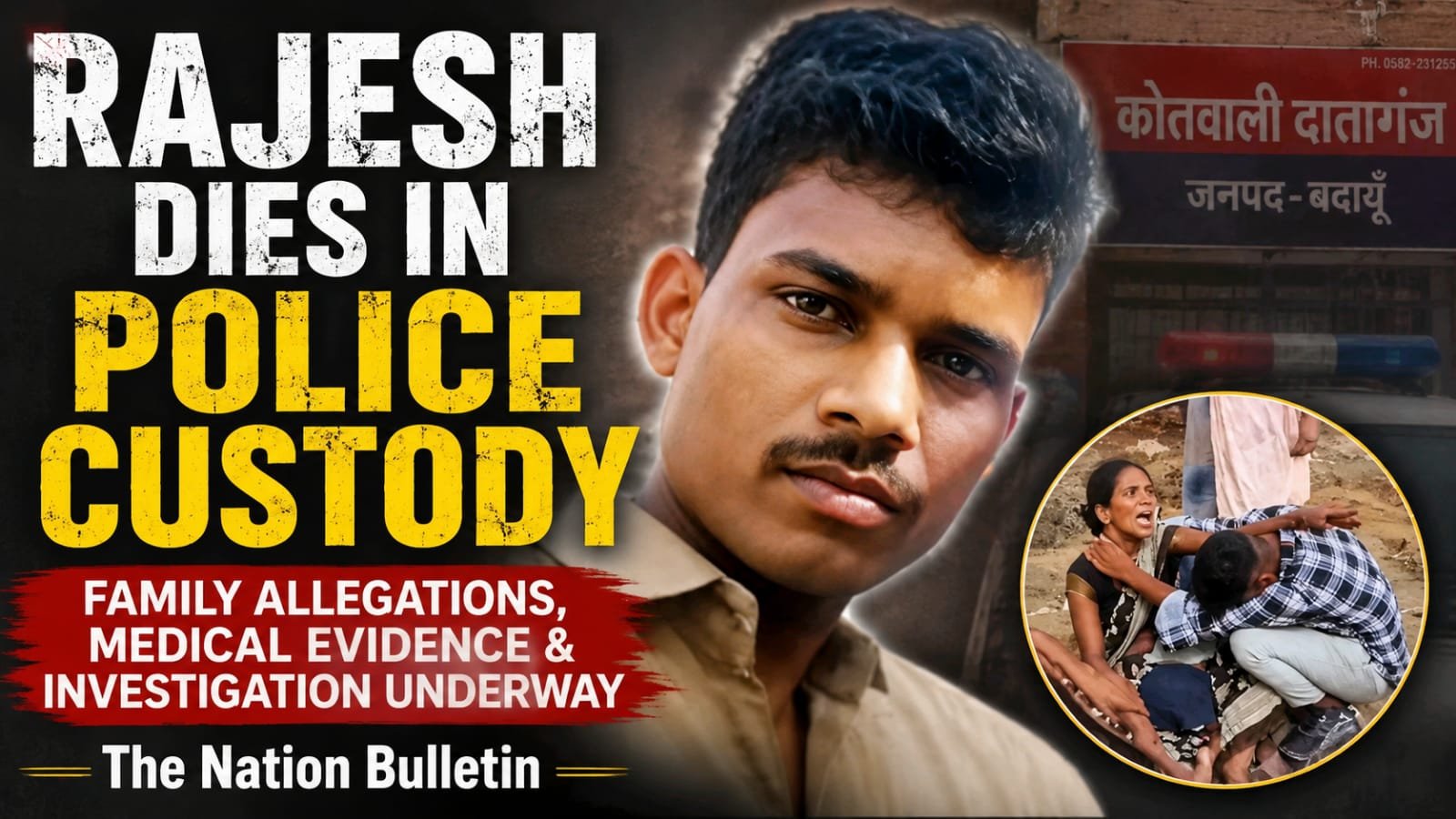
BADAUN, Uttar Pradesh — The Rajesh custodial death case at Dataganj Kotwali has brought the management of police custody under scrutiny after the 28-year-old collapsed inside the police station on August 28 and later died during treatment at the district hospital. The case involves allegations by Rajesh’s family, the police version of events, CCTV footage, emergency medical records and a three-member medical board’s post-mortem findings.
Key Highlights
- Rajesh, originally from Khiriya village in Shahjahanpur district, had been living with his family at his maternal grandparents’ home in Atsena village under Dataganj police station limits.
- The incident began with a dispute over the use of a DJ during a bhandara at a religious site in Atsena village, followed by a violent confrontation involving sticks.
- Police detained people associated with both sides and brought Rajesh to Dataganj Kotwali for questioning and preventive proceedings related to apprehension of breach of peace.
- At around 4:00 pm on August 28, Rajesh reportedly collapsed after leaving the toilet area of the police station, prompting police personnel to take him first to Dataganj Community Health Centre and then to Badaun district hospital.
- At the district hospital, his recorded blood glucose was 315 mg/dL and oxygen saturation was 30%, while his pulse was declining and emergency CPR was unsuccessful.
- A three-member panel conducted the post-mortem examination and recorded cardiac arrest as the primary cause of death, with the procedure required to be videographed.
- The family alleged illegal overnight detention, beating and subsequent hanging, while the police denied physical torture and said the health deterioration resulted from an internal medical cause.
- CCTV footage, hospital admission records, the post-mortem examination and preserved viscera are among the documentary and technical evidence relevant to determining the sequence of events.
Rajesh Custodial Death Case: How the Detention Began
Rajesh was originally a resident of Khiriya village in Shahjahanpur district but had been living for several years with his family at his maternal grandparents’ home in Atsena village, which falls under Dataganj police station jurisdiction in Badaun.
The dispute began during a bhandara organised at a religious site in Atsena village. A disagreement reportedly developed between two groups over playing a DJ. According to the supplied account, people from both sides were under the influence of alcohol when the confrontation became violent. During the clash, a man identified as Jhabbu from the other side suffered a serious head injury after sticks were allegedly used.
After receiving information, Dataganj Kotwali police reached the location and detained individuals connected with both sides. The injured person was sent for medical treatment, while Rajesh was brought to the police station for questioning and preventive proceedings concerning the possibility of a breach of peace.
Health Deterioration Inside Dataganj Kotwali
The situation changed after Rajesh was taken into custody. According to police records, at approximately 4:00 pm on August 28, he became exhausted and collapsed on the floor immediately after coming out of the toilet area at the police station.
Police personnel present at the spot attempted to lift him and give him water. His level of consciousness was described as deteriorating, following which he was taken to Dataganj Community Health Centre. After the initial examination, doctors referred him to Badaun district hospital because of the seriousness of his condition.
| Medical Stage | Doctor or Medical Team and Procedure | Recorded Clinical Findings |
|---|---|---|
| Community Health Centre, Dataganj | Dr. Ritesh Bhasin, Medical Officer In-Charge; primary examination | Severe difficulty in breathing; no obvious external injury observed during the initial examination. |
| District Hospital, Badaun | Emergency medical team; emergency treatment and CPR | Blood glucose 315 mg/dL; SpO2 30%; declining pulse; CPR unsuccessful. |
| Post-mortem examination | Three-member panel of specialist doctors; mandatory videography of the examination | Cardiac arrest recorded as the primary cause of death; viscera preserved for further examination. |
Medical Evidence and Competing Explanations
The hospital records document an extremely low oxygen saturation of 30% alongside blood glucose of 315 mg/dL and a declining pulse. The supplied medical analysis associates these findings with severe physiological distress and discusses possible mechanisms involving hypoxia, respiratory failure and stress-related physiological responses.
That analysis also raises possible medical pathways involving an unknown pre-existing heart condition, uncontrolled diabetes and acute psychological stress. It refers to Takotsubo cardiomyopathy and stress-induced cardiac arrest as possibilities in such a medical context. These possibilities are presented as analytical considerations rather than as an established finding of the post-mortem examination.
The post-mortem examination recorded cardiac arrest as the primary cause of death. The supplied findings state that no fractures or direct external or internal injuries were identified, while viscera were preserved. The examination was conducted by a three-member medical panel and was subject to mandatory videography.
Family Allegations and Police Version
The family and police administration have presented substantially different accounts of what happened during Rajesh’s detention.
| Issue | Family’s Allegations | Police Administration’s Position | Technical or Documentary Evidence |
|---|---|---|---|
| Nature of custody and alleged torture | Rajesh was allegedly kept in illegal overnight custody, beaten and later hanged. | He was challaned in connection with breach of peace after the disturbance at the bhandara; police deny physical torture. | CCTV footage reportedly shows Rajesh walking normally, entering the toilet area and suddenly collapsing after coming out. |
| Physical condition | The family says Rajesh was healthy when brought from home and alleges that bandages were seen on his body at the police station. | Police say he had been involved in the violent confrontation and that his deterioration resulted from an internal medical cause. | CCTV reportedly shows two constables supporting him and attempting to give him water after he became incapacitated. |
| Emergency response and information | The family alleges that information was withheld for about two and a half hours and that relatives were not taken to the hospital. | Police maintain that he was taken without delay to Dataganj CHC and subsequently to the district hospital after the emergency developed. | CHC and district hospital admission logs are cited as documenting the emergency referral and his serious clinical condition. |
| Cause of death | The family attributes the death to alleged police torture and continued physical trauma. | Police rely on the three-member medical board’s post-mortem finding of cardiac arrest. | The supplied post-mortem findings report no direct external or internal injury fractures and state that viscera were preserved. |
Legal and Administrative Questions in the Case
The case has also produced a legal and administrative contradiction concerning the treatment of the original village dispute and the subsequent custodial death. Police registered a first information report against members of the opposing side on the basis of the family’s complaint, invoking provisions concerning assault and culpable homicide or murder.
This creates an important question identified in the supplied analysis: if Rajesh’s condition had deteriorated because of serious injuries allegedly sustained during the village confrontation, why was he brought to the police station without first receiving medical treatment? Conversely, if the police position that the death resulted entirely from an internal medical cause is accepted, questions arise concerning the forensic basis of the criminal case against the opposing group.
Custody Procedures and Mandatory Medical Assessment
The supplied legal analysis refers to the guidelines laid down by the Supreme Court in D.K. Basu versus State of West Bengal and mandatory National Human Rights Commission protocols concerning medical examination after a person is taken into custody.
It argues that an initial assessment of blood pressure, blood glucose and oxygen saturation could potentially have identified a serious health risk earlier. The case therefore raises questions about whether preventive detention procedures are accompanied by adequate medical screening and monitoring when a detainee’s physical condition changes.
Senior Superintendent of Police Ankita Sharma has assigned an impartial investigation to a competent officer, according to the supplied material. The inquiry is expected to include a magistrate investigation under Section 176(1A) of the Code of Criminal Procedure and forensic examination of secured CCTV records.
CCTV, Viscera and the Next Stage of Investigation
Digital and medical evidence will be important in establishing the chronology of the incident. CCTV footage is cited as showing Rajesh’s movement inside the police station and the efforts made by two constables after he collapsed. Hospital records provide the documented sequence of emergency treatment and referral.
The preserved viscera, post-mortem findings and forensic examination of CCTV records are expected to form part of the evidence considered alongside the magistrate’s inquiry. The supplied analysis states that these elements need to be examined together to establish a complete chronology rather than relying on any single account.
Custodial Management and Medical Preparedness
The case has highlighted proposed procedural improvements for people detained under preventive provisions. These include mandatory medical screening at the time of detention, irrespective of whether the person is being held under preventive provisions or in another custody-related process.
The supplied recommendations also call for police stations to have basic emergency equipment such as pulse oximeters and glucometers, along with Basic Life Support training for police personnel. The stated objective is to improve the early identification of deteriorating health and strengthen emergency response inside police facilities.
The Rajesh custodial death case therefore remains dependent on the combined assessment of the magistrate inquiry, preserved viscera, medical findings and digital CCTV evidence. Those records are central to establishing the precise sequence of events and assessing the competing accounts surrounding Rajesh’s death at Dataganj Kotwali.
Frequently Asked Questions
What happened to Rajesh at Dataganj Kotwali?
According to the supplied account, Rajesh collapsed inside Dataganj Kotwali at around 4:00 pm on August 28 after coming out of the toilet area. He was taken to Dataganj CHC and then referred to Badaun district hospital, where he died after emergency treatment and CPR were unsuccessful.
What did the post-mortem examination say about Rajesh’s death?
The three-member medical panel recorded cardiac arrest as the primary cause of death. The supplied findings state that no fractures or direct external or internal injuries were found, and viscera were preserved.
What evidence is being examined in the Rajesh custodial death case?
The supplied material identifies CCTV footage, CHC and district hospital admission records, the post-mortem examination, preserved viscera and the magistrate inquiry as important evidence for establishing the chronology of events.
What did Rajesh’s family and police say about the death?
The family alleged illegal overnight detention, beating and hanging, while police denied physical torture and said Rajesh’s deterioration resulted from an internal medical cause. The supplied evidence includes CCTV footage and medical records relevant to these competing accounts.

Praveen Yadav is the Founder and Editor at The Nation Bulletin. With over 3 years of experience in digital journalism and news reporting, he covers national affairs, governance, and breaking current events with a commitment to factual accuracy and verified reporting.