The risk of a potentially dangerous lake burst near the China-Nepal disaster site has eased after satellite images showed the water level gradually shrinking. Authorities are continuing round-the-clock monitoring as rescue operations remain affected by difficult weather and damaged infrastructure.
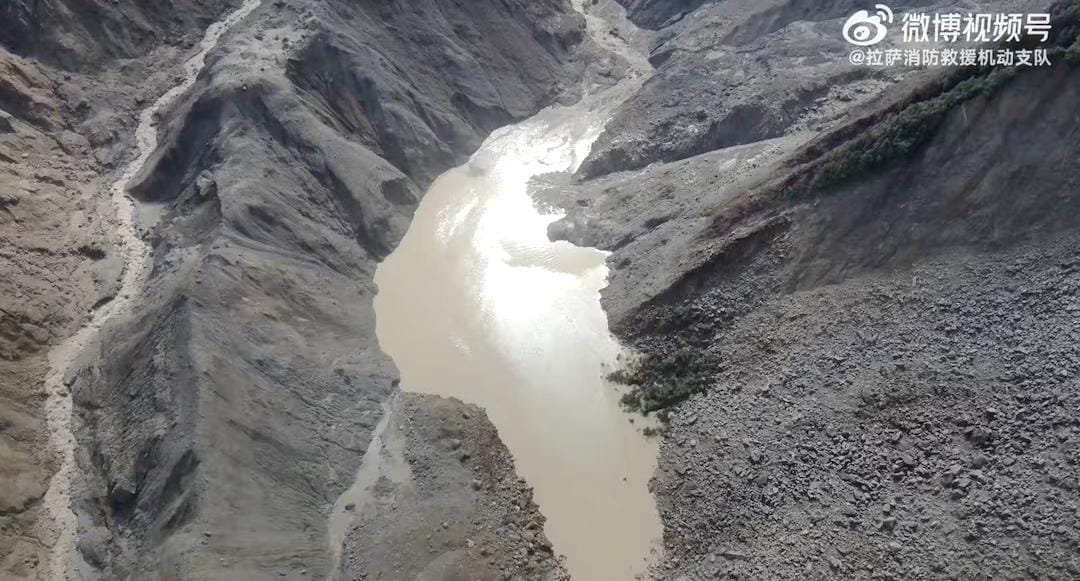
The threat from a lake formed after a glacier collapse near the China-Nepal disaster site has weakened, Chinese authorities said on Saturday, August 29, after satellite images showed the reservoir gradually reducing in size. The lake, which straddles the border between China’s Tibet region and Nepal, had raised concerns about a possible secondary flood downstream.
Key Highlights
- The lake on the Purepu Tsangpo river covered about 99,000 square metres early Saturday, down 21,000 square metres from Thursday.
- Authorities said water was gradually flowing out, with parts of the lake bed visible by Saturday afternoon.
- Another larger body of water near the glacier collapse is estimated to cover more than 120,000 square metres, although its depth remains unknown.
- China’s death toll rose to seven, while 554 people remained missing, according to Xinhua.
- More than 50 rescue workers were searching through rubble on Saturday as rain, damaged roads and disrupted communications hampered relief efforts.
China-Nepal Disaster Site Lake Shows Signs of Shrinking
Satellite imagery from Thursday through Saturday morning indicated that water was slowly draining from the lake formed by debris from the glacier collapse. China’s Water Resources Ministry, cited by state broadcaster CCTV, said the reservoir had gradually reduced as water flowed out.
By early Saturday, the lake covered approximately 99,000 square metres, equivalent to around 14 soccer pitches. The area was 21,000 square metres smaller than the measurement recorded on Thursday.
Parts of the lake bed had become visible by Saturday afternoon, providing an indication that the immediate risk of a sudden burst had declined.
Authorities Continue Monitoring Secondary Flood Risks
Despite the improvement, experts and authorities continue to watch the lake because a sudden change in its condition could affect rescue operations downstream. Water Resources Ministry experts said search and rescue work could continue safely if the lake’s outflow remained low or manageable and receded completely within two to three days.
Authorities said rescue teams could be warned and evacuated if abnormalities were detected. CCTV reported that warnings could be issued more than 30 minutes in advance.
China Anneng, a state-owned engineering and rescue company, has been monitoring the lake since Thursday. The company has deployed radar equipment and drones to maintain 24-hour surveillance around the site.
An initial overflow on Friday temporarily stopped rescue operations, but a later assessment determined that the risks were manageable.
Second Lake Raises Concern Near Glacier Collapse
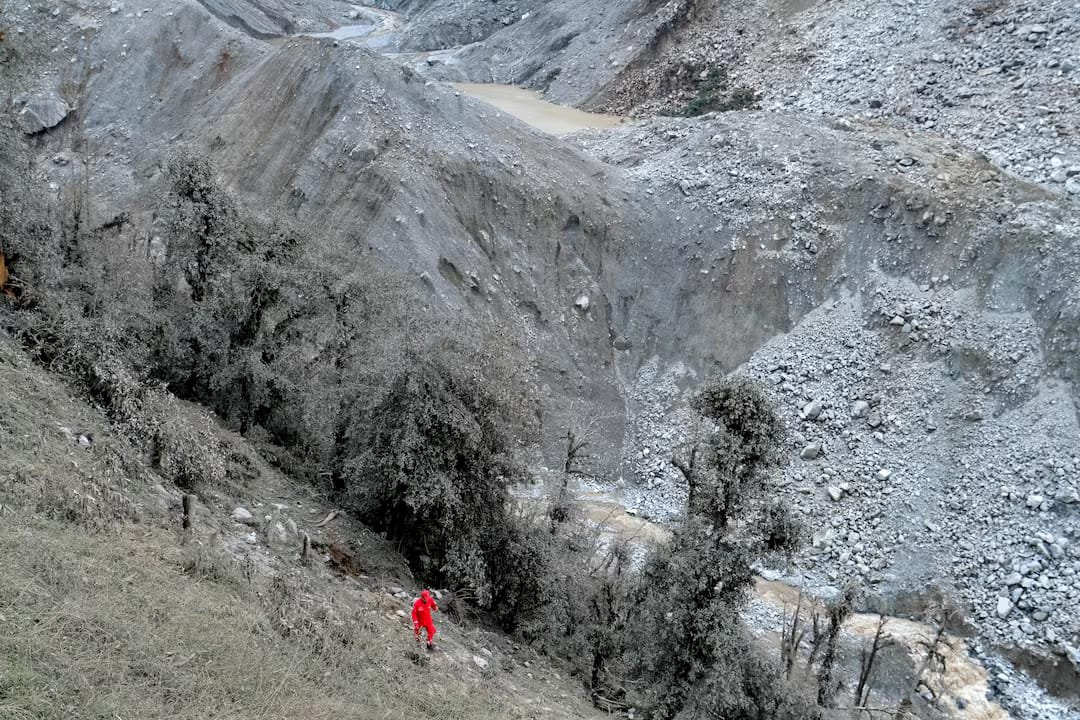
Authorities have also identified another and potentially larger body of water at the foot of the glacier collapse. Chen Hongqi, a senior engineer at the Ministry of Natural Resources’ Geological Disaster Technical Guidance Center, estimated that the second lake covered more than 120,000 square metres.
However, its depth is not yet known. An official with Nepal’s Disaster Management Authority said flood risks would remain until both lakes had completely drained.
Rescue Operations Continue Amid Rain and Damaged Roads
More than 50 rescue workers searched through boulders and mud on Saturday morning, calling out for possible survivors despite bleak and rainy conditions. The first rescue team, accompanied by a search dog, reached the Gyirong border crossing complex on Friday afternoon and found the facility reduced to ruins.
Dangerous conditions at the main disaster zone have continued to complicate Chinese relief efforts. Xinhua reported that damaged roads and disrupted communications were making access and coordination more difficult.
Intermittent rain is forecast in the area over the next three days. Authorities are also working to reopen a key highway leading to the border port, with crews having moved to within about 1.5 km of the site by Saturday afternoon.
China’s death toll increased to seven early Saturday, while 554 people were still missing. Xinhua said nearly 500 villagers and construction workers, along with 555 tourists in the area, had been evacuated.
Cause of Glacier Collapse Remains Unclear
The cause of Wednesday’s glacier collapse has not been established. Climate experts have suggested that global warming could be a factor, while Benjamin Horton, dean of the School of Energy and Environment at the City University of Hong Kong, said it was not yet clear whether an earthquake or warmer temperatures and glacier melting had triggered the event.
Videos verified by Reuters showed the lower section of the glacier near Langtang Lirung mountain peak breaking away before an avalanche of ice and rock and a major landslide moved into the valley.
Horton also said limited data made it difficult to fully understand the mechanisms behind the landslide, highlighting the need for greater investment in scientific research and wider data collection.
Frequently Asked Questions
Has the lake burst risk near the China-Nepal disaster site eased?
Yes. Chinese authorities said the risk had eased as satellite images showed water gradually flowing out and the lake shrinking.
How large was the lake on Saturday?
The lake on the Purepu Tsangpo river covered about 99,000 square metres early Saturday, after shrinking by 21,000 square metres since Thursday.
Is there another lake near the glacier collapse?
Yes. Chen Hongqi estimated that another body of water at the foot of the glacier collapse covered more than 120,000 square metres, although its depth was unknown.
How many people were still missing in China after the disaster?
Xinhua reported that China’s death toll had risen to seven, while 554 people remained missing early Saturday.

Sonu Yaduvanshi is a Senior Content Specialist and Digital News Editor at The Nation Bulletin with over 5 years of editorial experience. He specializes in government recruitments, competitive exams, public policy, and national affairs, focusing on source-verified reporting and factual clarity for readers.