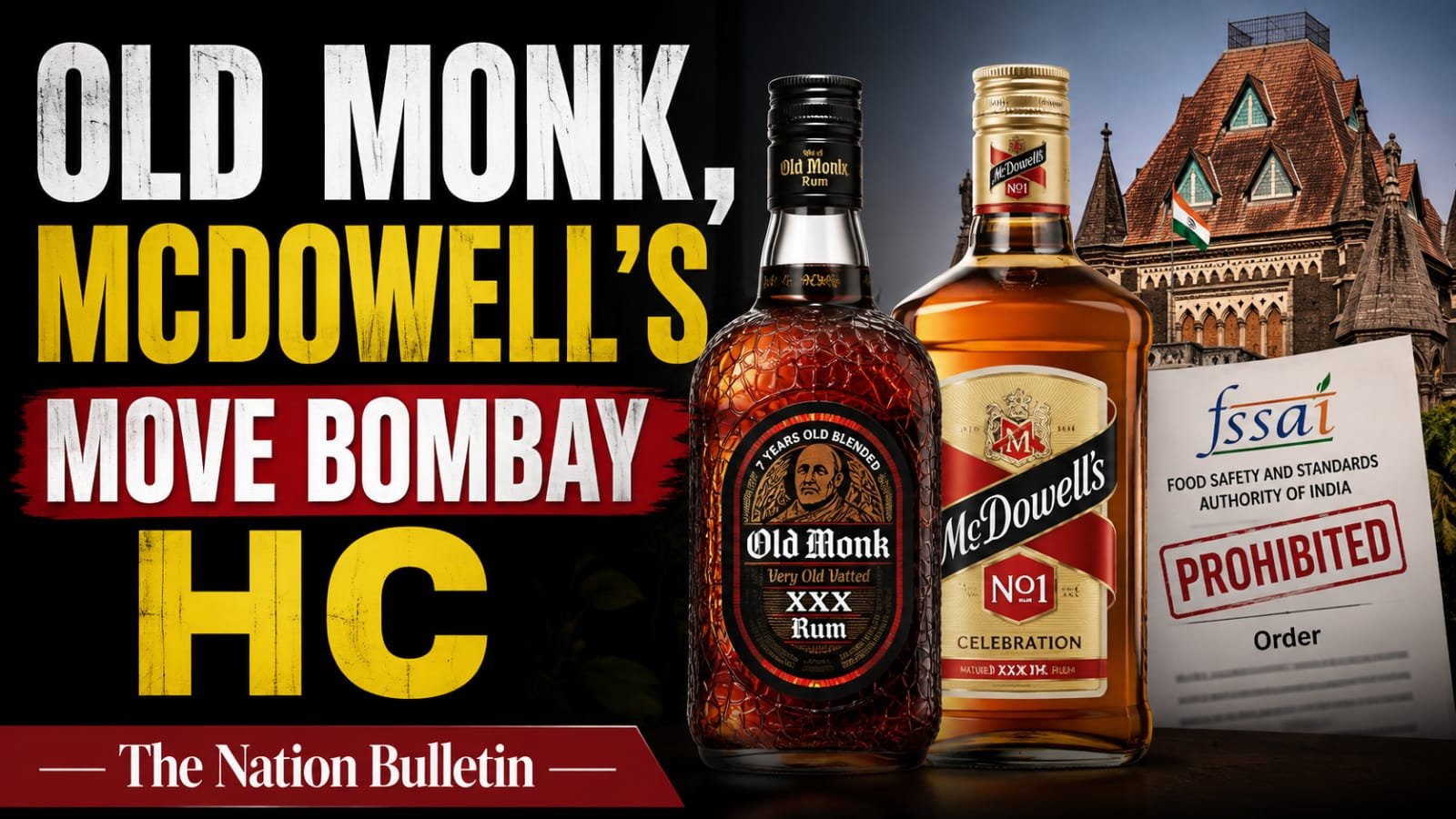
MUMBAI, India — The manufacturers of Old Monk and McDowell’s No. 1 Celebration Matured Rum have approached the Bombay High Court after the Food Safety and Standards Authority of India (FSSAI) prohibited the manufacture and sale of fresh stocks of the two rum brands. The companies are challenging the validity of the prohibition orders before the court.
- The manufacturers of Old Monk and McDowell’s No. 1 Celebration Matured Rum have moved the Bombay High Court.
- The legal challenge follows FSSAI orders prohibiting the manufacture and sale of fresh stocks of the two products.
- A Division Bench led by Acting Chief Justice Ravindra Ghuge and Justice Gautam Ankhad has agreed to hear the matter.
- The legal action comes as India’s spirits market remains an important growth area for major global drinks companies.
Old Monk, McDowell’s manufacturers challenge FSSAI orders
The manufacturers of the two well-known rum brands have challenged the FSSAI’s prohibition orders before the Bombay High Court. The case concerns the authority’s decision to prohibit the manufacture and sale of fresh stocks of McDowell’s No. 1 Celebration Matured Rum and Old Monk.
A Division Bench comprising Acting Chief Justice Ravindra Ghuge and Justice Gautam Ankhad agreed to hear the matter on Friday. The companies are seeking judicial scrutiny of the validity of the orders issued by the food safety regulator.
The supplied material does not provide further details on the specific grounds cited by FSSAI for the prohibition or the arguments advanced by the manufacturers in their petitions. Those issues are therefore subject to the proceedings before the court.
FSSAI action puts fresh stocks of two rum brands under scrutiny
The prohibition applies to the manufacture and sale of fresh stocks of the two products named in the orders. The legal challenge now places the dispute before the Bombay High Court.
Old Monk and McDowell’s No. 1 Celebration Matured Rum are established names in India’s alcoholic beverages market. However, the current proceedings are specifically focused on the regulatory orders concerning the manufacture and sale of fresh stocks.
Diageo gives India standalone regional status
The legal development comes alongside a broader shift in the Indian spirits industry. Diageo, the world’s largest spirits maker, has decided to make India a standalone operating region, separating the country from its Asia-Pacific structure.
According to The Economic Times report supplied for this article, Diageo CEO Sir David Lewis said India would operate separately from the Asia-Pacific region, which will cover Asia excluding India. Under the new structure, India will be one of five standalone operating regions.
The company expects India’s spirits market to grow by around 4% to 6% over the next three years. Diageo has cited economic development, population growth and the strength of India’s whiskey market among the factors supporting its outlook.
India remains a key market for Diageo
India’s importance to Diageo is linked to the scale of its spirits market. The country is described in the supplied report as the world’s largest whiskey market by volume and the second-largest spirits consumer.
Diageo has been focusing on premiumisation, expanding higher-margin brands and improving operational efficiency in the Indian market. Its prestige and above segment, which includes brands such as Johnnie Walker, Black Dog and Antiquity, accounted for more than 90% of net sales.
The company expects future growth in India to be driven significantly by volumes rather than relying only on price increases. Chief Financial Officer Nik Jhangiani pointed to demographic trends and the India-UK free trade agreement as factors supporting the company’s outlook.
Diageo restructures its Indian supply chain
The company’s regional restructuring is also being accompanied by a major change to its Indian spirits packaging network. Diageo plans to reduce the number of sites it uses from 100 to 35.
Of those 35 locations, only eight are owned by Diageo, while the remaining sites are operated by partners. The restructuring has already generated approximately $135 million in recurring savings, with another $150 million expected during the company’s three-year plan period.
United Spirits reports growth in FY26
The restructuring comes after a strong financial year for United Spirits, Diageo’s India-listed business. The company reported a 7.6% increase in net sales value and an 11.6% rise in EBITDA in FY26, according to the supplied Economic Times report.
United Spirits has also been implementing a multi-year supply-chain programme focused on optimising its operational footprint and improving productivity. Management expects around 90% of the planned cost-saving benefits to be realised during the current fiscal year.
What happens next in the Old Monk and McDowell’s case?
The Bombay High Court’s decision to hear the manufacturers’ challenge will bring the FSSAI prohibition orders under judicial scrutiny. The proceedings will determine how the court addresses the manufacturers’ challenge to the regulatory action.
For now, the supplied material confirms only that fresh stocks of the two named rum products were prohibited by FSSAI and that their manufacturers have approached the Bombay High Court against those orders. Further developments will depend on the court proceedings.
Frequently Asked Questions
Why have Old Monk and McDowell’s rum manufacturers approached the Bombay High Court?
The manufacturers have challenged the validity of FSSAI orders that prohibited the manufacture and sale of fresh stocks of Old Monk and McDowell’s No. 1 Celebration Matured Rum.
What did the Bombay High Court do in the case?
A Division Bench comprising Acting Chief Justice Ravindra Ghuge and Justice Gautam Ankhad agreed to hear the manufacturers’ challenge.
Source Attribution
This report is based solely on the supplied source material, including the report on the Bombay High Court proceedings and The Economic Times report on Diageo’s India business restructuring.
Praveen Yadav is the Founder and Editor at The Nation Bulletin. With over 3 years of experience in digital journalism and news reporting, he covers national affairs, governance, and breaking current events with a commitment to factual accuracy and verified reporting.