Uttar Pradesh Chief Minister Yogi Adityanath has ordered FIRs against those circulating misleading videos about government schools with an alleged intention to damage their image, while directing senior officials to conduct surprise inspections. The move comes amid the #SchoolThikKaro campaign and restrictions on unauthorised entry and filming by YouTubers and other outsiders.
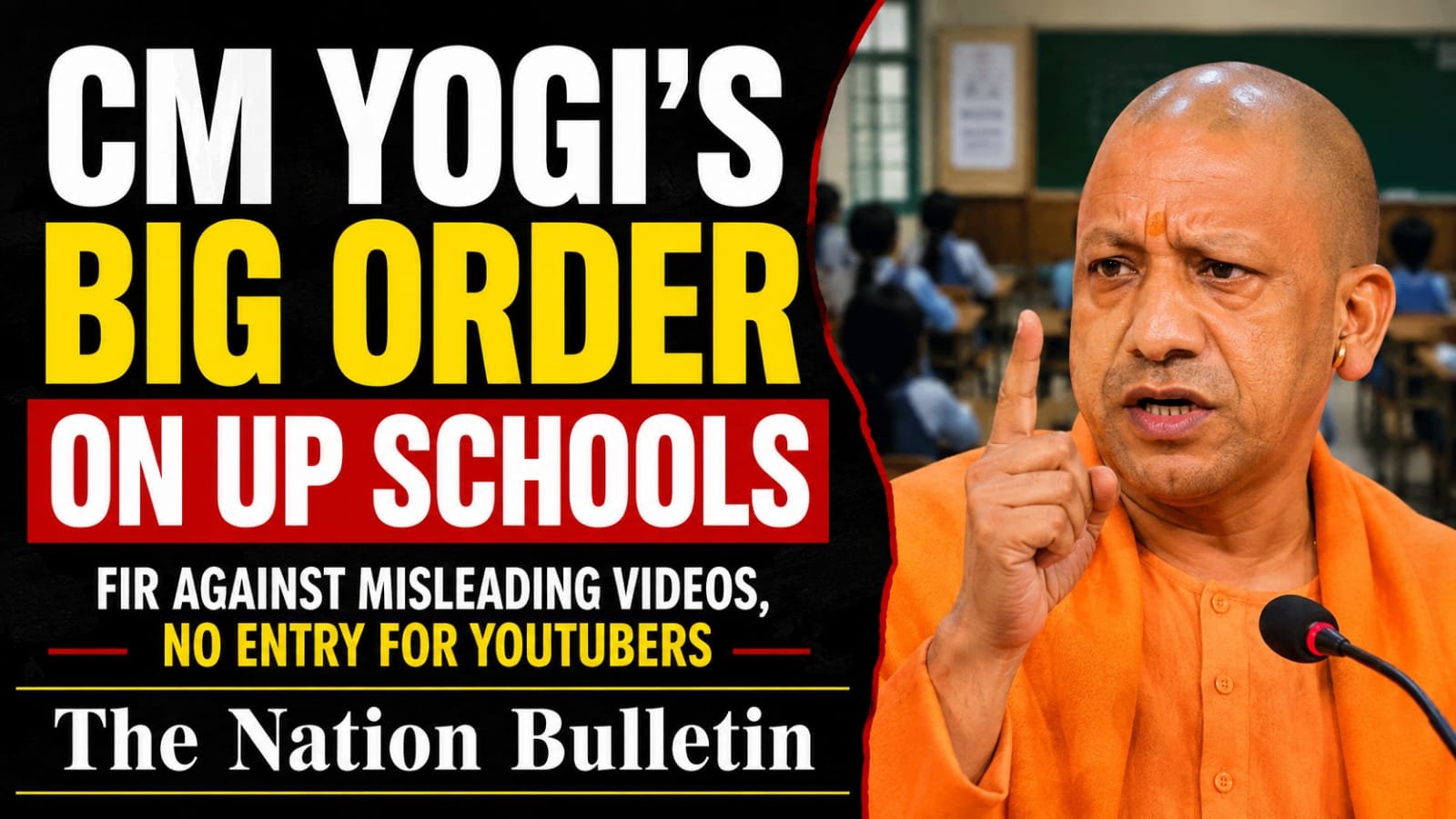
LUCKNOW, India — Uttar Pradesh Chief Minister Yogi Adityanath has directed officials to take legal action against people who create and circulate misleading videos of government primary and upper-primary schools by taking facts out of context or presenting them with malicious intent. At the same time, he has ordered district-level officials to visit schools themselves and verify the actual condition of basic facilities on the ground.
Key Highlights
- CM Yogi has directed officials to register FIRs against those creating or circulating misleading videos intended to tarnish the image of government schools.
- District magistrates and field officials have been asked to conduct surprise inspections of mid-day meals, drinking water, separate toilets, classrooms and other basic facilities.
- Hapur, Ayodhya, Balrampur, Azamgarh and Ballia are among the districts where restrictions have been issued against unauthorised entry, photography and videography.
- Parents and School Management Committee members are not covered by the restrictions and can visit schools according to the applicable rules.
CM Yogi Orders FIRs Over Misleading School Videos
The chief minister has taken a firm position on videos circulating on social media about the condition of Uttar Pradesh’s government primary and upper-primary schools. Officials have been instructed to identify and take legal action against people who create videos by presenting information out of context, using old or allegedly false facts, or attempting to create a misleading impression.
The direction for FIRs is part of a broader response to the controversy surrounding social media coverage of government schools. The government has simultaneously asked officials to independently verify whether the problems shown or alleged in such content actually exist.
Officials Told to Check Schools on the Ground
Yogi Adityanath has directed district magistrates and other field-level officials to personally conduct surprise and on-site inspections of government schools. The purpose is to establish the ground reality rather than relying only on videos circulating online.
During these inspections, officials have been asked to assess the quality of mid-day meals, the availability and condition of separate toilets for boys and girls, drinking water facilities, classroom conditions and other basic infrastructure.
The chief minister has also directed that negligence or corruption in the implementation of schemes and the delivery of facilities should lead to strict departmental action against the officials, employees or other responsible parties concerned.
How the #SchoolThikKaro Campaign Started the Debate
The controversy developed alongside the #SchoolThikKaro campaign on social media. The campaign called for social audits of basic infrastructure and conditions in government schools located in both rural and urban areas of Uttar Pradesh.
Following the campaign, several YouTubers, social media influencers and local residents began visiting schools and recording videos of classrooms, mid-day meals, toilets and other facilities. In some cases, these visits and recordings were carried out without prior permission.
Videos From Mohanlalganj and Jhansi Went Viral
Among the videos that circulated widely were visuals from Mohanlalganj in Lucknow, where children were allegedly shown cleaning a damaged roof. Another set of videos from Jhansi highlighted waterlogging in classrooms and leaking roofs.
These videos became part of the wider political debate, with the opposition also using the reported conditions in government schools as an issue of criticism.
Employee Union Raises Concerns Over Unauthorised Social Audits
The issue also prompted objections from employee organisations. The All India National Pension System (NPS) Employees Union wrote to the Union Education Ministry opposing what it described as unauthorised social audits of schools.
Employee organisations argued that people entering school premises without permission and recording videos could disrupt teaching activities. They also raised concerns about the dignity and security of teachers and the potential impact on the image of the education department.
Student safety was another concern highlighted in relation to unrestricted access by outsiders. The presence of unauthorised individuals inside school campuses raised questions about the security of students as well as the functioning of schools.
Hapur Bans Unauthorised Entry of YouTubers
Against this backdrop, several Basic Education Officers (BSA) issued directions restricting unauthorised access and filming in council-run schools.
In Hapur, Basic Education Officer Deepa Bhati ordered that outsiders, YouTubers and social media personnel would not be permitted to enter council-run schools without prior permission from the competent authority. The directions also instructed schools to keep their gates closed during school operations and after school hours.
The Hapur order followed concerns surrounding social media campaigns and unauthorised photography and videography at school premises.
Ayodhya, Balrampur, Azamgarh and Ballia Also Issue Restrictions
Similar directions have been issued in several other districts. According to the supplied reports, Basic Education Officers in Ayodhya, Balrampur, Azamgarh and Ballia also restricted entry and photography or videography by outsiders and social media personnel without permission.
The instructions require authorised visitors to follow prescribed procedures. The visitor register is to be used for school visits, with authorised departmental officials required to record their visit and sign the register.
Parents and SMC Members Exempt From the Restrictions
The restrictions have been clarified to avoid affecting parents and School Management Committee (SMC) members. The ban applies to unauthorised outsiders, YouTubers and people conducting photography or videography without permission.
Parents can continue to visit schools according to the applicable rules, including for matters concerning their children’s progress and school arrangements. SMC members are likewise permitted to visit schools as part of their role in school management and oversight.
Government Takes a Two-Pronged Approach
The government’s response combines action against allegedly misleading social media content with direct inspections of government schools. While officials have been told to pursue FIRs against content creators who deliberately spread misleading information, they have also been instructed to verify genuine shortcomings themselves.
The directions make clear that government schools are expected to have functioning basic facilities. District magistrates and Chief Development Officers (CDOs) have been asked to conduct surprise inspections covering drinking water, mid-day meals, separate toilets for boys and girls and electricity arrangements.
Where negligence is found, the concerned officials and contractors can face departmental action. The approach therefore places responsibility on authorities to address genuine infrastructure or service-related problems while also taking action against unauthorised activity and content considered misleading.
What the Latest Orders Mean for School Inspections
The latest instructions shift the responsibility for assessing school conditions towards official field verification. Instead of allowing unauthorised individuals to conduct independent recordings inside school premises, district authorities have been directed to establish the situation through inspections.
At the same time, the restrictions do not prevent legitimate involvement by parents or SMC members. The distinction is between authorised participation in school affairs and unauthorised entry or filming by outsiders.
The government has therefore placed two issues at the centre of its response: ensuring that genuine deficiencies in government schools are identified and corrected, and preventing misleading or unauthorised social media activity from determining the public perception of the school system.

Praveen Yadav is the Founder and Editor at The Nation Bulletin. With over 3 years of experience in digital journalism and news reporting, he covers national affairs, governance, and breaking current events with a commitment to factual accuracy and verified reporting.