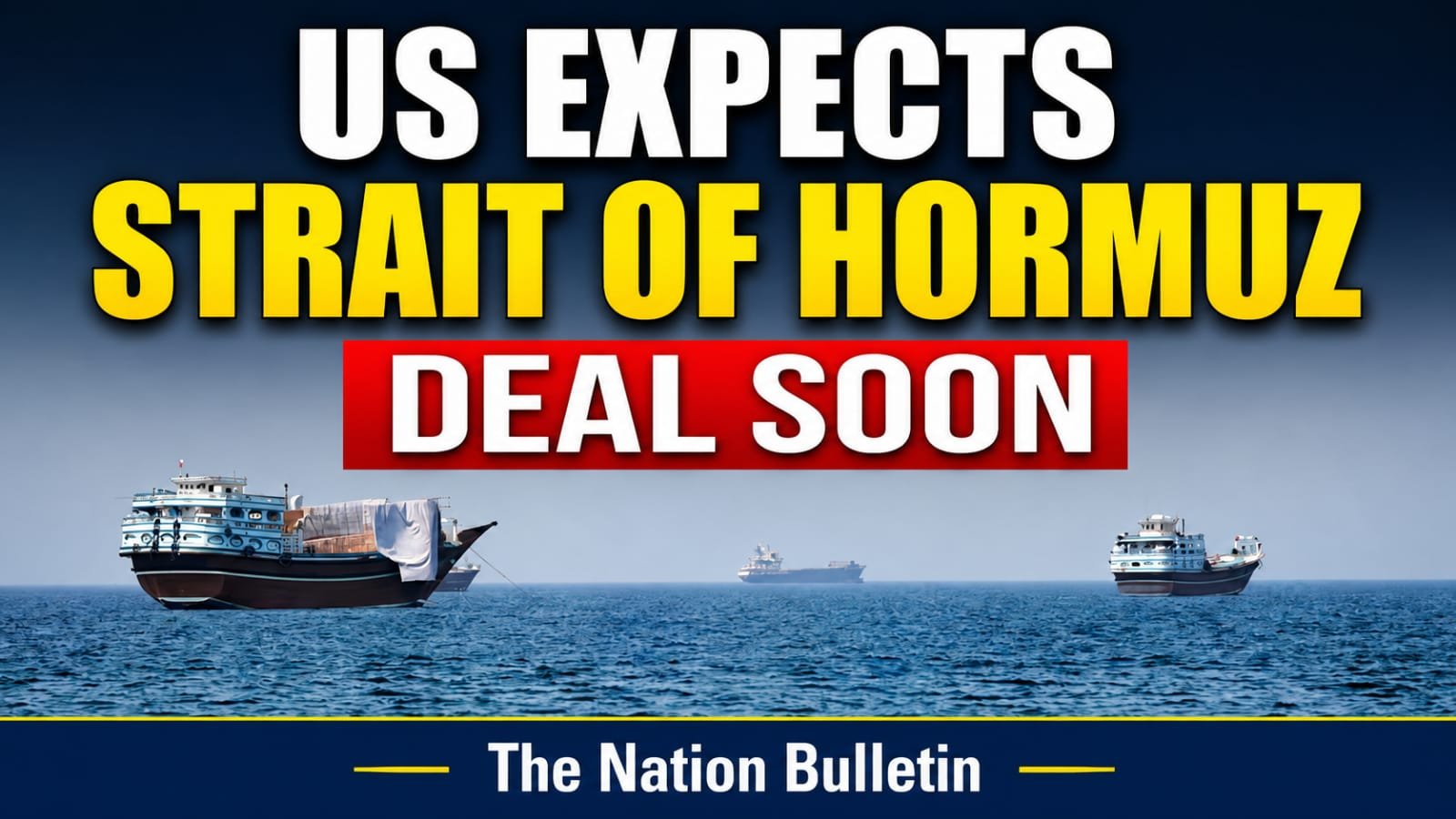
WASHINGTON, United States — The United States expects a possible agreement between Iran and Oman that could restore commercial shipping through the Strait of Hormuz, while Saudi Arabia, Turkey and Pakistan have signed a mutual defense pact amid escalating regional tensions. The developments came as Washington continued diplomatic efforts to contain the wider conflict involving Iran, Israel and Iranian-backed groups.
- Washington says progress has been made between Iran and Oman over the Strait of Hormuz.
- The US says it would lift its blockade of Iranian ports if commercial shipping resumes without impediments.
- Saudi Arabia, Turkey and Pakistan agreed to treat an armed attack on one member as an attack on all three.
- Lebanon and Israel agreed on a shortlist of countries that could monitor Hezbollah’s disarmament.
US links Hormuz reopening to wider agreement
A US official told Reuters that Washington expects Iran and Oman to reach an agreement soon over the strategic waterway. The official said restoring unrestricted commercial shipping would trigger the lifting of the US blockade of Iranian ports.
The Strait of Hormuz is a critical route for global energy supplies. Before the US and Israel launched their war on Iran on February 28, roughly one-fifth of the world’s consumed oil was transported through the waterway, according to the supplied report.
The disruption has affected oil shipments and contributed to higher energy prices, adding pressure to inflation. Iran has used the conflict to justify imposing tolls on oil tankers and restricting vessels attempting to cross without permission.
Washington’s position remains tied to implementation. The US official said any American action would depend on Iran fulfilling its commitments under an eventual arrangement.
Shipping attacks add pressure on energy markets
The problems around Hormuz have been accompanied by attacks attributed to Iran’s Yemen-based allies, the Houthis, targeting shipping near the Red Sea and Gulf of Aden.
Abu Dhabi National Oil Company said 15 of its vessels had been struck while passing through the Strait of Hormuz since the conflict began. The company said one crew member was killed and 20 others were wounded.
The attacks have increased concerns over the security of commercial shipping at two major maritime routes surrounding the Arabian Peninsula.
Saudi Arabia, Turkey and Pakistan sign defense agreement
As Gulf states face heightened security risks, Saudi Arabia, Turkey and Pakistan signed a joint defense agreement in Mecca on Friday.
The three countries said an armed attack against any one of them would be treated as an attack against all three. The arrangement is intended to strengthen collective deterrence and security cooperation.
All three countries are US allies and have majority-Sunni Muslim populations. Turkey stressed that the agreement was defensive and was not directed against a particular country.
The pact nevertheless comes during a period of heightened tensions between regional Sunni powers and Shi’ite-majority Iran, whose conflict with the United States has already affected Gulf security.
Lebanon and Israel discuss Hezbollah disarmament monitoring
Diplomatic efforts are also continuing around the conflict involving Israel and Hezbollah in southern Lebanon. A Lebanese official said Lebanon and Israel had agreed on a shortlist of countries that could provide personnel to verify Hezbollah’s disarmament.
The United States would select countries from that shortlist under the US-brokered arrangement. The development represents another diplomatic track running alongside efforts to stabilize the wider regional conflict.
Iranian leadership remains divided over negotiations
Washington and Tehran have not held direct high-level talks since US Vice President JD Vance met Iranian officials in Switzerland in June. That meeting followed a June 17 memorandum of understanding that established terms for restarting oil shipping through Hormuz and contributed to a ceasefire.
Hostilities resumed on July 7 following opposition to the arrangement in both countries, although fighting was subsequently suspended again. The US military’s Central Command has not reported strikes on Iran since July 29, according to the supplied Reuters report.
Analysts cited in the report have pointed to possible disagreements within Iran’s leadership as another complication for diplomacy. The reported tensions involve President Masoud Pezeshkian and other centers of power, including Supreme Leader Ayatollah Mojtaba Khamenei and the Islamic Revolutionary Guard Corps.
Pezeshkian defends negotiations
Iranian President Masoud Pezeshkian defended his government’s approach to negotiations during an interview broadcast on state television on Friday.
He argued that dialogue could provide a route for Iran to secure its interests and said most senior military commanders supported negotiations aimed at ending the fighting.
When we can get our rights through dialogue, why not do it?
Pezeshkian also contrasted the US confrontation with Iran with Washington’s relationship with China, arguing that Beijing’s growing strength had not led to a similar military confrontation.
What happens next
The immediate focus is on whether Iran and Oman can finalize an arrangement that allows commercial vessels to move normally through the Strait of Hormuz. Such an agreement would also test whether Washington’s promised easing of restrictions can become part of a broader and more durable settlement.
At the same time, the new defense pact involving Saudi Arabia, Turkey and Pakistan adds a fresh security dimension to the region, while the proposed international monitoring mechanism for Hezbollah’s disarmament creates another diplomatic track to watch.
The durability of any agreement will depend on whether the parties carry out their commitments and prevent further disruption to shipping and regional security.

Praveen Yadav is the Founder and Editor at The Nation Bulletin. With over 3 years of experience in digital journalism and news reporting, he covers national affairs, governance, and breaking current events with a commitment to factual accuracy and verified reporting.