India has backed away from proposed color-coded health warnings on packaged foods after strong industry opposition, while the Supreme Court examines the regulator’s decision amid growing concerns over sugar, salt and fat consumption.
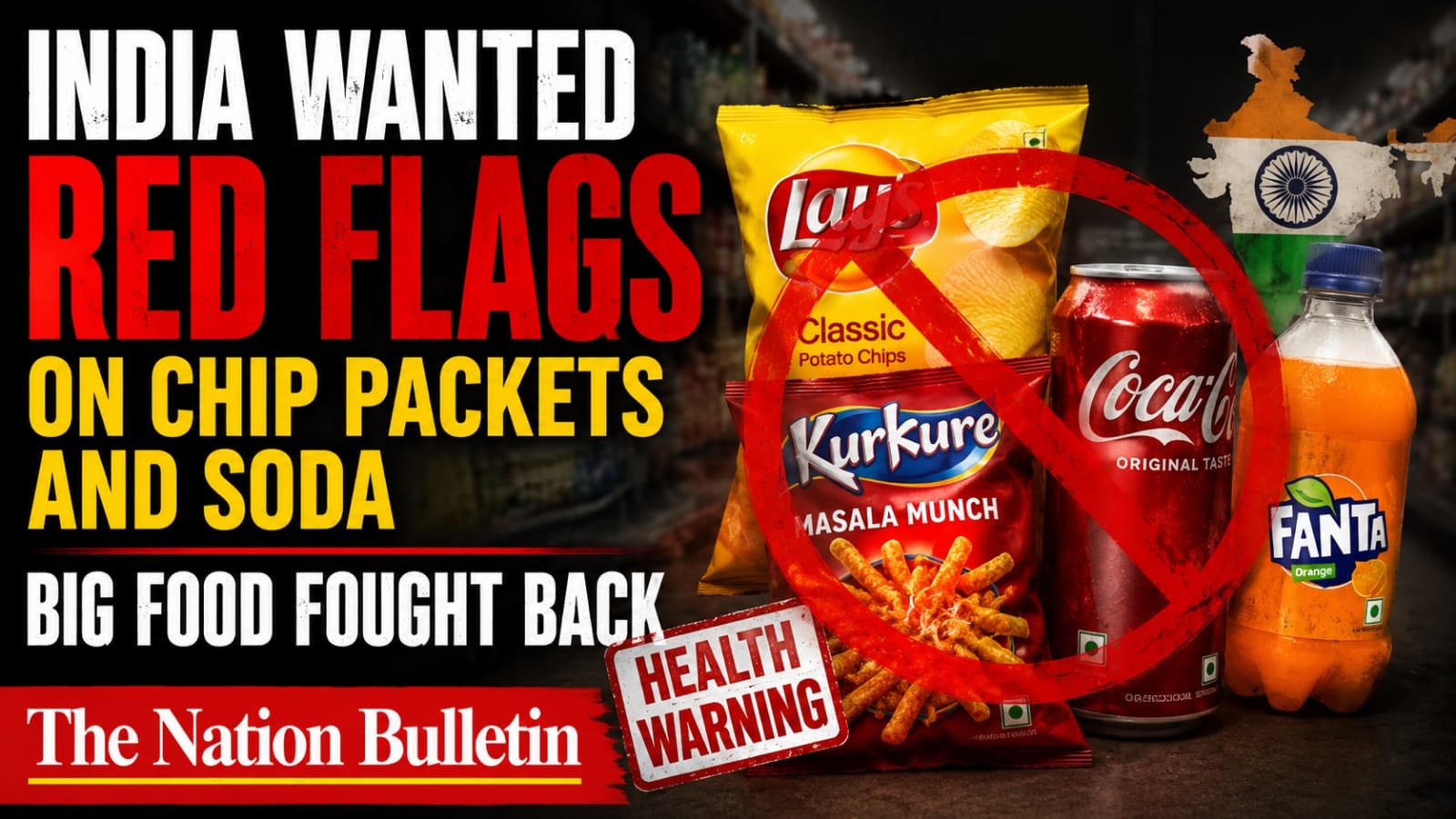
NEW DELHI, India — India’s food-safety regulator has abandoned a push for prominent color-coded health warnings on the front of packaged food and drinks after a tense meeting with industry executives in March, according to recordings and documents reviewed by Reuters.
The decision has intensified a broader debate over how consumers should be informed about the nutritional content of packaged products as India’s middle class becomes increasingly health-conscious and activists push for tougher food-labeling standards.
Key Highlights
- India’s food regulator has moved away from proposed color-coded front-of-pack warnings for packaged foods.
- Food industry executives argued that warning symbols could confuse consumers and urged regulators to emphasize portion control.
- The Supreme Court is scrutinizing the decision after public health activists petitioned for stronger nutritional labeling.
- Nearly 80% of products in India’s packaged food and beverage market could be considered high in fat, sugar and salt, according to industry estimates cited by Reuters.
India packaged food labeling faces renewed scrutiny
The Food Safety and Standards Authority of India, or FSSAI, has considered stronger front-of-pack labeling measures since 2017, including color-coded warnings and star ratings indicating nutritional value.
Under the existing system described in the report, producers are required to provide ingredient lists and basic nutritional information on the back of packaging. Health activists have argued that consumers need clearer information at the point of purchase.
Food industry pushed back against warning labels
At the March 19 meeting with regulators, industry representatives challenged the effectiveness of interpretive warning labels. Coca-Cola India executive Mili Bhattacharya argued that consumers who do not already examine ingredient lists would not necessarily change their diets simply because a symbol appeared on the front of a package.
Industry representatives also raised concerns about how a color-coded system could affect a wide range of products. Deepak Jolly of the Ind Food & Beverage Association said the industry could see packaging dominated by red warnings if the system were implemented broadly.
The association, which represents companies including PepsiCo, said it wants greater clarity from regulators. It also argued that existing proposals could potentially classify products such as coconut water as high in sugar because of naturally occurring sugar.
Supreme Court examines India’s labeling policy
The dispute has moved beyond regulators and food companies. Public health activists have petitioned India’s Supreme Court, which in February directed regulators to consider warning-label systems and pointed to Israel’s red-and-green approach as one model for examination.
By August, however, FSSAI told the court that matching international packaging standards was “difficult.” The position drew criticism from judges, who emphasized that India should demonstrate concern for the overall health of its citizens.
FSSAI declined to comment on the matter, citing ongoing court proceedings.
Health concerns grow as Indian consumers change
The labeling debate comes as health awareness grows among India’s increasingly affluent consumers. A recent study published in The Lancet estimates that 450 million Indians could be obese or overweight by 2050.
Market-research firm Pharmarack also reported that monthly sales of weight-loss drugs that reduce appetite have increased 400% since early 2025. At the same time, social-media activists and influencers have intensified criticism of processed and packaged food.
Food influencers challenge major brands
Revant Himatsingka, known online as Food Pharmer, has built an audience of more than 5 million across YouTube and Instagram while campaigning against ingredients he considers inferior in packaged foods.
His criticism has included comparisons between products sold in India and similar products available in European and Australian markets. In 2023, PepsiCo obtained a Delhi court order against a video in which Himatsingka criticized the sugar and artificial sweetener content of its Sting beverage, arguing that his claims were false and intended to encourage a campaign against the drink.
In July, Indian regulators ordered PepsiCo and other companies to remove the “energy drink” label from certain products within 90 days.
Why recipes differ between India and overseas markets
Multinational food companies often adjust recipes according to local regulations, consumer preferences and purchasing power. Former Mondelez executive Parul Sharma said pricing and affordability are major factors behind differences in formulations between countries.
But activists argue that Indian consumers can receive products with different ingredients or nutritional profiles compared with similar products overseas. The report cites differences involving Fanta, KitKat and Maggi noodles as examples.
The Indian version of Fanta contains an artificial dye that is absent from the similarly branded British product described in the report. Indian standard KitKats contain 4.5% cocoa solids, compared with at least 22% cocoa in the milk chocolate used in the Australian version, while many Maggi noodle varieties sold in Britain use sunflower oil rather than palm oil.
Consumer pressure is beginning to influence products
There are signs that changing consumer expectations are affecting product strategies. Nestle announced in 2024 that it would begin selling sugar-free Cerelac baby food in India after activists criticized the company for selling only sugar-containing versions in the country for decades.
The wider dispute now places India’s food industry at the intersection of consumer choice, public-health concerns and regulatory policy. The Supreme Court’s scrutiny could determine how prominently nutritional information is presented to Indian consumers in the future.

Praveen Yadav is the Founder and Editor at The Nation Bulletin. With over 3 years of experience in digital journalism and news reporting, he covers national affairs, governance, and breaking current events with a commitment to factual accuracy and verified reporting.