DUBAI/WASHINGTON — Iran has warned of a “devastating” response to any new U.S. economic measures after Washington threatened what it described as the toughest financial penalties in history against Tehran and countries providing economic support to Iran.
- Iranian military officials warned that any new U.S. threats would trigger a broad response across multiple domains.
- U.S. Treasury Secretary Scott Bessent said details of the planned measures would be announced Monday.
- Washington is seeking cooperation from China, a major buyer of Iranian oil, over its pressure campaign.
- Oil flows through the Strait of Hormuz have already fallen sharply amid the conflict and blockade.
Iran warns of ‘devastating’ response to U.S. pressure
The latest escalation follows U.S. President Donald Trump’s warning that countries providing Iran with “any type of lifeline” could face economic consequences. Treasury Secretary Scott Bessent is expected to provide more details of the measures at a press conference on Monday.
Iran’s chief of staff of the Armed Forces, Major General Ali Abdollahi, said the country was prepared to respond across land, sea, air, air defence and cyberspace.
“With preparedness across land, sea, air, air defence and cyberspace, Iran’s armed forces will respond to the enemy’s new threats with crushing, punishing and devastating responses,”
Iranian media quoted Abdollahi as saying.
Tehran rejects new sanctions threat
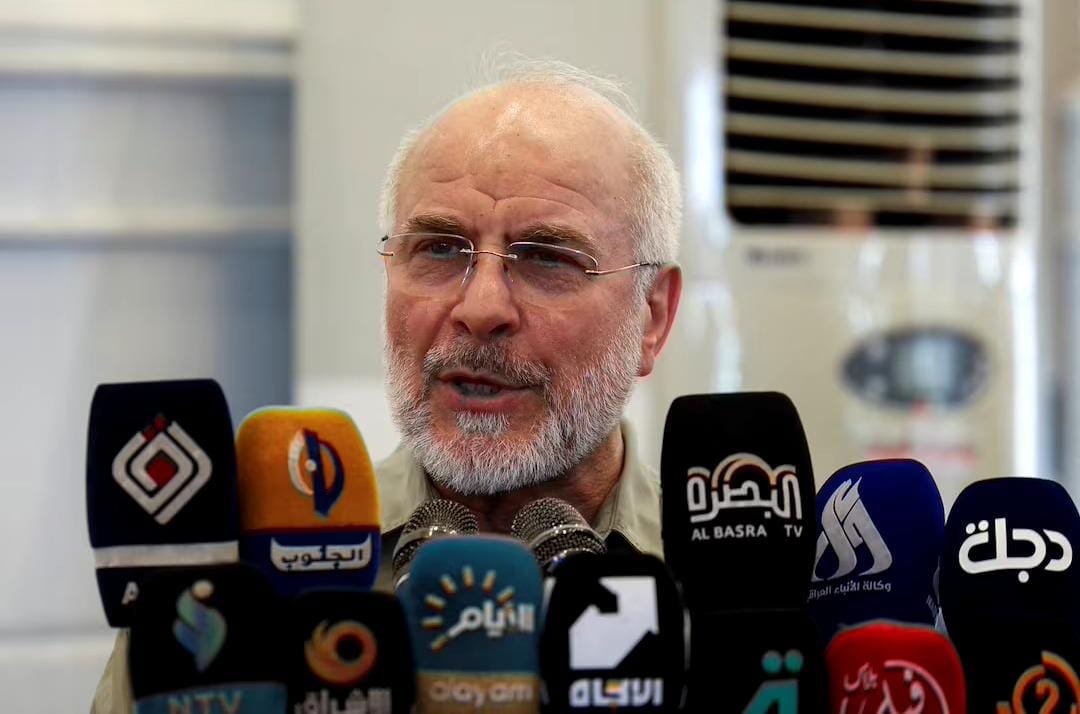
Iranian Parliament Speaker Mohammad Baqer Qalibaf, who is also the country’s main negotiator in mediated talks with the United States, accused Washington and Israel of pursuing economic and “cognitive” warfare.
Speaking in neighbouring Iraq, Qalibaf said Iran needed to prepare for the impact of sanctions and overcome the economic pressure. Iran’s foreign ministry separately said U.S. sanctions would not weaken the country’s determination to protect its independence and sovereignty.
President Masoud Pezeshkian also warned that Iran’s response to an attack would be “crushing”, while arguing that the conflict should now end.
U.S. says economic pressure could avoid wider military escalation
Bessent said the administration’s maximum economic pressure campaign was not necessarily intended to trigger a large-scale military escalation. He told CNBC that if maximum economic pressure was applied, there would likely not be a “large-scale kinetic restart.”
He said Washington planned to explain its next steps on Iran on Monday and described the combination of a naval blockade and new sanctions as a “one-two punch”.
Trump’s administration is facing pressure to end the war as higher fuel prices weigh on public approval and create political risks ahead of the November midterm elections.
Strait of Hormuz disruption threatens global energy flows
The confrontation has already affected shipping through the Strait of Hormuz, a major global energy route. Reuters reported that only seven commodity ships passed through the waterway on Thursday, according to ship-tracking data from Kpler, compared with more than 130 a day before the war.
Before February, the strait carried about a fifth of all traded oil. The reduced shipping activity has therefore added to concerns over fuel prices and the wider effects of the conflict on global energy markets.
The United States and Iran have twice announced ceasefire agreements, in April and June, intended to restore shipping through Hormuz and move toward an end to the conflict. Both arrangements subsequently collapsed.
China caught between sanctions pressure and energy needs
Washington is also seeking China’s cooperation in enforcing pressure on Iran. Bessent said China receives a significant share of its energy from the Gulf and should cooperate with the U.S. approach.
China buys more than 80% of Iran’s shipped oil, according to 2025 data cited from Kpler. Iranian crude offers to Chinese buyers have already declined since the United States reimposed its blockade on Iranian ports in July, according to trade sources cited by Reuters.
China’s embassy in Washington opposed the approach, saying sanctions and pressure would not help resolve the dispute and calling for diplomatic solutions.
Economic pressure adds risks for Iran and Gulf states
Iran has lived under extensive economic sanctions for decades, but the pressure has contributed to severe economic difficulties, including high inflation, a weakened currency and energy shortages. Damaged infrastructure has added to the strain on the population.
Further pressure also carries risks for U.S. partners in the Gulf. Iranian attacks have affected some energy facilities and desalination plants that are important sources of drinking water in the region.
What happens next
The next major development is expected Monday, when Bessent is due to outline the new U.S. measures. Iran has already signalled that it will resist additional economic pressure, raising the possibility of further confrontation if Washington proceeds with its planned sanctions.
Frequently Asked Questions
What new U.S. measures is Iran responding to?
Washington has threatened new financial penalties targeting Iran and countries that provide economic support to Tehran. Scott Bessent is expected to provide details on Monday.
Why is the Strait of Hormuz important in the Iran conflict?
The Strait of Hormuz is a critical global energy route. Before February, it carried about a fifth of all traded oil, making disruptions there significant for international fuel markets.
Iran-U.S. tensions remain high
Iran’s warnings and Washington’s planned sanctions mark another escalation in an already prolonged confrontation. With shipping through Hormuz sharply reduced and China facing pressure over Iranian oil purchases, the economic consequences could extend well beyond Iran and the United States.

Praveen Yadav is the Founder and Editor at The Nation Bulletin. With over 3 years of experience in digital journalism and news reporting, he covers national affairs, governance, and breaking current events with a commitment to factual accuracy and verified reporting.