Russia intensified its aerial campaign against Ukraine in July by launching a record number of glide bombs while also increasing ballistic missile attacks, according to Ukrainian officials. The escalation came as Kyiv claimed Russian forces suffered their highest monthly casualty figures of the year, even as Moscow continued to rely on long-range strikes to maintain pressure on Ukraine.
According to Ukraine’s General Staff, Russian forces sustained around 42,800 casualties during July, a figure that, if confirmed, would represent the highest monthly losses recorded by Kyiv so far in 2026. However, Al Jazeera noted that it could not independently verify casualty claims made by either side in the war, which has now entered its fifth year.
Ukraine Reports Record Use of Russian Glide Bombs
Ukraine’s Defence Ministry said Russia launched approximately 8,300 glide bombs during July, the highest monthly total since the war began. The weapons have become one of Moscow’s most effective battlefield tools because Ukraine has struggled to develop reliable countermeasures against them.
Alongside glide bombs, Russia also fired a record 376 missiles at Ukrainian cities during the month, surpassing the previous monthly high of 288 missiles recorded in March. Of those missiles, Ukrainian officials said 120 were ballistic missiles, increasing pressure on Ukraine’s already limited air defence resources.
According to Ukrainian authorities, Patriot air defence systems remain the only proven defence against ballistic missile attacks, but the growing number of launches has significantly reduced available interceptor stocks.
Kyiv Says Russian Battlefield Losses Continue to Rise
President Volodymyr Zelenskyy said Ukraine’s military campaign has continued to inflict heavy losses on Russian forces. He stated that drones alone accounted for 30,272 Russian casualties during July.
Zelenskyy has argued that increasing Russian losses could eventually force Moscow to mobilise up to half a million reservists later this year. Russian President Vladimir Putin has so far avoided deploying regular conscripts and reservists in what Moscow officially calls its “Special Military Operation”, a move analysts say could carry domestic political risks.
Speaking recently to Fox News, Zelenskyy said Ukraine’s total casualties during the war have reached approximately 450,000, including around 50,000 fatalities.
The Washington-based Center for Strategic and International Studies (CSIS) has separately estimated that the casualty ratio between Russian and Ukrainian forces increased to nearly 8:1 during the first half of 2026, compared with between 2:1 and 3:1 for much of the conflict. According to the think tank, Ukraine’s expanded use of drones has played a significant role in changing battlefield dynamics.
Russian Territorial Gains Slow Significantly
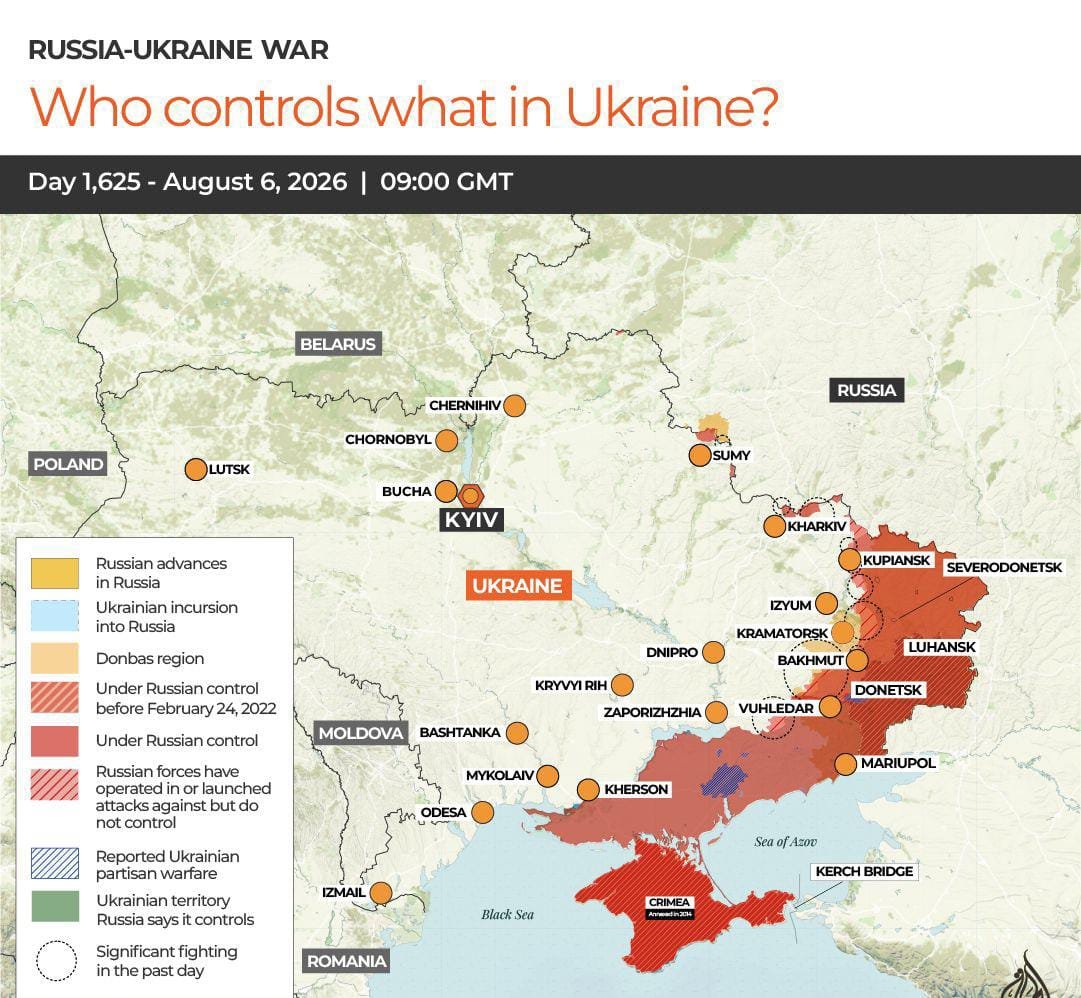
While Russia has continued its offensive, independent battlefield assessments cited by Al Jazeera suggest its territorial gains have slowed sharply.
The Institute for the Study of War (ISW), which analyses battlefield developments using geolocated open-source information, estimated that Russian forces occupied only 37.85 square kilometres of Ukrainian territory during July. That compares with approximately 455 square kilometres captured during the same month last year.
The ISW also estimated that Russia has, on balance, lost approximately 183.5 square kilometres of occupied territory during 2026, contrasting with the more than 2,198 square kilometres it seized during the first seven months of 2025.
Despite slower advances, Russian forces have continued employing infiltration tactics by sending small groups of soldiers into contested areas before reinforcing their positions later. According to the ISW, Russian troops infiltrated approximately 121.6 square kilometres during July, bringing the year’s total infiltrated area to nearly 380 square kilometres.
Many of those positions have since been recaptured by Ukrainian forces. However, Ukrainian defenders around the eastern city of Kostiantynivka have expressed concerns that sustaining the city’s defence may become increasingly difficult if Russian pressure continues.
Ukraine Renews Long-Range Strike Campaign
Ukraine has also intensified attacks deep inside Russian territory. President Zelenskyy declared a recently completed 40-day long-range strike campaign successful before extending the operation on August 4.
According to Ukrainian officials, the campaign focused on three main objectives: disrupting Russia’s military production and oil refining infrastructure, targeting logistics networks supporting occupied territories, and attacking frontline military positions.
Ukraine’s Security Service (SBU) said operations during the campaign struck 14 oil refineries, dozens of oil depots and fuel terminals, 14 aircraft and four military airfields. Several of those attacks reportedly occurred during the past week, including strikes on facilities in Volgograd, Ufa, Yaroslavl and the Engels-2 and Saratov airfields.
Ukraine Targets Energy Infrastructure and Military Facilities
Ukraine has continued expanding its long-range drone operations against Russia’s energy and defence sectors. During the latest phase of the campaign, Ukrainian forces reported strikes on multiple oil refineries, fuel storage sites, aircraft facilities and military airfields. Among the reported targets was a drone manufacturing plant in Izhevsk that, according to military technology expert Serhii Beskrestnov, relies primarily on domestically produced Russian components.
A recent Financial Times analysis of satellite imagery, cited by Al Jazeera, estimated that Ukraine has damaged or destroyed roughly one-third of Russia’s operational oil refining capacity. Ukrainian officials say these operations have been supported by the country’s rapidly expanding fleet of long-range drones, with nearly 10,000 launched each month.
Moscow Mayor Sergei Sobyanin said that 6,225 Ukrainian drones flew towards the Russian capital during July, accounting for nearly two-thirds of Ukraine’s long-range drone operations targeting Russian territory that month.
Ukraine has also expanded international cooperation to increase drone production. According to the report, Kyiv has agreements with nine partner countries to manufacture drones abroad, with half of the production destined for Ukraine, while negotiations on 15 additional agreements remain underway.
Crimea Faces Growing Energy Pressure
Occupied Crimea has emerged as one of the main targets of Ukraine’s long-range campaign. Ukrainian officials said attacks struck 201 electricity substations across the peninsula, placing significant strain on local power infrastructure.
Rodion Miroshnik, the Kremlin’s ambassador-at-large, acknowledged that Crimea’s electricity network had operated under unprecedented pressure, resulting in rolling blackouts across multiple districts. He also said neighbouring occupied regions of Kherson and Zaporizhia experienced widespread power outages during the same period.
Ukraine further claimed it has sunk or disabled 206 Russian tankers and ferries transporting fuel and military supplies across the Black and Azov seas to Crimea. According to the commander of Ukraine’s unmanned systems forces, the campaign has reduced available maritime targets.
The disruption has reportedly forced Moscow to allocate billions of roubles in subsidies for Crimea, including introducing a temporary price cap on petrol.
Ukrainian strikes also reportedly destroyed a 60,000-tonne petroleum storage facility in Taman near the Kerch Strait, triggering a major fire on July 31. Additional operations targeted aircraft hangars in Yevpatoria, a naval boatyard in Chornomorske and an artillery brigade supply base elsewhere in Crimea.
Russia Expands Missile and Glide Bomb Campaign
As Ukraine intensified long-range strikes, Russia increased the use of glide bombs and ballistic missiles against Ukrainian cities. Glide bombs, fitted with guidance systems and wings, can be launched from aircraft at distances of 20 to 30 kilometres from the front line, allowing Russian aircraft to remain outside many Ukrainian air defence zones.
Some of the weapons reportedly carry warheads weighing up to three tonnes. Ukrainian officials say their speed and flight characteristics make them extremely difficult to intercept.
Russia also launched a record number of missiles during July, including 120 ballistic missiles. Ukraine’s Air Force said it intercepted only one of the 51 Iskander-M ballistic missiles launched during the past week, highlighting the growing pressure on the country’s air defence systems.
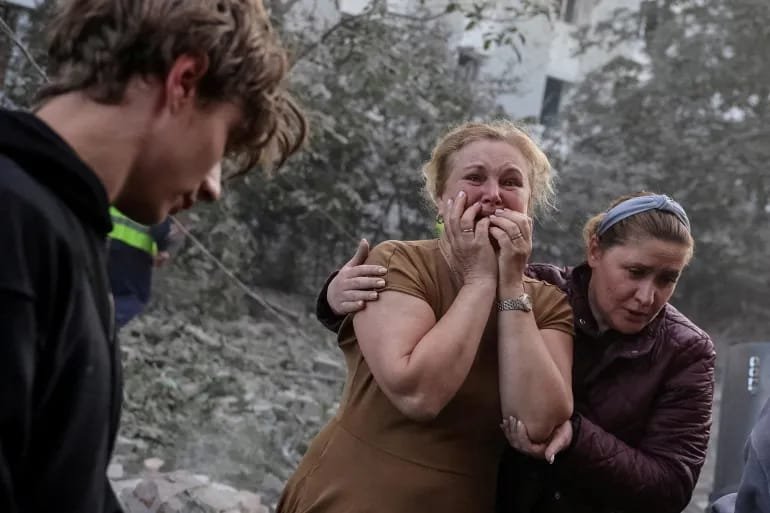
According to the report, the increased missile penetration contributed to civilian casualties, including at least nine deaths on August 1 and another 17 people killed in Kyiv on August 5.
Ukraine Appeals for More Patriot Interceptors
Russian production of Iskander-M ballistic missiles is estimated at around 70 each month. President Volodymyr Zelenskyy also claimed that a missile used against Radushne last month was manufactured in North Korea, marking only the second reported use of such a weapon during the war.
Zelenskyy has urged Ukraine’s international partners to provide additional Patriot interceptor missiles, arguing that existing stockpiles held by allied countries could help strengthen protection against continued ballistic missile attacks.
“The United States knows what we need. Europe knows what we need. Anti-ballistic missiles must protect people – not sit in stockpiles,” Zelenskyy said.
Figures released by Ukraine’s Air Force illustrate the challenge facing the country’s air defences. Since the start of the war, Ukrainian forces say they have intercepted 4,626 missiles of various types but only 437 ballistic missiles, underscoring the continuing difficulty of defending against one of Russia’s most advanced strike capabilities.
Latest Developments
The latest battlefield data points to two contrasting trends. Ukraine says it is inflicting increasing losses on Russian forces while expanding long-range strikes against military and energy infrastructure. At the same time, Russia continues to intensify its use of glide bombs and ballistic missiles, weapons that remain among the most difficult for Ukrainian air defences to counter. As both sides adapt their military strategies, the conflict continues to evolve with no immediate sign of easing.

Praveen Yadav is the Founder and Editor at The Nation Bulletin. With over 3 years of experience in digital journalism and news reporting, he covers national affairs, governance, and breaking current events with a commitment to factual accuracy and verified reporting.