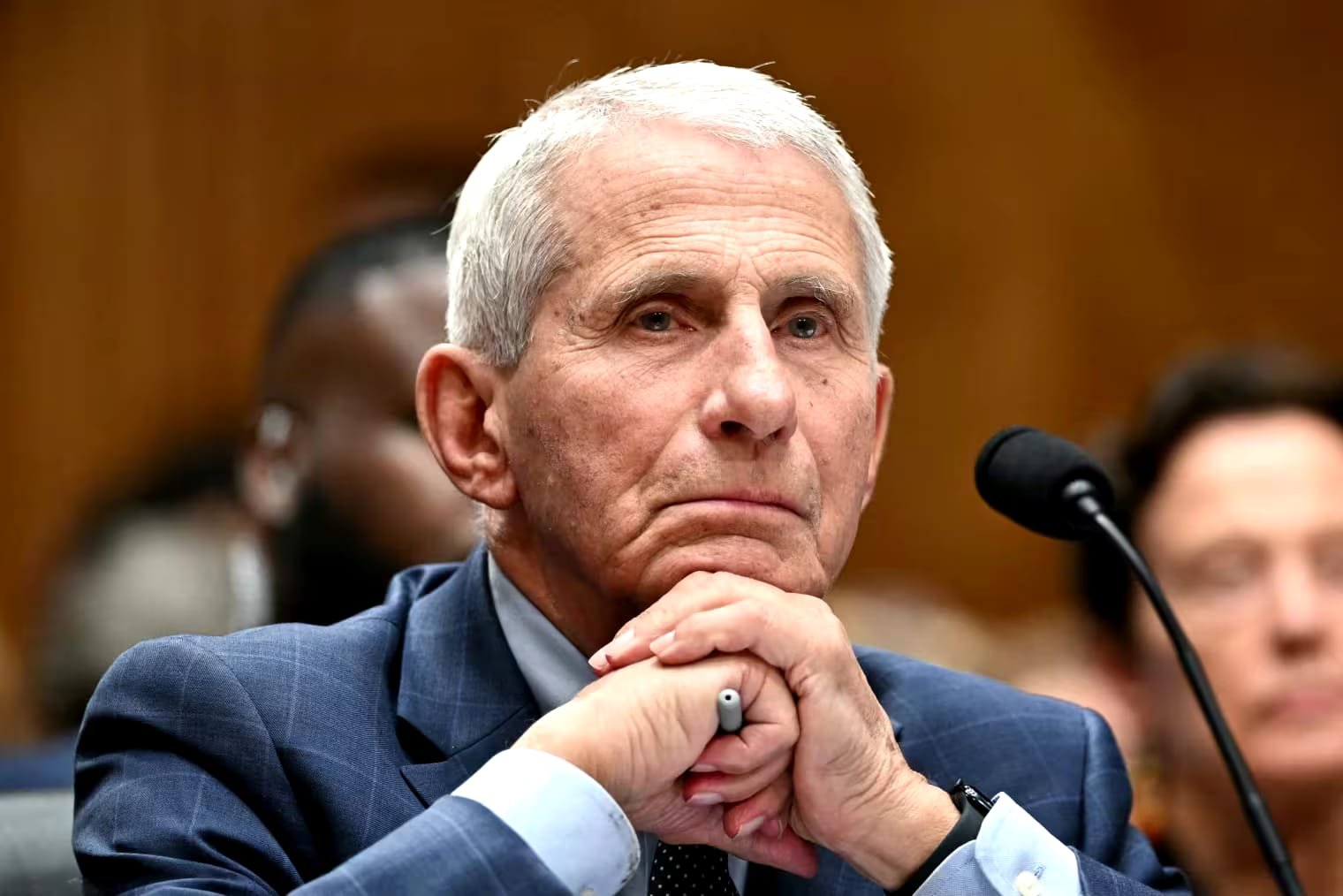
Republicans on the U.S. Senate Homeland Security and Governmental Affairs Committee voted on Thursday to hold Dr. Anthony Fauci in contempt of Congress after he repeatedly invoked his Fifth Amendment right against self-incrimination during a contentious hearing held last week. The resolution passed by an 8-5 party-line vote, escalating a long-running political dispute over Fauci’s role during the COVID-19 pandemic.
The vote followed Fauci’s appearance before the committee, where he declined to answer lawmakers’ questions after explaining in his opening remarks that he believed Republican members intended to use his testimony as part of an effort to prosecute him. Fauci, who served as one of the United States’ top public health officials during the pandemic, has remained a frequent target of Republican criticism in the years since the health crisis.
Committee Approves Contempt Resolution
Committee Chairman Rand Paul, Republican of Kentucky, defended the decision before the vote, arguing that Fauci should not have been permitted to refuse questioning after receiving a broad federal pardon from former President Joe Biden.
“We are voting on whether a witness who has received the benefit of a sweeping federal pardon can be ordered by this committee to answer questions and then defy that order without consequence,” Paul said during the committee meeting.
Paul was referring to the pre-emptive pardon granted by Biden shortly before leaving office. At the time, Biden said the pardon was intended to protect Fauci and several other individuals from what he described as potentially politically motivated prosecutions.
Following the committee’s vote, the contempt resolution may either be referred directly to the U.S. Department of Justice or sent to the full Senate for consideration. Paul said earlier that the committee’s first step after approving the resolution would be to refer the matter to the Justice Department.
Future of the Resolution Remains Uncertain
Although the committee approved the measure, its path forward remains unclear. If Paul seeks a vote before the full Senate, the resolution would likely face significant hurdles. According to the report, the narrowly divided chamber would require 60 votes for the measure to advance, a threshold it is not expected to reach.
If federal prosecutors choose to pursue the matter, the case would fall under the authority of the U.S. attorney for the District of Columbia. The report noted that an indictment would first need to be secured from a grand jury before any prosecution could proceed.
Fauci’s Lawyer Calls Vote a Political Move
Fauci’s attorney, David Schertler, strongly criticized the committee’s action, describing it as politically motivated and aimed at penalizing his client for exercising constitutional protections.
“Today’s resolution is a crude political stunt intended to punish Dr. Fauci for exercising his constitutional rights,” Schertler said.
“Today’s resolution is a continuation of Senator Paul’s personal vendetta against Dr. Fauci, who spent 50 years in public health and has saved countless lives. It is shameful and wrong that Senator Paul is abusing his power by trying to weaponize the Justice Department against an honorable public servant.”
The dispute marks the latest chapter in a years-long confrontation between Rand Paul and Fauci over the federal government’s handling of the COVID-19 pandemic, with both sides continuing to reject each other’s allegations.
Democrats Warn Against Setting a New Precedent
Democratic members of the committee opposed the contempt resolution, arguing that penalising a witness for invoking constitutional protections could discourage future cooperation with congressional investigations.
Sen. Gary Peters, the committee’s top Democrat, said the move could have lasting consequences for congressional oversight by making witnesses reluctant to appear before lawmakers.
“If this committee now seeks to punish a witness for asserting their constitutionally protected Fifth Amendment rights, future witnesses will argue that appearing before Congress exposes them to punishment, regardless of whether they comply with the subpoena and invoke a constitutional protection,” Peters said.
During the committee meeting, Democrats attempted five times to table the contempt resolution, but each effort failed in party-line votes.
Republicans Question Fauci’s Fifth Amendment Claim
Republicans argued that Fauci should not have been able to invoke the Fifth Amendment because of the pre-emptive pardon granted by former President Joe Biden. They also contended that Fauci had effectively waived that protection by delivering an opening statement on matters related to the committee’s investigation.
Rand Paul said he had instructed Fauci to answer questions and warned him that refusing to do so could lead to contempt proceedings.
“I ordered him to answer and warned him about contempt, yet he still refused. That is obstruction of a congressional investigation. The Committee will act accordingly,” Paul said in a statement.
Sen. Ron Johnson, Republican of Wisconsin, said his investigation into Fauci was continuing. Johnson announced that the subcommittee he leads had obtained a copy of Fauci’s iPhone, which Fauci used while serving in the Department of Health and Human Services during the COVID-19 pandemic.
Johnson also said Fauci had been invited to participate in a transcribed interview before the committee, adding that additional interviews would form part of the ongoing investigation.
Legal Expert Questions Republican Interpretation
Abbe Smith, a law professor at Georgetown University, questioned the Republican argument that Fauci could not invoke the Fifth Amendment because of the pardon.
Smith said the legal effect of a pre-emptive pardon remains uncertain and suggested there is no settled understanding of how much protection such pardons provide. She also said she would have advised Fauci to invoke the Fifth Amendment under the circumstances.
Addressing Republican claims that Fauci’s opening statement amounted to a waiver of his constitutional protection, Smith said she did not believe the remarks met that legal standard because he did not answer specific allegations before declining further questioning.
Long-Running Political Dispute Continues
The committee vote represents the latest escalation in a years-long political conflict between Republicans and Fauci over the federal response to the COVID-19 pandemic and the origins of the virus.
Rand Paul has repeatedly accused Fauci of lying to Congress and destroying records, allegations that Fauci and his legal team have consistently denied. Earlier this week, Paul argued that anyone found guilty of lying to Congress or destroying records should face felony charges.
During last week’s hearing, Fauci defended his decision to invoke the Fifth Amendment, saying he believed the proceedings were intended to support repeated public calls for his prosecution rather than to conduct a fair inquiry.
“Given Sen. Paul’s obvious obsession with calling for my prosecution… the only conclusion I can reach is that the sole reason he is calling me before this committee is to get me to say something, anything, that could vindicate his repeated public pledges that I end up, in his words, ‘behind bars,'” Fauci said.

Praveen Yadav is the Founder and Editor at The Nation Bulletin. With over 3 years of experience in digital journalism and news reporting, he covers national affairs, governance, and breaking current events with a commitment to factual accuracy and verified reporting.