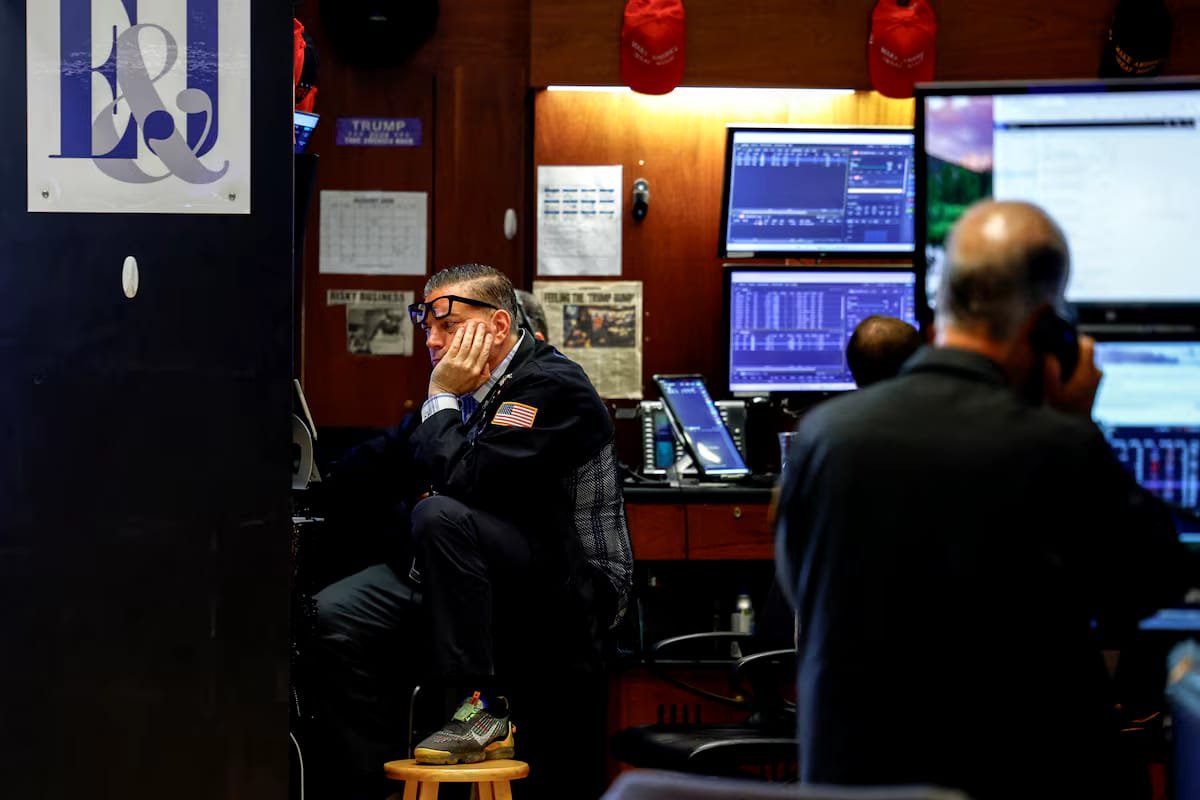
The S&P 500 traded little changed in volatile early trading on Thursday as weakness in semiconductor and software stocks offset gains across most other sectors. Investors digested a fresh round of corporate earnings while also looking ahead to key U.S. employment data that could influence the Federal Reserve’s next policy decisions.
Despite upbeat quarterly revenue forecasts from data storage company Western Digital and memory chip maker Sandisk, both stocks came under heavy selling pressure. Their declines weighed on the broader technology sector even as most sectors of the S&P 500 advanced.
Major U.S. Index Performance
| Index | Level | Change | % Change |
|---|---|---|---|
| Dow Jones Industrial Average | 54,393.31 | +44.19 | +0.08% |
| S&P 500 | 7,729.37 | +5.82 | +0.08% |
| Nasdaq Composite | 26,350.26 | -14.59 | -0.05% |
At 9:37 a.m. ET, the Dow and the S&P 500 remained in positive territory, while the Nasdaq Composite slipped slightly as losses in technology shares outweighed gains elsewhere in the market.
Chip Stocks Retreat Despite Strong Revenue Outlook
Technology shares led the market’s weaker performers after investors reacted cautiously to earnings updates from major storage chip companies.
Western Digital fell 18.5%, while Sandisk declined 11.3%, even though both companies projected quarterly revenue above Wall Street expectations on expectations of continued artificial intelligence-driven demand. The two stocks had already posted exceptional gains this year, rising roughly 200% and 400%, respectively.
According to Hank Smith, Director and Head of Investment Strategy at Haverford Trust, investors are taking profits after the sector’s strong rally.
“There are just incredible expectations and chips have done so well this year through June so there’s just some digestion going on in the market,” Smith said.
The broader semiconductor sector also weakened. Shares of Intel and AMD traded lower, while the Philadelphia Semiconductor Index dropped approximately 1.5%.
Software Shares Add Pressure to Technology Sector
Software companies also weighed on market sentiment after several earnings-related reactions.
Shares of Atlassian, Salesforce, Adobe and Zscaler all moved sharply lower following earnings releases across the software industry.
AppLovin dropped 17.4% after reporting second-quarter revenue below Wall Street estimates, while cloud security company Datadog fell 16.7% after warning that revenue growth is expected to slow during the third quarter.
Top Stock Movers
| Company | Move | Reason |
|---|---|---|
| Western Digital | -18.5% | Profit-taking despite stronger-than-expected revenue forecast |
| Sandisk | -11.3% | Investors unimpressed despite upbeat quarterly outlook |
| AppLovin | -17.4% | Second-quarter revenue missed Wall Street estimates |
| Datadog | -16.7% | Forecast slower revenue growth for the third quarter |
| Parker-Hannifin | +8.5% | Raised full-year profit forecast above analyst estimates |
| Albemarle | +6.7% | Reported quarterly profit above expectations |
| Microsoft | About +1% | Megacap technology shares traded higher |
| Amazon | About +1% | Megacap technology shares traded higher |
| SpaceX | +2% | Ahead of first post-IPO share lockup expiry |
Most Sectors Remain Positive
While technology stocks struggled, the broader market remained resilient. Nine of the 11 sectors in the S&P 500 traded higher, led by energy, consumer staples and healthcare, helping offset losses from chips and software companies.
AI-Driven Rally Shows Signs of Cooling
The latest trading session suggested that the strong rally in artificial intelligence-linked stocks may be losing some momentum after months of sharp gains.
Although Western Digital and Sandisk both projected quarterly revenue above analysts’ expectations, citing continued demand tied to artificial intelligence, investors opted to lock in profits following the companies’ remarkable share price gains earlier this year.
Even with Thursday’s weakness in parts of the technology sector, strong earnings from several major technology companies this reporting season have helped restore investor confidence that heavy AI investments are beginning to generate meaningful returns. That optimism recently helped both the S&P 500 and the Dow Jones Industrial Average return to record highs.
The Nasdaq Composite, meanwhile, remained about 3% below its all-time high after rebounding from last week’s lows, when the technology-heavy index came close to confirming a market correction.
Oil Prices Hold Near $80 Ahead of Iran Developments
In the commodities market, Brent crude traded in a narrow range near $80 per barrel as investors monitored reports of possible diplomatic developments involving Iran and the United States.
According to Reuters sources, a proposed agreement between Iran and Oman would give Tehran control over ships entering the Gulf through the Strait of Hormuz. Markets remained alert for any developments that could influence global energy supplies.
Investors Await Key U.S. Jobs Report
Fresh economic data released on Thursday showed that the number of Americans filing new claims for unemployment benefits increased slightly last week.
The figures arrived just one day before the release of the closely watched U.S. nonfarm payrolls report for July, which investors are expected to use as an important gauge of the labour market and the direction of future monetary policy.
Market participants are paying closer attention to incoming economic data after Federal Reserve Chairman Kevin Warsh reduced the central bank’s use of forward guidance, making economic indicators increasingly important for interest-rate expectations.
Market Breadth
| Market Indicator | Reading |
|---|---|
| NYSE Advancers vs Decliners | 1.07 : 1 |
| Nasdaq Advancers vs Decliners | 1.39 : 1 (Decliners led) |
| S&P 500 New 52-Week Highs | 25 |
| S&P 500 New 52-Week Lows | 2 |
| Nasdaq New Highs | 72 |
| Nasdaq New Lows | 30 |
Market Outlook
Thursday’s trading reflected a market balancing strong corporate earnings against elevated expectations for technology stocks. While weakness in semiconductor and software companies limited gains in the major indexes, strength across most other sectors helped keep the broader market stable.
Attention is now shifting to Friday’s U.S. employment report, which is expected to play a significant role in shaping expectations for the Federal Reserve’s next interest-rate decisions and could influence market direction in the coming sessions.

Praveen Yadav is the Founder and Editor at The Nation Bulletin. With over 3 years of experience in digital journalism and news reporting, he covers national affairs, governance, and breaking current events with a commitment to factual accuracy and verified reporting.